No external English test required
Families applying through the preparation pathway do not need an IELTS, AEAS or Cambridge result. Provide your child’s school reports and our teachers assess their English directly.
See the entry requirements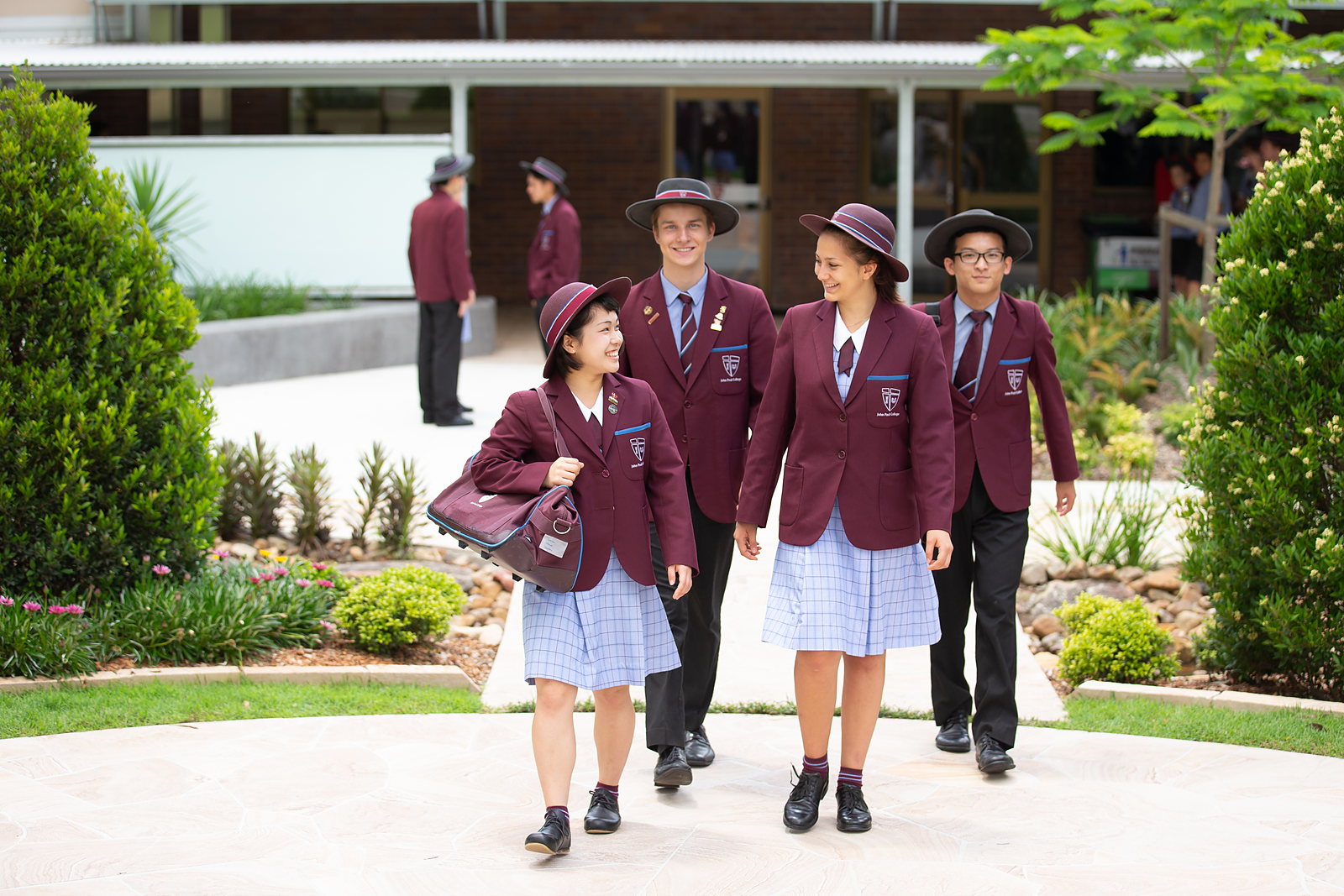
Your child joins our secondary years in Brisbane, Australia, and builds their English on the same campus. They finish with an ATAR for university entry. Every student under 18 has approved welfare arrangements, and named people responsible for them.
Years 11 and 12
Australian universities offer places on the ATAR. In 2025 our median was the strongest on record, and more than half the cohort placed in the top 10% of the state.
See our full results and every year since 2020The ATAR (Australian Tertiary Admission Rank) is the score Australian universities use to offer places. It runs from 0 to 99.95. International students sit the same subjects and the same external examinations as everyone else. Percentages are of the known ATAR-eligible Year 12 cohort. What is the ATAR?
We recommend entry in Year 9. Year 10 is the latest recommended starting point — and if your child needs English preparation first, plan to arrive one or two terms earlier.
Years 11 and 12 are a single two-year programme. They lead to the Queensland Certificate of Education and an ATAR. Students choose the subjects for those two years during Year 10. A student who arrives in Year 11 must make that choice in their first weeks, in a second language, before they know the teachers or the assessment. Arriving in Year 9 gives your child two full years to settle. Results that count towards the ATAR are earned in Years 11 and 12.
Six stages. Five are fixed; only the English preparation stage varies in length, according to each student’s needs.
Your child completes lower secondary school in Vietnam, at the natural end of the Vietnamese school year.
Your child arrives in Brisbane for our Term 3 intake, settles into homestay or boarding, and is guided through the first week by our International Team.

High School Preparation at JPIC, on our campus. Students progress to the next level when they are ready, rather than on a fixed schedule.
Find Your Starting Point
Your child enters mainstream JPC classes on schedule. This is the year students select their senior subjects — which is why Year 10 is the latest recommended starting point.
Find Your Starting PointOne two-year programme leading to the Queensland Certificate of Education and an ATAR, with senior mentoring and career guidance.
An ATAR provides entry to Australian universities. Our Vietnamese graduates have gone on to law, engineering and education.
Students who already meet the English benchmark proceed directly to mainstream classes. There are four intakes a year — January, April, July and October — so a May completion is not the only possible entry point. We do not accept students into Year 12: it is assessed across the whole year, so it cannot be joined part-way through.
Our Vietnamese graduates’ experience bears this out. Sam arrived in Year 8 and left as College Vice Captain with a Law scholarship. Jessica arrived in Year 8 and is now a practising lawyer. Joseph’s clearest memory is choosing his own subjects in Year 10 — by which time he was already well established.
Where your child starts depends on their English, not on their ability. Some students join regular classes straight away. Others begin in a preparation program on the same campus, then move across when they are ready. From there the path is identical: Years 7 to 10, then Years 11 and 12, then university. Find your child’s starting point below.
Vietnamese school years map directly onto ours. The one exception is Year 12 — students do not join it part-way through, because Years 11 and 12 are a single two-year programme.
| In Vietnam | At John Paul College | Age on entry |
|---|---|---|
| Lớp 6 – Lớp 9 (THCS) | Year 7 – Year 9 | 12 – 14 |
| Lớp 10 (THPT) | Year 10 | 15 |
| Lớp 11 (THPT) | Year 11 | 16 |
This table is a guide. Admissions confirms your child’s final placement from their school reports.
Every starting point has its own tuition and CRICOS code — see the full fee schedule and entry requirements.
They begin on the same campus, taught by our own teachers, and transfer to mainstream classes when they are ready. This is the pathway most of our Vietnamese graduates followed.
Families applying through the preparation pathway do not need an IELTS, AEAS or Cambridge result. Provide your child’s school reports and our teachers assess their English directly.
See the entry requirementsA five-level pathway, from foundation English to academic readiness, taught by our own specialist teachers. Very few Australian schools provide this on their own campus rather than through a separate language college.
High School PreparationThat depends on where your child starts. Students progress to the next level when they are ready, rather than on a fixed schedule. We provide a realistic estimate from their school reports before you make any commitment.
Plan the arrival dateNam arrived from Hanoi and began in High School Preparation. He joined the main College in 2017 and finished as Dux of John Paul College in 2020. The preparation pathway is not a lesser route into the College.
Read Nam’s storyThe most useful answer is a description of an ordinary school day, and who is with your child at each point in it. Here is student life, from morning to evening.
Every international student under 18 must have approved welfare arrangements for the whole length of their student visa. John Paul College provides them. That is not an extra — it is a condition of enrolment, and we take responsibility for it.
Move through the day one moment at a time, or press play. This is an ordinary school day, not a showcase.
 Sunrise
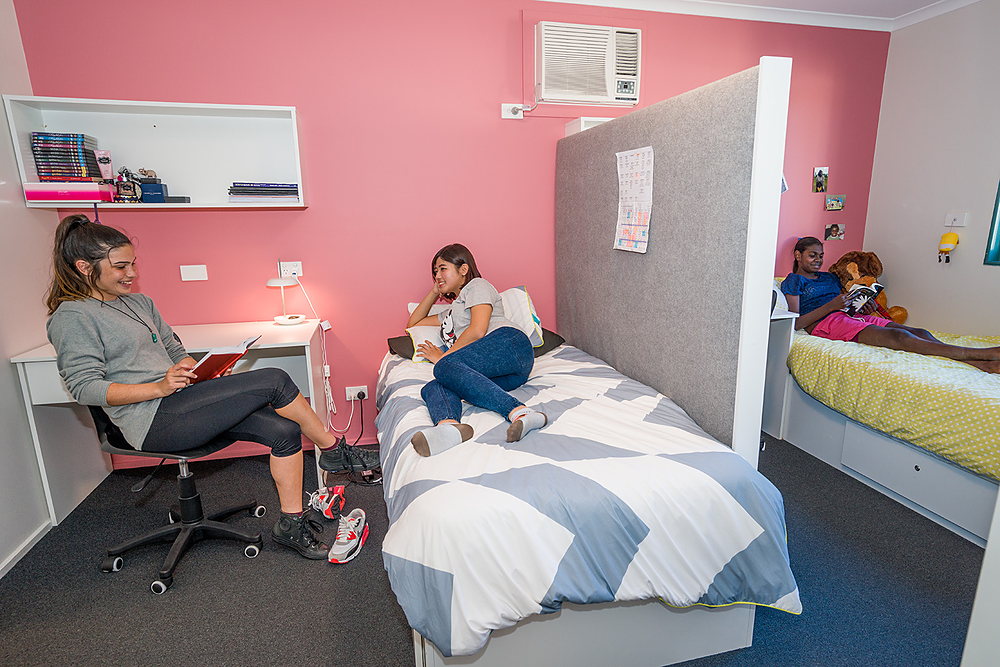
Boarders wake in a twin-share room at Fenton Village, a short walk from class. Homestay students wake in their own room, in a checked local family’s home.
Whichever you choose, your child has named people responsible for them, and a 24/7 emergency hotline to call.
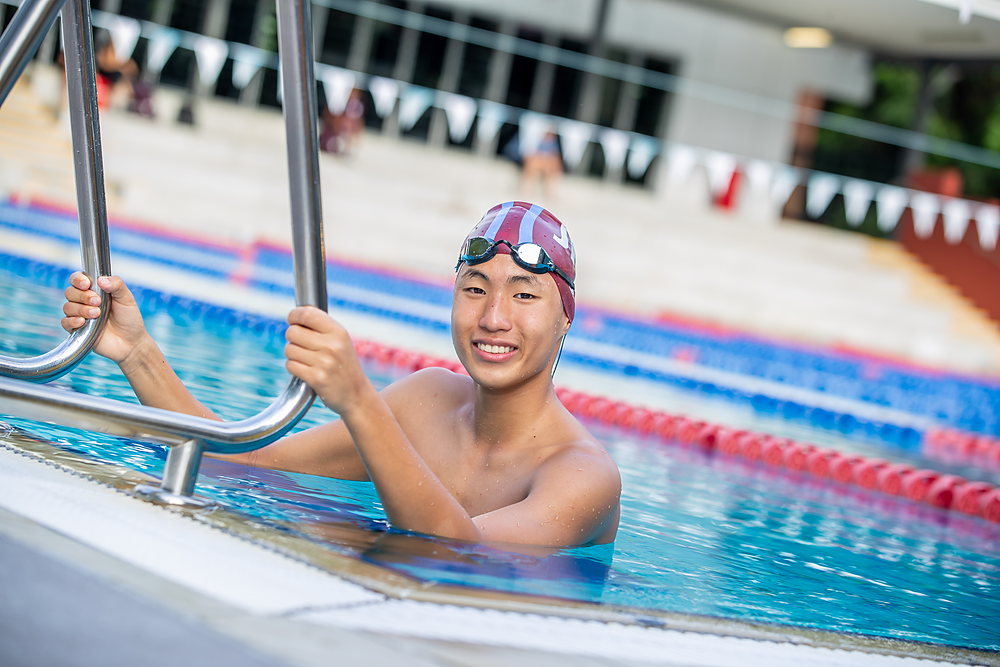 Before school
Swim squads train from about 6:30am. Music students practise and teams warm up. Many students simply arrive early to meet their friends.
A sport, an instrument or an activity your child has chosen for themselves is what students remember most.
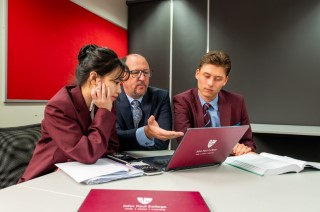 8:20am
The day starts in a mentor group — a small class with the same teacher all year. For a new international student, this is the teacher who comes to know them first.
Your child is known here. One teacher is responsible for knowing how their week is going.
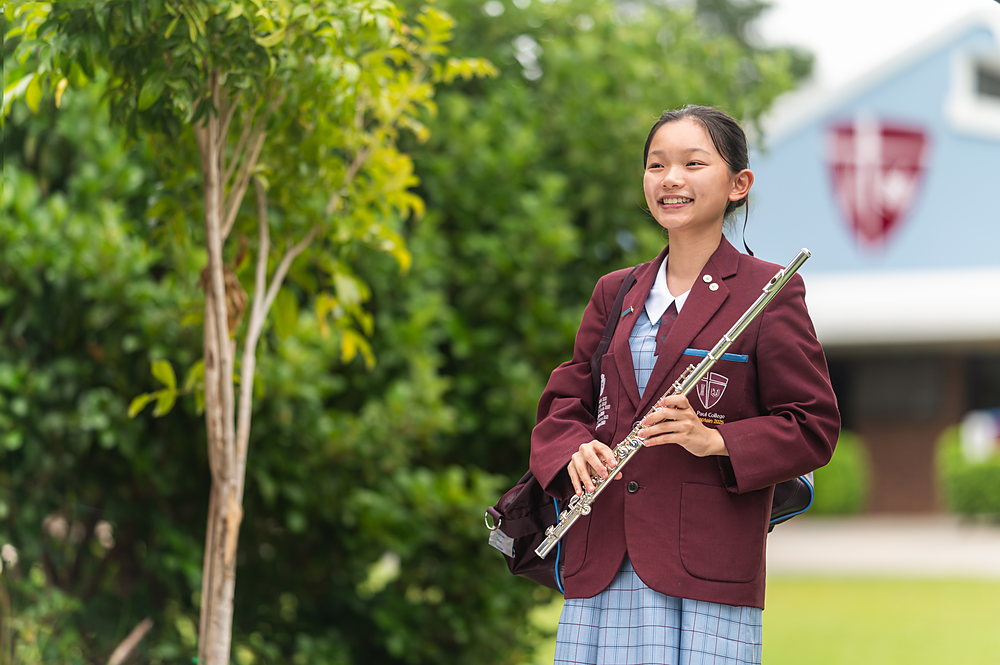 Morning
International students sit in the same Australian Curriculum classes as every other student, taught by teachers who have worked with students from overseas for years.
English improves fastest this way: used throughout the day, across every subject, not only in English lessons.
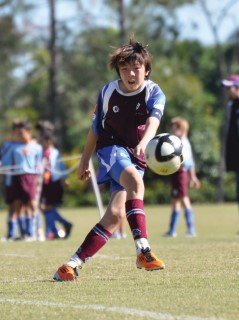 Midday
On the ovals and courts, in Queensland’s climate, for most of the year. Thirty-three hectares means there is always space, and always a game in progress.
Friendships are often formed at lunchtime rather than in lessons. Space to play is how a new student finds their place.
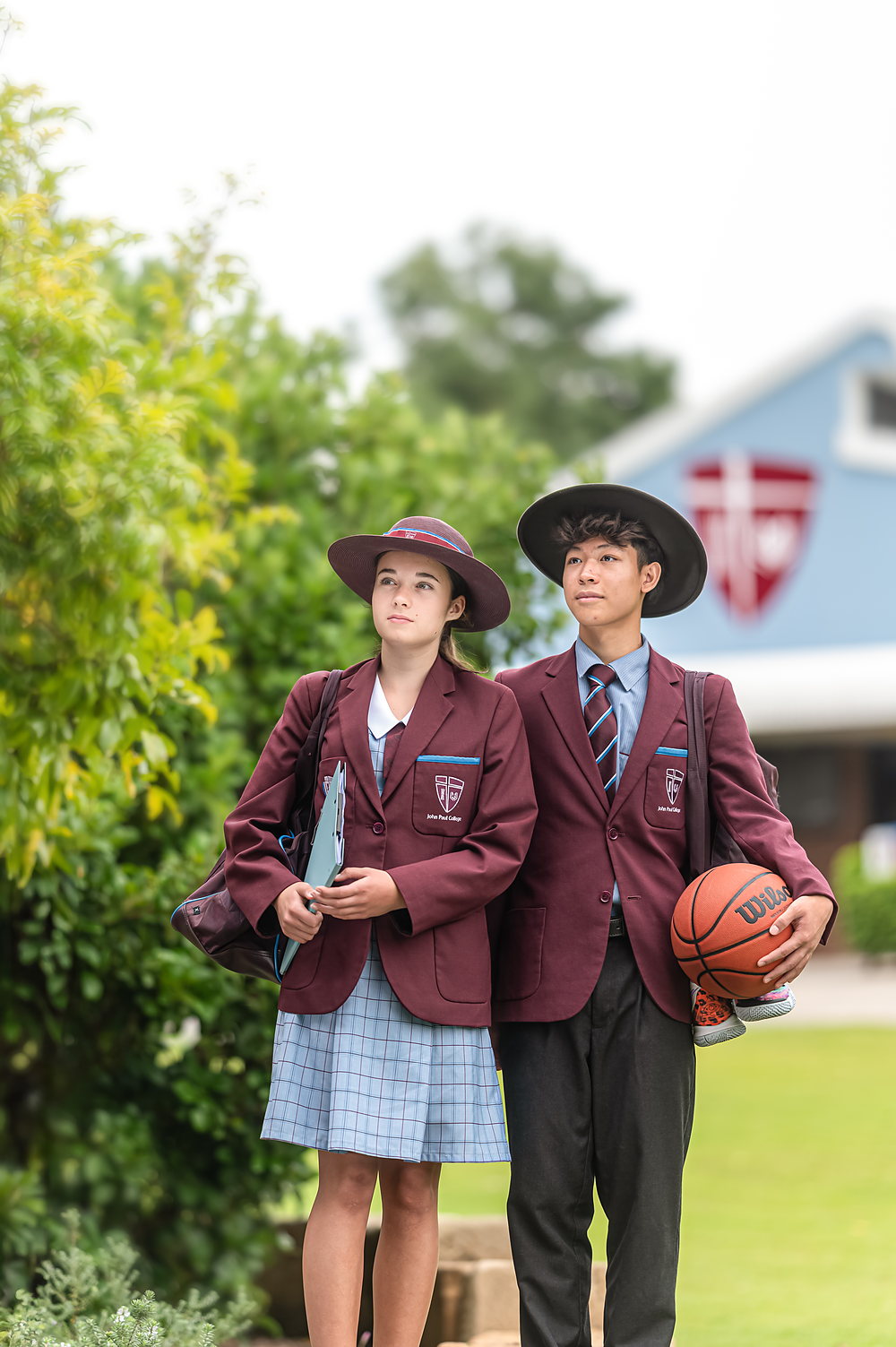 3:20pm
From here your child can choose from more than 13 inter-school sports across all four terms, six student-led clubs, or the performing arts program — bands, orchestras, choirs and chamber groups.
This is where a new student becomes a member of a team.
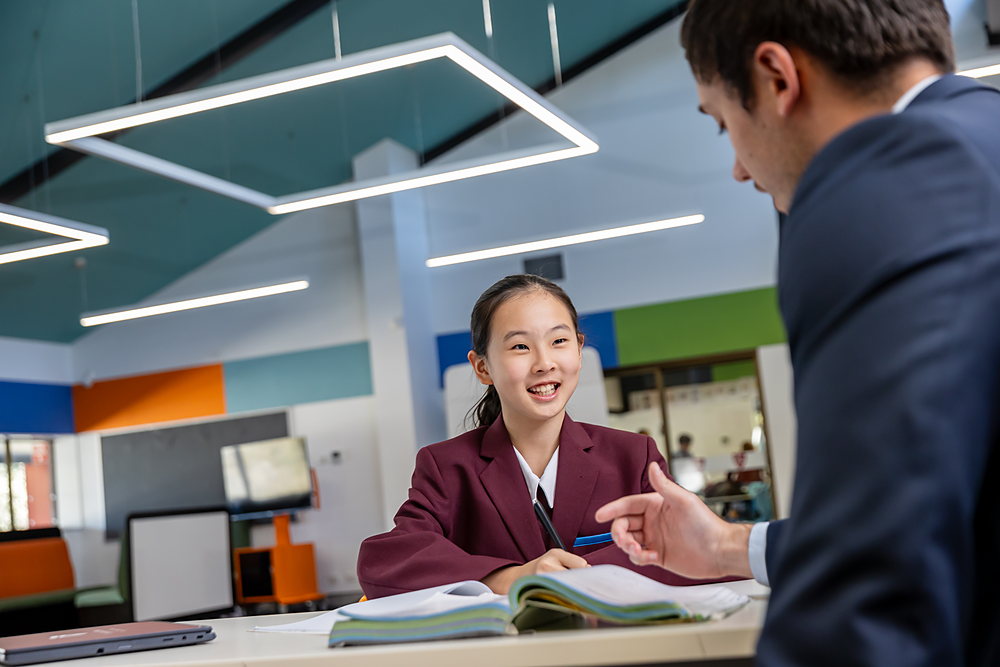 After class
The Extended Day Program runs homework support, mentoring and wellbeing workshops. This answers the question every parent asks: who is with my child after school?
Included in Premium Homestay, and optional for other students.
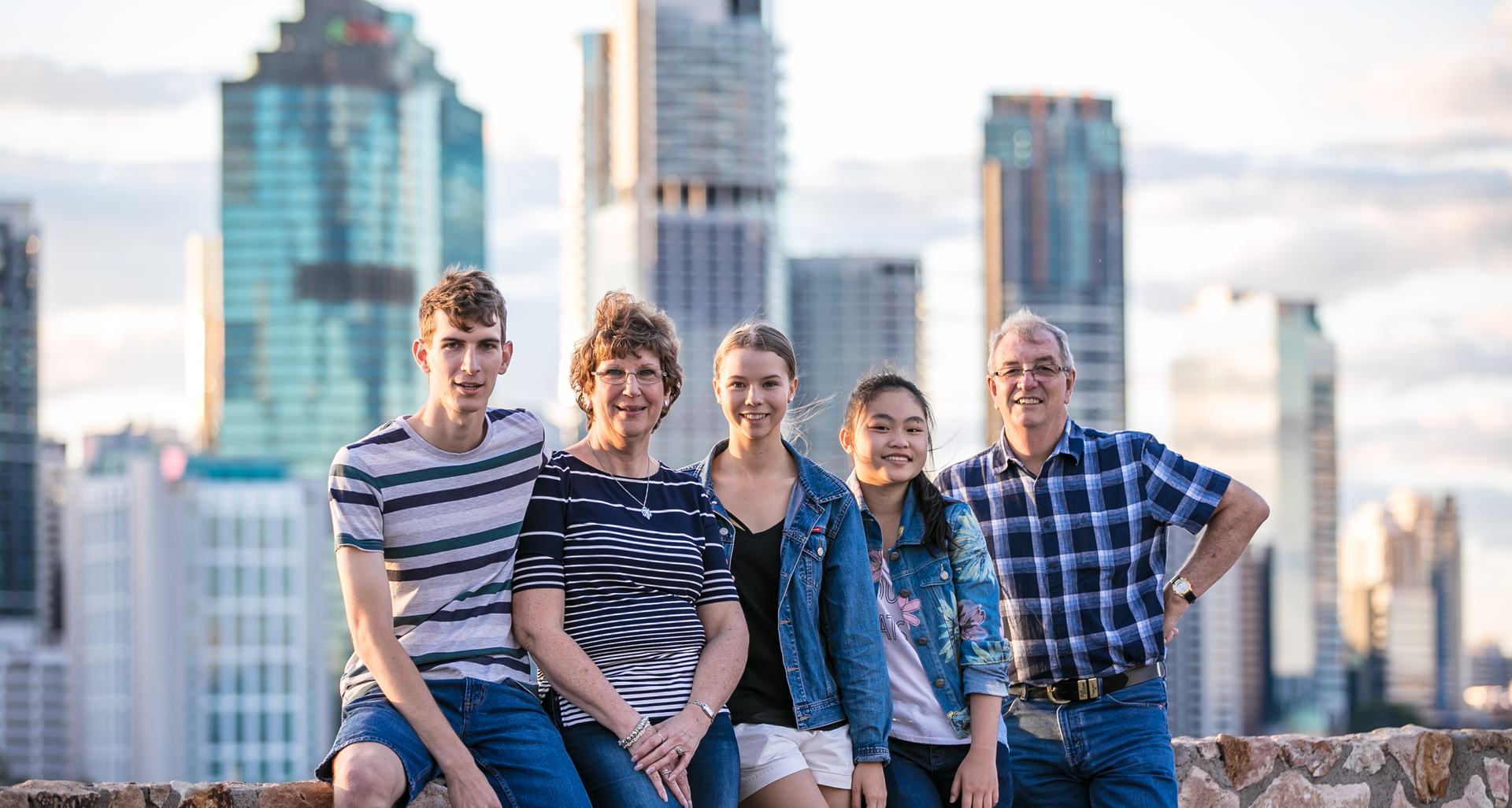 Evening
A community dinner with staff on Tuesday and Thursday, or dinner together in the boarding dining hall. Then supervised study — Years 7 to 9 together in a classroom, Years 10 to 12 in their room or common areas.
No student is left to manage homework alone in a second language.
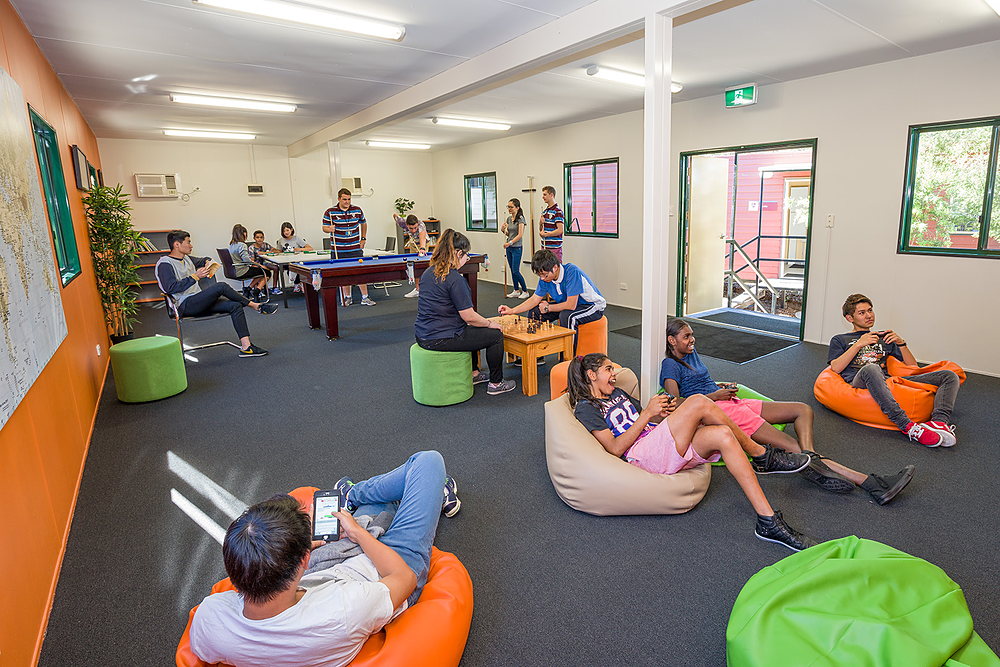 Bedtime
Time to relax with fellow boarders or with the homestay family before bed. Brisbane is three hours ahead of Vietnam, so a call home after dinner reaches you in the early evening.
Neither Vietnam nor Queensland changes its clocks, so the three-hour gap holds all year.
A checked local family, a structured care plan and a 24/7 emergency hotline, in every placement. Many homestay programs provide only accommodation and meals. Ours provides structured care.
See Premium HomestayA boutique boarding community on campus, with dedicated boarding staff and supervised study. Everything is a short walk from class.
See BoardingEvery placement runs on the same pastoral model — Connect, Achieve, Respect, Empower. Your child has named people responsible for them, and a 24/7 emergency hotline to call.
Compare the optionsNam lived with an Australian homestay family. He describes them as his second family — the people who supported him through the hard parts, and celebrated the rest.
A student who feels settled and confident does better in class. That is true of any child, and it is especially true of one who is studying in a second language, far from home. So wellbeing at John Paul College is not left to chance. It is taught, in every year, to every student.
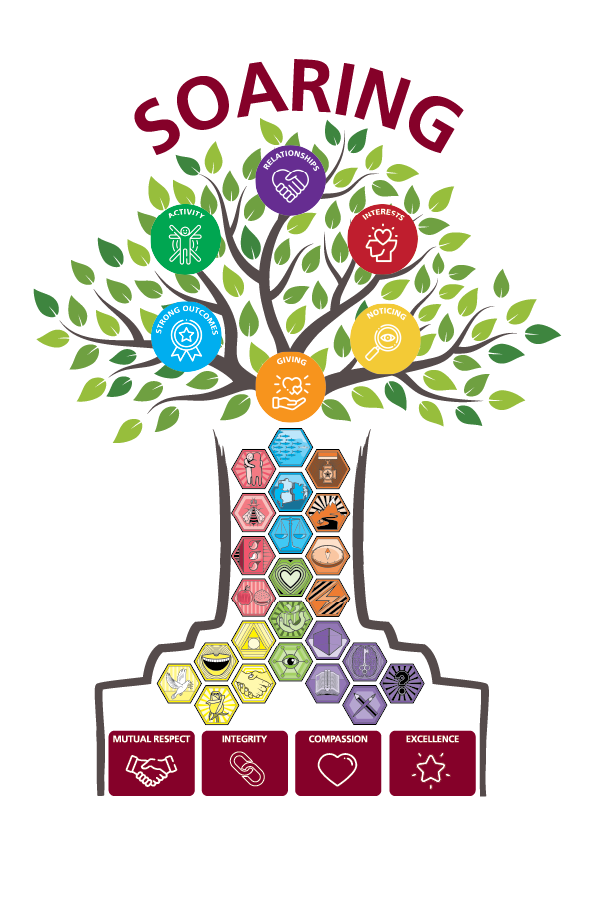
SOARING is our own wellbeing and character framework — built on Positive Psychology and taught in every year from Prep to Year 12. Select a branch of the JPC SOARING Tree to see the skills it develops.
Establishing, striving for and achieving personal goals, in belief in oneself — important for self-esteem and wellbeing, and helping to cultivate resilience when students face challenges in life.
Valuing our physical and mental wellbeing through exercise, nutrition and sleep. Learning what it means to lead a healthy lifestyle, underpinned by positive attitudes, is vital for young people.
Nurturing positive connections with others through relational awareness and social management — communication, collaboration, leadership, decision-making and conflict resolution.
Experiencing moments of complete engagement in personal interests. Being ‘in the zone’ is the perfect balance of challenge and the application of key strengths and skills.
Developing self-awareness and the ability to build upon positive emotional experiences — enhancing creativity, resilience, perseverance and wellbeing.
Exploring one’s unique sense of meaning and purpose by engaging in experiences that let us think and feel beyond ourselves. Aligning with what we value most gives students a real sense of purpose.
SOARING is taught alongside Friendology 101, an international program that teaches children the skills of friendship. Each year has its own focus — Begin, Explore, Share, Care, Think, Create, Lead.
See our primary wellbeing program Years 7 – 12SOARING develops twenty-four character strengths through the years in which confidence is formed. Students learn to identify their strengths and to practise them.
See our secondary wellbeing programFor a child who will study, work and lead in a second language, this is not an optional extra. A settled, happy student is a student who is ready to learn. Confidence, teamwork and the willingness to contribute are what turn strong results into real opportunities.
Thirty-three hectares in Daisy Hill, shared by students from over 45 nationalities. Sport, music, science and the pool are all a walk from the classroom — not a bus ride, not an extra fee, and not something your child has to choose between.
Five national awards since 2004: the IDP Award (the first school ever to win it), NEAS Gold Standard in 2018, NEAS national awards in 2021 and 2022, and an Australian Education Awards honour in 2024.
See our awardsOur secondary school follows the Australian Curriculum, then the Queensland Certificate of Education and an ATAR for university entry. Our primary school delivers the International Baccalaureate Primary Years Programme.
See our coursesHigh School Preparation is taught by our own language specialists, on the same campus your child will graduate from — not outsourced to a separate language college.
See how it worksThe Stephen Paul Aquatic Centre, the Stephen Bean Theatre, the Stephen Bowers Oval, a Science Centre, a dance studio and the Noelene Munns Learning Centre — all inside the school gate.
See the campus map13 or more inter-school sports across all four terms — and a High Performance Academy for students who pursue representative pathways at state and national level.
See the sport programAn award-winning performing arts program: bands, string orchestras, choirs and chamber groups, with lessons through to Year 12 — alongside debating, drama and student leadership.
See the music programFour students from Vietnam, four different starting points. All four finished at an Australian university.

Nam arrived from Hanoi and began in the High School Preparation Course, joining the main College in 2017. Three years later he was Dux of John Paul College. He now studies inclusive education and runs Ngoi Sao Sang — “Bright Star” — a non-profit teaching children with disabilities.
Read Nam’s story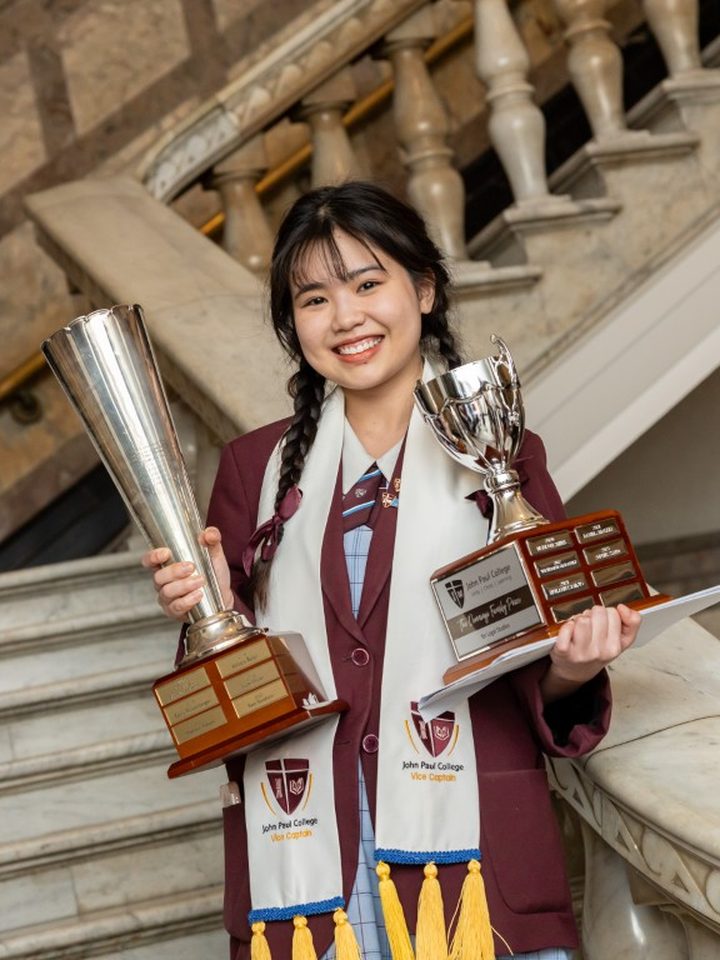
Sam arrived from Vietnam in Year 8 — a new country, a new language and a new school at once. Five years later she was College Vice Captain and won the Cameron Cup, the award for the student who best exemplifies the College motto. She left with a scholarship to study Law.
Read Sam’s storyJessica landed in Brisbane in April 2016 and spent ten weeks in an English preparation course before joining Year 8. She was elected to the Middle School Student Council and placed second in Queensland in a Chinese-speaking competition. She graduated in Law at QUT and is now a practising lawyer.
Read Jessica’s story“Back home I studied twelve subjects. Here I chose six — and I could finally concentrate.” Joseph chose his own subjects from Year 10, and that focus set his direction. He is now an engineer on Cross River Rail, helping prepare Brisbane for the 2032 Olympic and Paralympic Games.
Read Joseph’s storyYou do not need to work this out alone. Tell us where your child is now, and we will help you identify the right year level, the right entry route and the right arrival date.

Allan can guide you through the application, the year level and the documentation in your own language. You are welcome to contact him at any stage of your planning.
You can also apply through an authorised agent in Vietnam, with offices in Hanoi, Ho Chi Minh City and Da Nang. There is no cost to your family — the College pays the agent’s service fee.
We reply within two business days.
We recommend entry in Year 9. Year 10 is the latest recommended starting point, because students select their Years 11 and 12 subjects during Year 10. John Paul College does not accept students into Year 12. There are four intakes a year: January, April, July and October.
For 2027, Years 7 to 10 tuition is A$34,300 per year and Years 11 and 12 is A$34,900 per year. High School Preparation is A$8,575 per term. Homestay is A$25,100 per year and boarding is A$27,350 per year. Other one-off and annual fees apply. Figures are a guide transcribed from the current fee schedule — confirm exact amounts against your Written Agreement before paying. See the full fee schedule.
No external English test result is required to apply through the High School Preparation pathway. Direct entry to Years 7 to 11 is for students whose English and school reports already meet the College benchmarks. Every international applicant also completes an interview with the Head of School. See the entry requirements.
Yes. Allan Dam, Head of Global Engagement & Partnerships, speaks Vietnamese, so you can ask your questions and read our answers in your own language. You can also apply through an authorised education agent in Vietnam if you would rather work with someone locally — see the authorised agents.
Every international student under 18 must have approved welfare arrangements for the length of their student visa. John Paul College provides them, through Premium Homestay or boarding at Fenton Village, with the JPC CARE framework in every placement and a 24/7 emergency hotline.
The Queensland school year runs from late January to early December, in four terms. A student finishing in May can arrive for the July intake, settle over two terms, and begin the next year level in January. See our term dates.
Vietnamese school years map directly onto Australian year levels. Lớp 6 to Lớp 9 correspond to Year 7 to Year 9, Lớp 10 to Year 10, and Lớp 11 to Year 11. Year 12 is not available to new students. Admissions confirms the final placement from your child’s school reports.
Either with a checked local homestay family, or in Fenton Village, the boarding community on the John Paul College campus. Premium Homestay includes the Extended Day Program: homework support from 3pm, a community dinner with staff, and door-to-door transport home. Compare the options.
Brisbane is three hours ahead of Vietnam, and neither Vietnam nor Queensland changes its clocks during the year, so the three-hour gap holds all year. You can call your child after school every day without calculating the time difference.
Yes. Study Abroad places students in mainstream Australian classrooms for periods from four weeks to one year. Study Abroad does not include Year 12 and does not include boarding. See Study Abroad.
Tell us about your child and our International Team will guide you, step by step — year level, entry route, arrival date, fees, and how your child will be cared for. There is no cost, and no obligation to apply.