Get Ready for School / Extra Co-curricular Activities
Be on campus before school starts. Some sports train earlier — swim squads start at 6:30am.
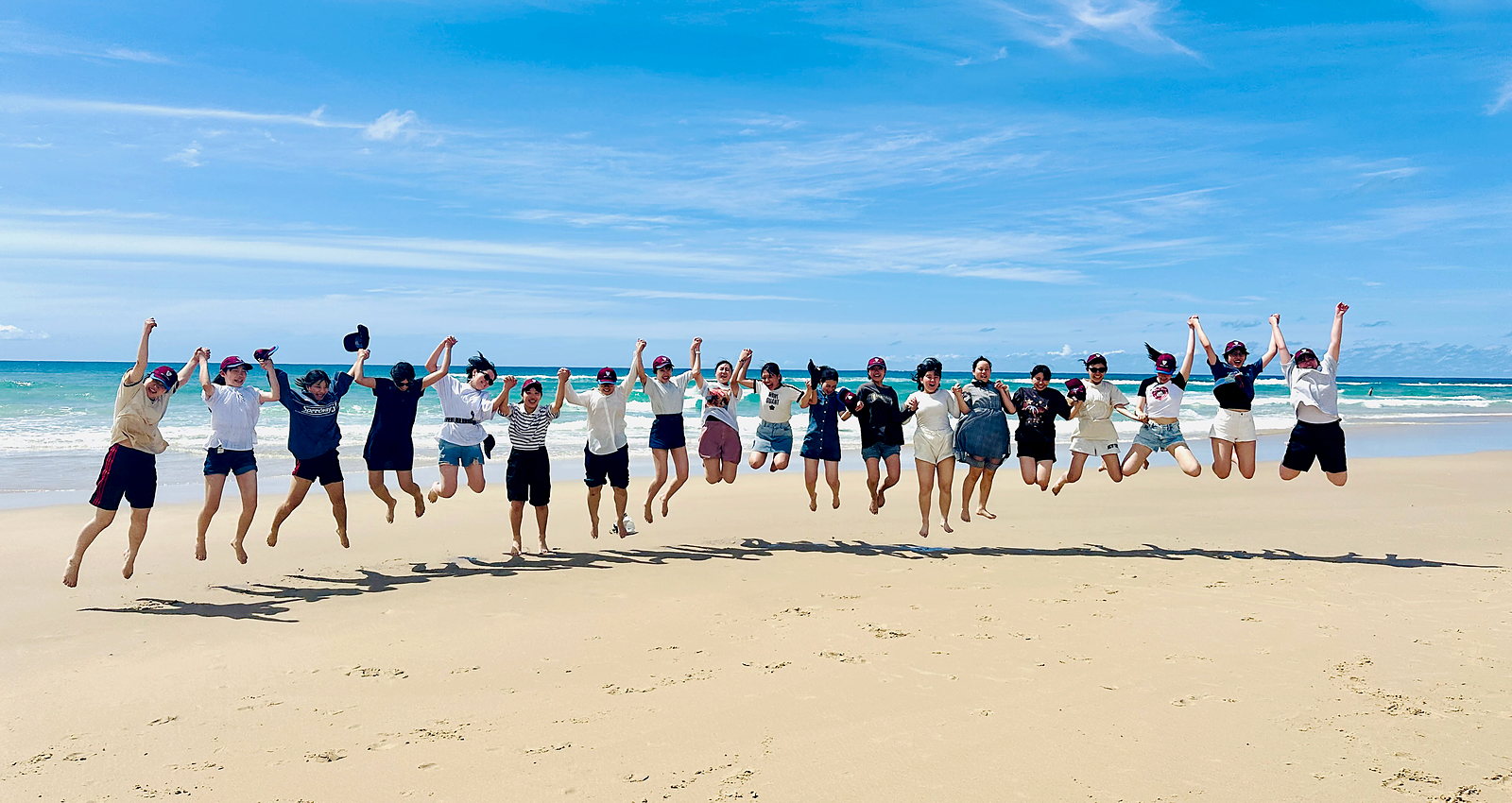
Join real classes, play in real teams, and experience Australian culture with a local host family.
Queensland is the warm, north-eastern corner of Australia — and it keeps the same seasons as most of Latin America. John Paul College sits in Daisy Hill, between the city of Brisbane and the Gold Coast, with koalas in the trees beside the campus and surf beaches 45 minutes away. For 30 years we have welcomed students from other countries, for a term, a semester or a full year.
Summer (December–February) 27–30 °C · Winter (June–August) 20–23 °C · no snow, and sport outdoors in every term. Queensland does not use daylight saving, so its clock never shifts through the year.
Tap a numbered pin — or its row in the list — to see what is there.
The river is the city. Everything worth doing in Brisbane sits on a bend of it — and it is thirty minutes from the school gate.
A real capital city, but a friendly one — safe, walkable, and small enough that students find their way around in a fortnight.
Forty kilometres of surf beach, backed by a city of its own. For most of our students this is the ordinary Saturday they talk about for years.
One of the largest sand islands in the world, and close enough to be a day trip. The water is clear enough to see straight through.
North of Brisbane, and gentler — this is where Queensland families go when they want a quiet weekend.
Distances and travel times are approximate, by road unless noted. The map is a simplified illustration, not to scale.
You cannot fly here to look first. So here is the ground itself: everything inside the gold line is ours. Open a film to fly across it.
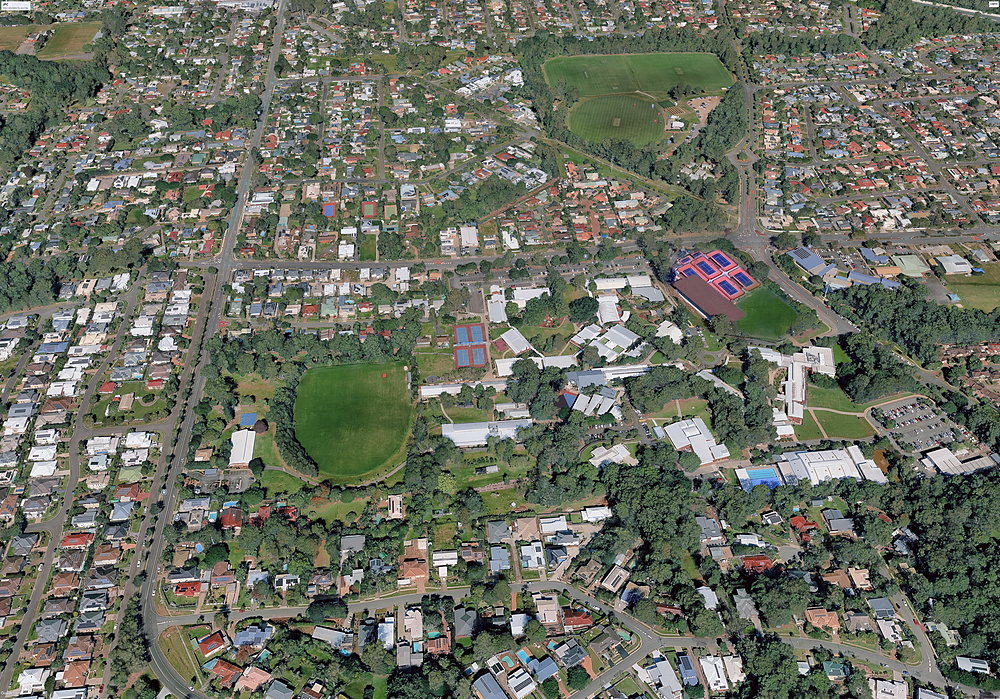
Want to look inside the buildings? Walk the campus in 360°
Classes run from 8:20am to 3:20pm, Monday to Friday — be on campus before school starts. That part is the same every day. Everything around it is yours to choose.
Your subject timetable arrives before you fly. You choose your activities in your first week.
Same uniform, same timetable, same classes as every Australian student.
Lunch outside — two ovals, courts and bushland, almost every day of the yearBe on campus before school starts. Some sports train earlier — swim squads start at 6:30am.
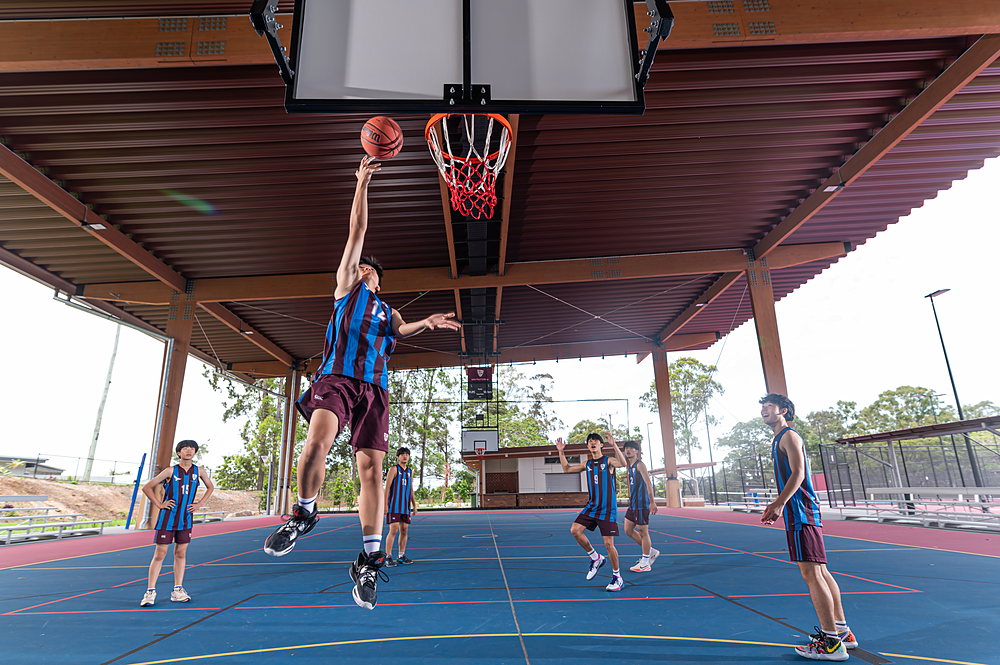 After 3:20pm
13+ inter-school sports, six student-led clubs, performing arts. All in your fee.
 Tue & Thu · 3:30–6:00pm
From week 2: a mentor for homework, then a dinner cooked at school. Home by 6:30pm.
 Sat & Sun · no timetable
Saturday sport in College colours, then free time — a barbecue, the koala sanctuary at Daisy Hill, or the coast.
You join in your first week, on the same terms as everyone else. Nothing extra to pay, nothing to audition for.
Basketball
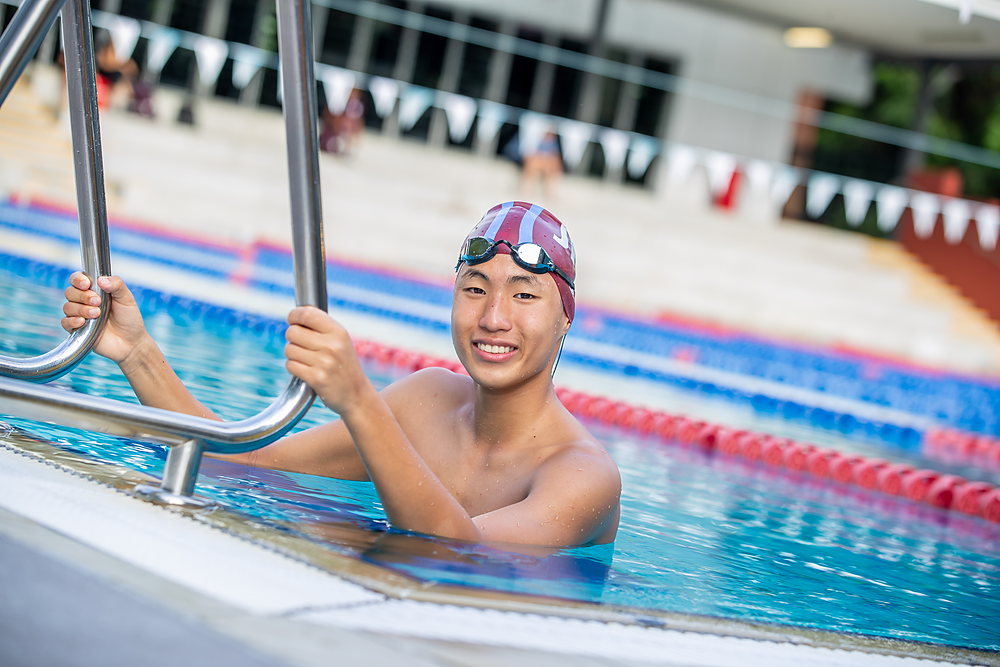 Swimming
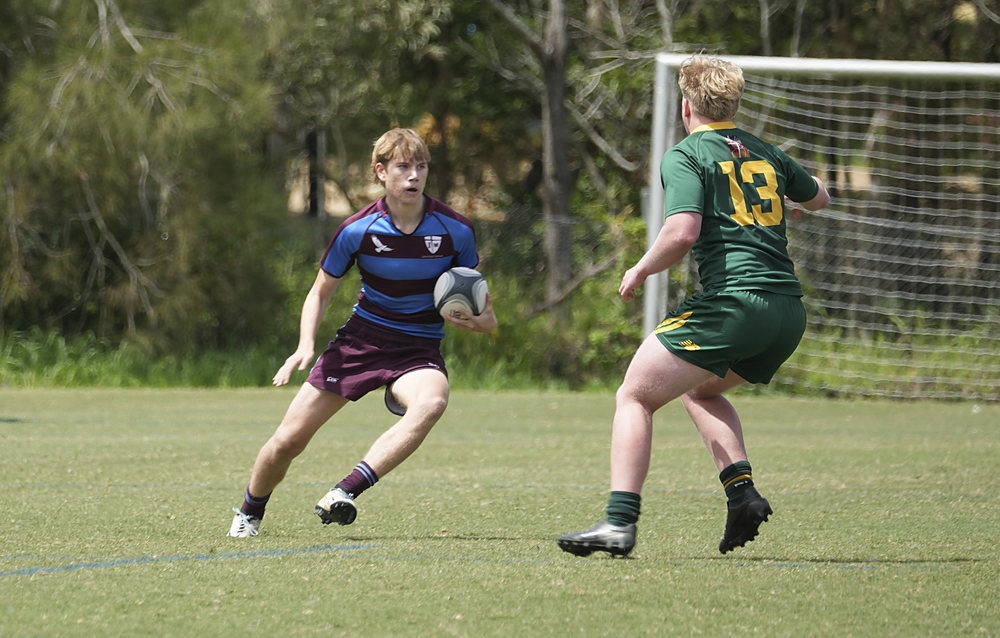 Rugby
Rugby
 Football
 Dance
Dance
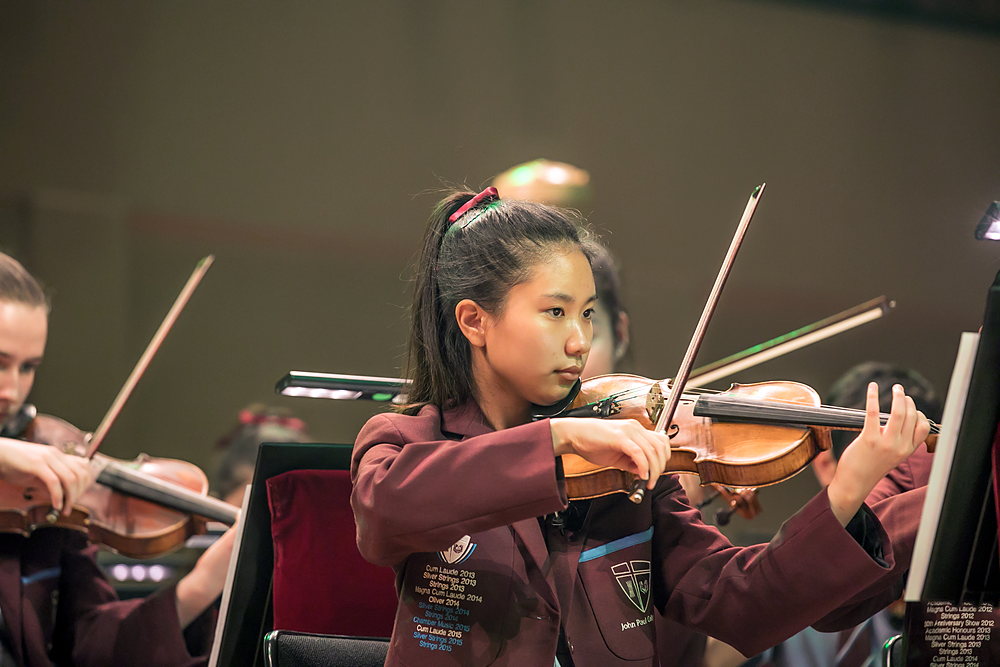 Strings & bands
Thirteen inter-school sports, boys and girls, every term.
Bands, choirs, dance and drama — in a real theatre.
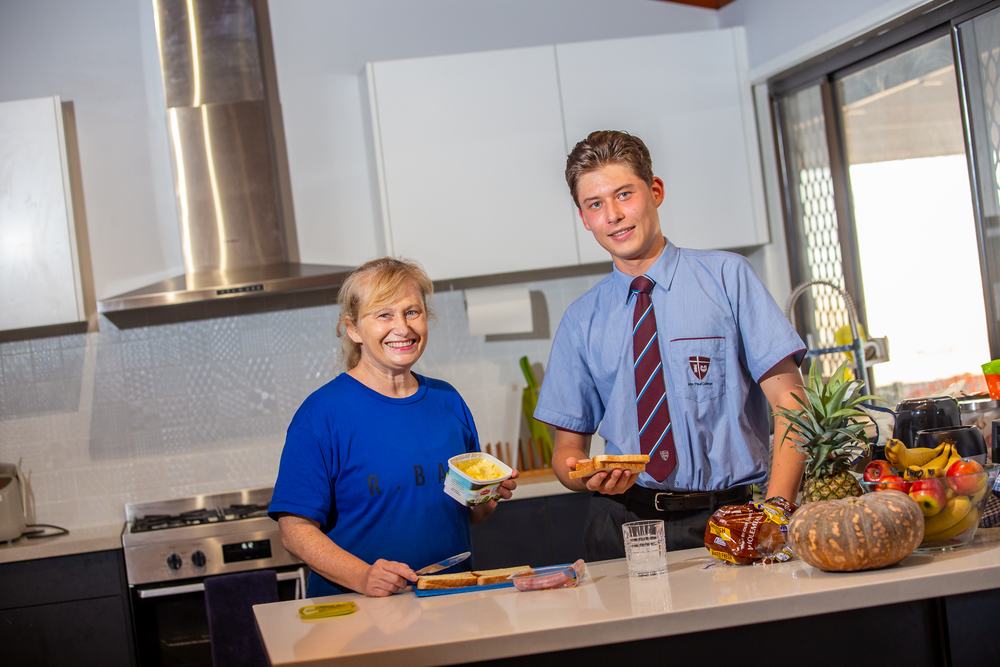
This is the part a hotel and a tour bus can never give you. Your child lives inside an ordinary Australian home — the Saturday barbecue, the drive to the beach, the football on the television, the jokes at the dinner table. English stops being a subject and becomes the way the house talks.
Full board and your own room, with a family who has been checked and visited before any student is placed.
The fastest progress our students make is not in class. It is the hour after dinner, talking about nothing in particular.
The JPC CARE framework, plus specialist welfare staff for students under 18.
The coast, a sanctuary, a cousin’s birthday, the markets. Students come home describing the Sundays, not the classrooms.
Families comparing schools usually find the extras arrive later — uniform, a laptop, sport fees, airport pick-up, afternoon care. Here they are already in. This is what JPC CARE means in practice.
Every student, every program length.
Charged per week, and it carries the care.
Not included: flights, the student visa, and Overseas Student Health Cover (OSHC) — the health insurance every international student in Australia must hold.
Whatever the rest of the class is studying. There are only two things to work out — which subjects, and which year level.
Four core areas everyone takes, then electives you choose on arrival.
Core — everyone takes these Elective — you choose
Find your child’s age on the left. Select a row to open that year level in a new tab — or choose your country above to see your own year names instead.
Study Abroad runs from Year 7 to Year 11 — Year 12 is Australia’s final senior year, assessed across the whole year, so it cannot be joined for a term. A planning guide only: Admissions confirms placement from age, school reports and English level before you commit to anything.
Long enough for real friends and real progress in English. Our year runs late January to early December, in four terms.
South of the equator, December and January are summer in both places, so the school years line up more easily than they would in Europe.
Entry is around CEFR B1 (about IELTS 5). Admissions checks your child’s English first, so nobody is placed in a class they cannot follow.
The steps are a little different depending on who is applying. Choose one and we will show you yours.
Tell us your child’s year level and when they would like to come. Your local education agency can do this for you.
We match a length of stay and a start date to your family’s plans and your own school calendar.
For the student visa and the enrolment forms we point you to a registered agency near you.
We meet the flight, take your child to their homestay family, and settle them into class.
A parent or guardian has to sign the application, so bring them in from the start — then send us your questions together.
Send your recent school reports. Admissions confirms your year level and English before anything is committed.
Your subjects, and the sport, music and clubs you want to join. Full access is already in the fee.
You are met at the airport, taken to your host family, and walked into your first class.
Sign in to the Enrolment Portal to lodge and track an application. Not a partner yet? Apply to become a JPC agent first.
School reports, English level and the dates the family wants. Track its progress in the Enrolment Portal.
Year level, homestay match and the offer letter come back to you.
Airport transfer, welfare support and progress updates — with you kept in the loop.
Open the Enrolment Portal New to JPC? Become an agent Agent training
See term dates and start dates See the full application process
In Daisy Hill, on the east coast of Australia, in the state of Queensland. It sits between the city of Brisbane and the Gold Coast beaches — about 25 km from central Brisbane and about 50 km from the Gold Coast surf.
From four weeks up to a full year. For Years 7 to 11 the minimum stay is one school term, which is about ten weeks. Many families start with one term and decide from there.
Tuition includes a school-issued laptop for the whole program, the full uniform, full access to sport, activities and performing arts, and — on a stay of a full term or longer — an end-of-program report card. Homestay students also receive airport transfers, welfare support and the Extended Day Program. Flights, the student visa and Overseas Student Health Cover (OSHC) are not included, and homestay is charged separately. See the full fee breakdown.
Around CEFR B1 — about IELTS 5 — for Years 7 to 11. Admissions reviews school reports and English level before you commit to anything, and students who meet it join mainstream classes from the first day.
Brisbane is warm almost all year. Winters are mild and dry, so sport is played outdoors in every term and the beaches are usable for most of the year.
With a caring, JPC-approved Australian family in JPC Premium Homestay — full board and a single room. Specialist welfare staff support students under 18, and a 24/7 emergency hotline covers emergencies at any hour. See Premium Homestay.
Classes run from 8:20am to 3:20pm, Monday to Friday, and students must be on campus before school starts. Some sports train before school from about 6:30am. Sport, music and clubs run after 3:20pm, and homestay students also attend the Extended Day Program on Tuesday and Thursday afternoons.
Every week has the same shape, but the activities are your child’s own choice. Classes run 8:20am to 3:20pm in mainstream Australian classes. Some sports train before school. After 3:20pm students choose from more than 13 inter-school sports, performing arts and six student-led clubs, all included in tuition. On Tuesday and Thursday, from the second week of term, homestay students attend the Extended Day Program for supervised study and a community dinner, and are driven home by 6:30pm. Weekends are free time with the host family. See the week hour by hour.
The Extended Day Program runs on Tuesday and Thursday afternoons, from the second week of each term, finishing at 6:00pm — supervised study with academic mentors, wellbeing activities and a staff-prepared community dinner, with transport home by 6:30pm. It is included in Premium Homestay. See the Extended Day Program.
Yes. If an agency or a school is placing three or more students starting at the same time, we have separate group arrangements. Make an agent enquiry.
Many do. Students can continue into full enrolment and an Australian senior-school pathway when the time feels right — our graduates go on to leading universities in Australia and overseas. See where it can lead.
A term in Queensland is one of them. Tell us about your child and our International Admissions Team will guide you, step by step — dates, homestay, fees, all of it. Prefer to speak with someone closer to home? Your local education agency can help you enquire.