Min
Training before class, national competition after it
Read the story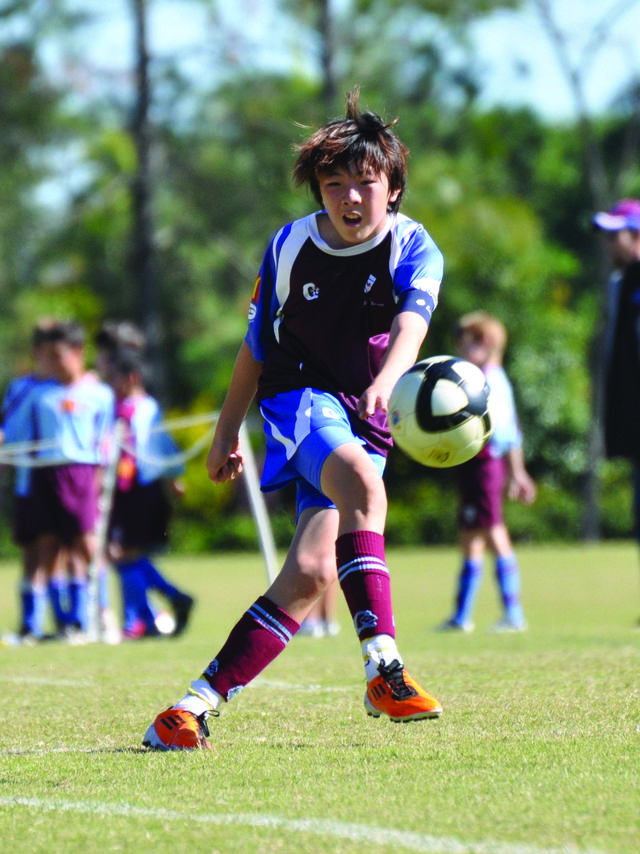
Move through the day one moment at a time — or press play and let it run. Nothing here is a brochure day: it is the shape of an ordinary Tuesday.
 Before school
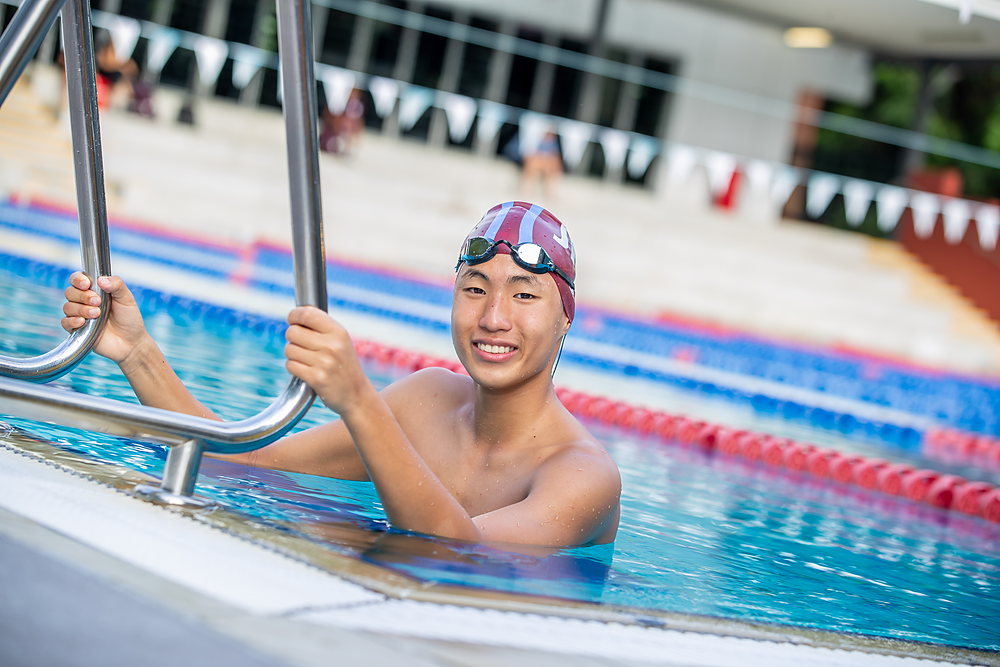
Some students are already on campus. Swim squads train from about 6:30am. Music students practise, teams warm up, and plenty of people simply arrive early to find their friends.
Why it matters: a sport, an instrument, an activity you chose yourself. That is the JPC experience students remember.
 8:20am
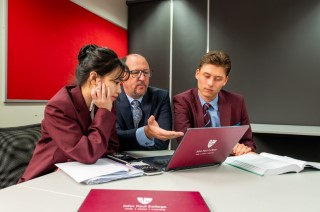
The day begins in a mentor group — a small class with the same teacher all year. They notice when something is wrong before anyone has to explain it. For a new international student, this is the person who learns your name first.
Why it matters: you are never anonymous here. Somebody is responsible for knowing how your week is going.
 Period 1
International students sit in the same Australian Curriculum classes as everyone else. Their teachers have worked with students from overseas for years. Students who need more English first start in a preparation program, then join these same classes.
Why it matters: this is the fastest way English improves. You use it all day, for real subjects, not only in an English lesson.
 Morning tea
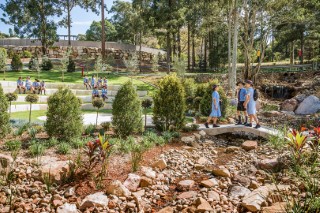
Morning tea is a 35-minute break, and almost everyone spends it outside. The campus is thirty-three hectares of natural bushland. There is room to find your own corner — or to end up in a group you did not have last term.
Why it matters: Queensland weather means breaks are outdoors nearly all year, which is a large part of why students settle so quickly.
 Mid-morning
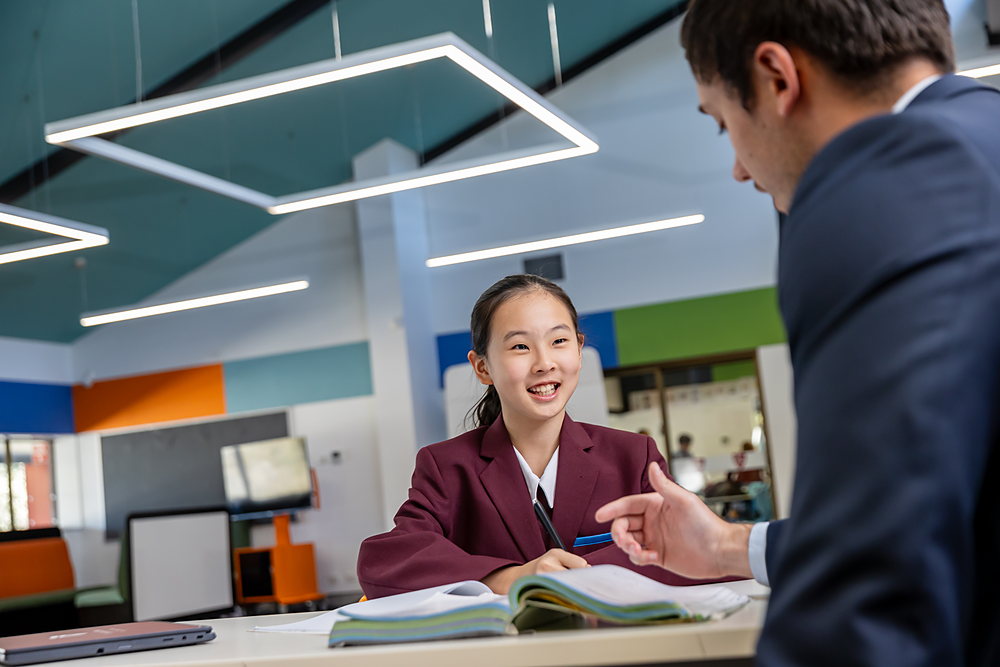
Language support is built into the ordinary week rather than added afterwards. The International Student Services team works alongside classroom teachers, with small-group and one-to-one help for students who are still building confidence.
Why it matters: a student gets help with the subject they are actually studying, in the week they are actually studying it.
 Lunch
Lunch
Most students eat with friends and then head outside. There is a football game on the oval, a basketball court, the canteen and the JPCafe. The student-led clubs meet after school rather than at lunch.
Why it matters: friendships at school are made sideways — over a shared interest, not by being introduced.
 Afternoon
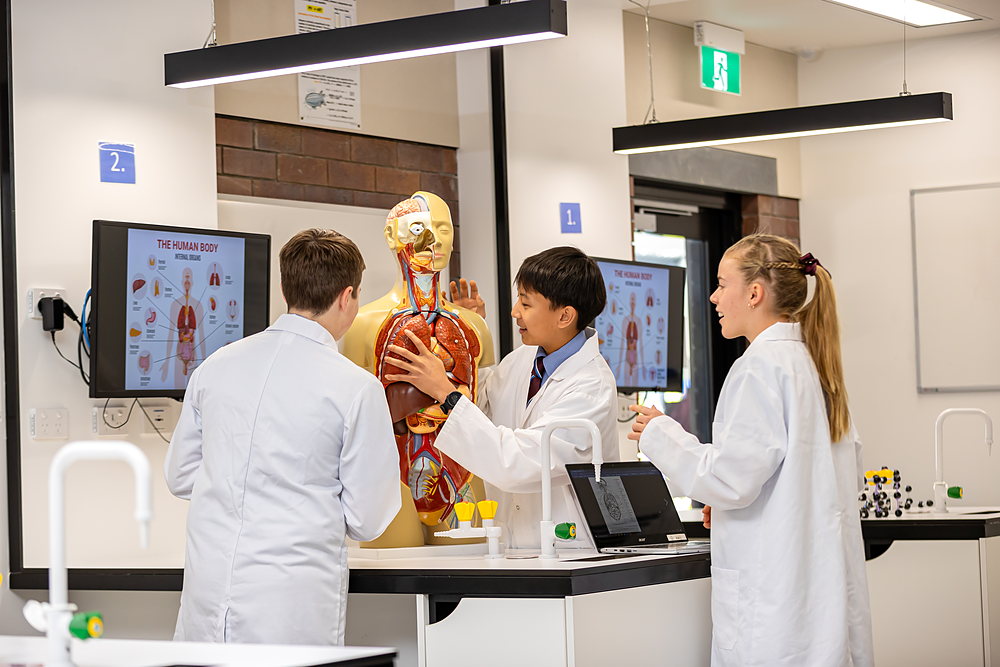
Afternoons are often the practical subjects. There are purpose-built laboratories in the Science Centre, workshops in S.G. Mapstone Applied Design, and rehearsal rooms in the music centre. These are real facilities, not a shared classroom with equipment wheeled in.
Why it matters: senior subjects like chemistry, physics and design need proper rooms — and they are the subjects universities look at.
 3:20pm
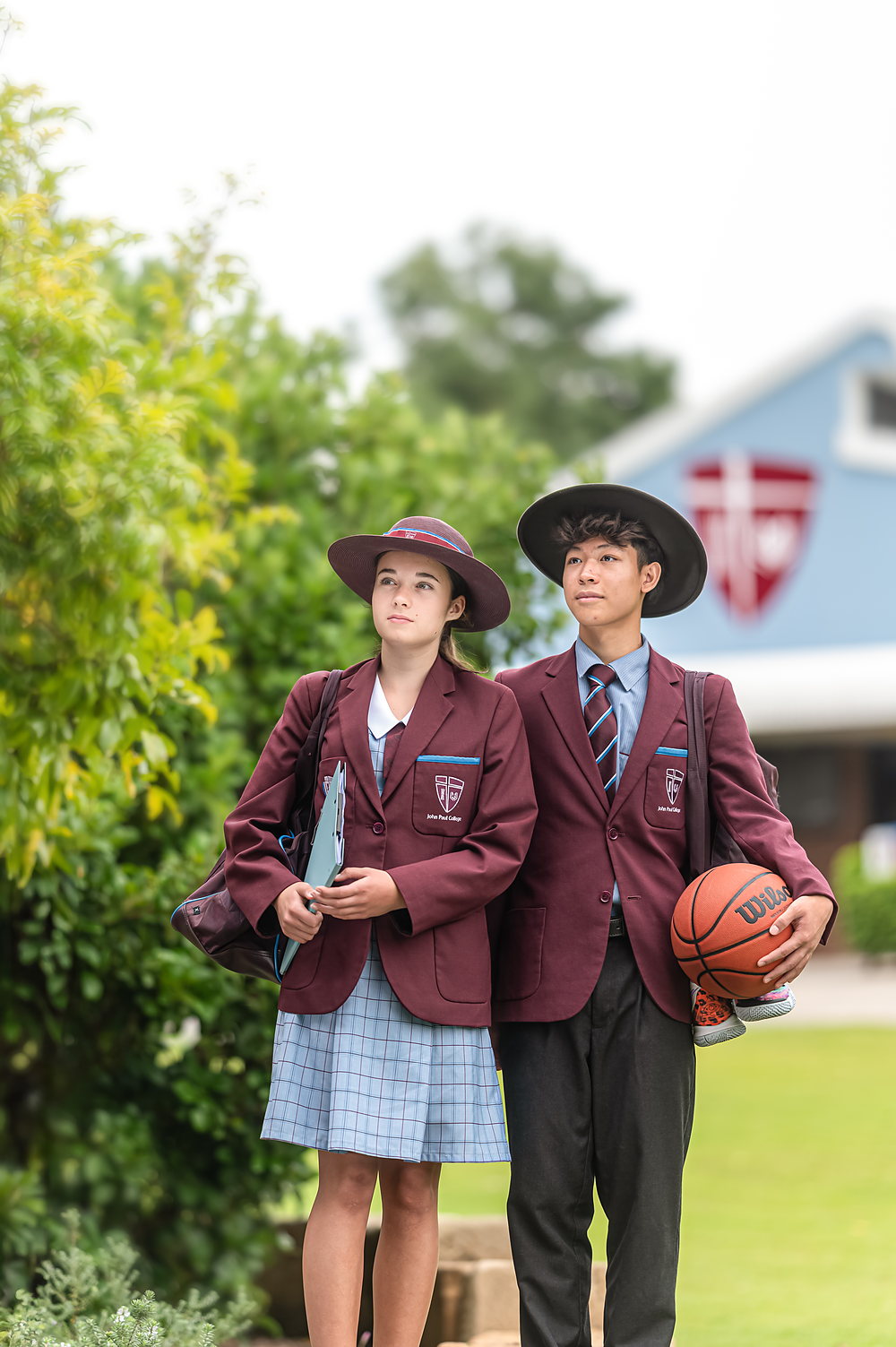
Formal classes end at 3:20pm. Some students head straight home. A great many do not, because the part of school they came for has not started yet.
Why it matters: 8:20 to 3:20 is the timetable. It is rarely the whole day.
 After school
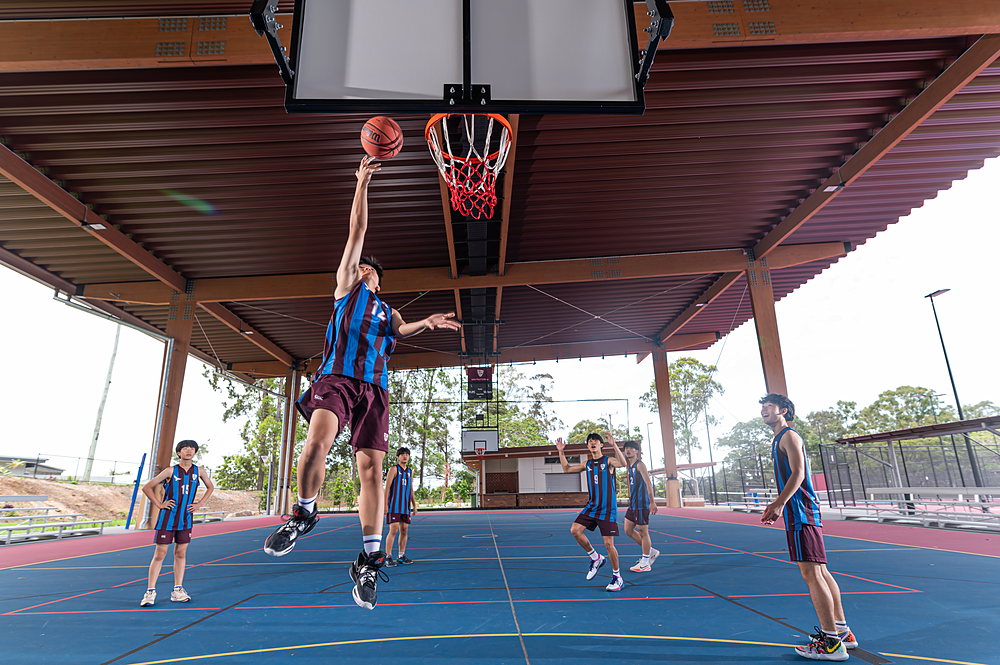
After 3:20pm the campus keeps going. Sport training and music rehearsal run after school, and so do the student-led clubs — Art Club, Debating, Esports, Writers Club, Young Designers and Community Care. Homestay students also attend the Extended Day Program on Tuesday and Thursday afternoons.
Why it matters: this is where the inter-school teams and the College musical come from. A lot of the friendships too.
 Evening
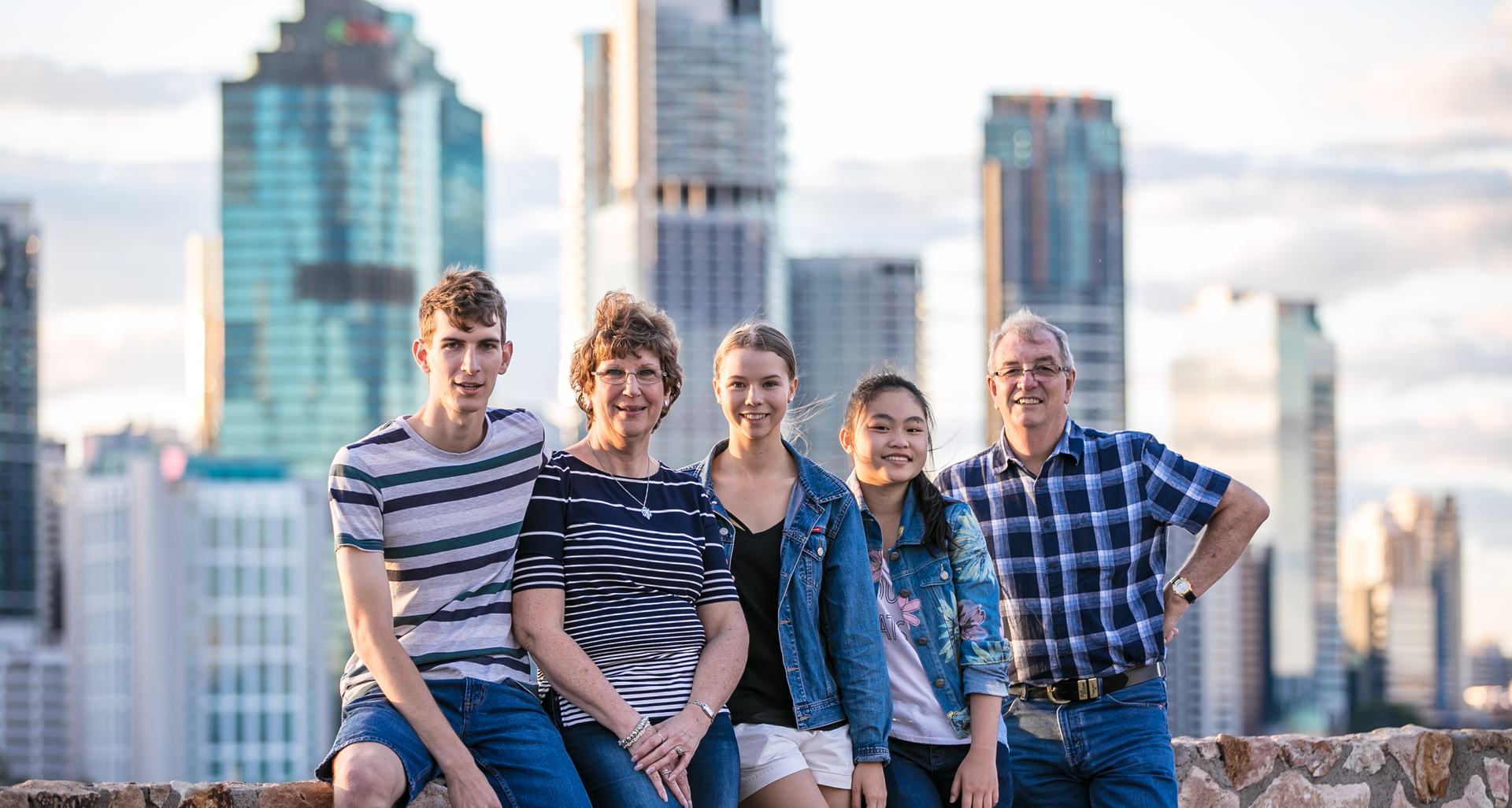
Homestay students eat with their host family and do homework at the kitchen table, speaking English all evening without thinking about it. Boarding students return to the boarding house for supervised study, dinner and their own common room.
Why it matters: the evening is where homesickness actually shows up. It is the reason both options are supervised rather than left to chance.
Australian school sport changes with the season. A student who starts in July is not waiting until next year. They join whatever is running that term, and pick up the rest as the year turns. Music, drama, dance and the student clubs run right through.
Start in Term 1 and you arrive with everyone else, at the beginning of the school year.
Swimming
The whole school competes. No experience needed — most students swim for their house, not for a time.
Instrumental, choir and vocal, dance, drama, cheer and bands. Art Club, Community Care, Debating, Esports, Writers Club and Young Designers meet after school.
Start in Term 2 and you walk into a completely different sporting season from the one that just finished.
Cross Country
Run through the bushland on our own campus. Everybody takes part, at whatever pace suits them.
Instrumental, choir and vocal, dance, drama, cheer and bands. Art Club, Community Care, Debating, Esports, Writers Club and Young Designers meet after school.
Start in Term 3 — the most common mid-year intake — and a fresh season starts the same week you do.
Athletics
Track and field across a full day. A good first week to be new, because everyone is out of uniform and out of class.
Instrumental, choir and vocal, dance, drama, cheer and bands. Art Club, Community Care, Debating, Esports, Writers Club and Young Designers meet after school.
Start in Term 4 and you arrive into the loudest term of the year. There is no inter-school sport season in Term 4 — the performing arts take over instead.
Carols & concerts
The end-of-year performance run: carols, recitals and performance evenings in the Stephen Bean Theatre.
Awards evening
The College's formal close to the year, where academic and co-curricular achievement is recognised in front of the whole community.
Instrumental, choir and vocal, dance, drama, cheer and bands. Art Club, Community Care, Esports, Writers Club and Young Designers meet after school. Training for the Term 1 sports begins before the year ends.
Sport offering current as of the 2025 co-curricular program. Terms indicate when trials, training and the main competition season run. Boys' and girls' seasons differ for some sports.
Sixty-plus facilities across thirty-three hectares of bushland, from Kindergarten to Year 12. Purpose-built laboratories, a professional-standard theatre, a multi-lane pool, design workshops — each one built for the thing it is for. Start from the air, then walk into any room.
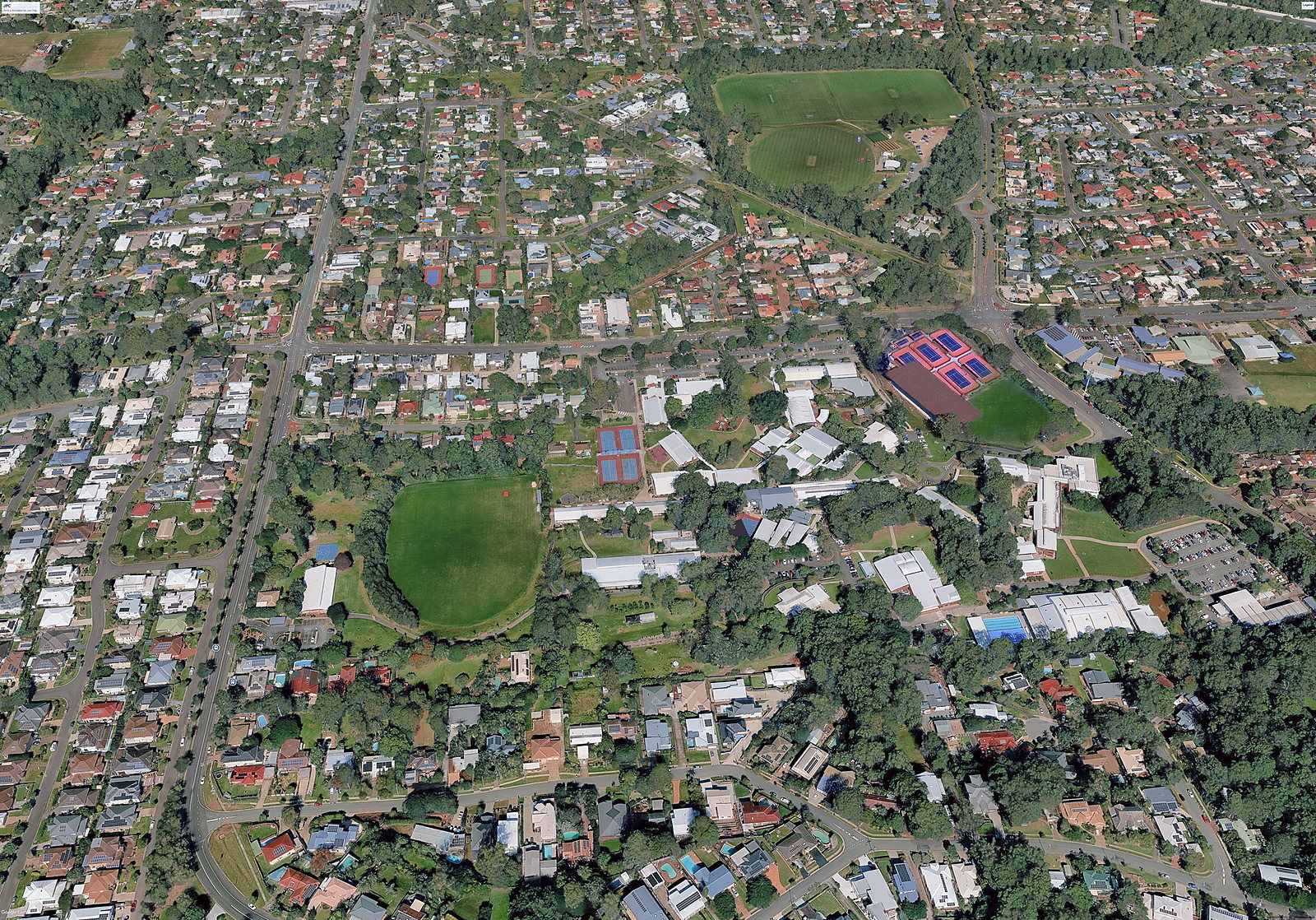
Walk through the rooms without leaving home
Eleven of the sixty-plus facilities on campus — the ones an international student uses most. Map references match the printed campus map; choose any tile with a to open that room in 360°.
Students come from more than thirty nationalities. Nobody has to explain why their English is still improving, or why they miss the food at home. The person at the next desk has been through it too.
SOARING is the College's wellbeing and character framework, taught inside ordinary lessons rather than bolted on. It names six things a flourishing student needs — select a branch to see what each one means in a school week.
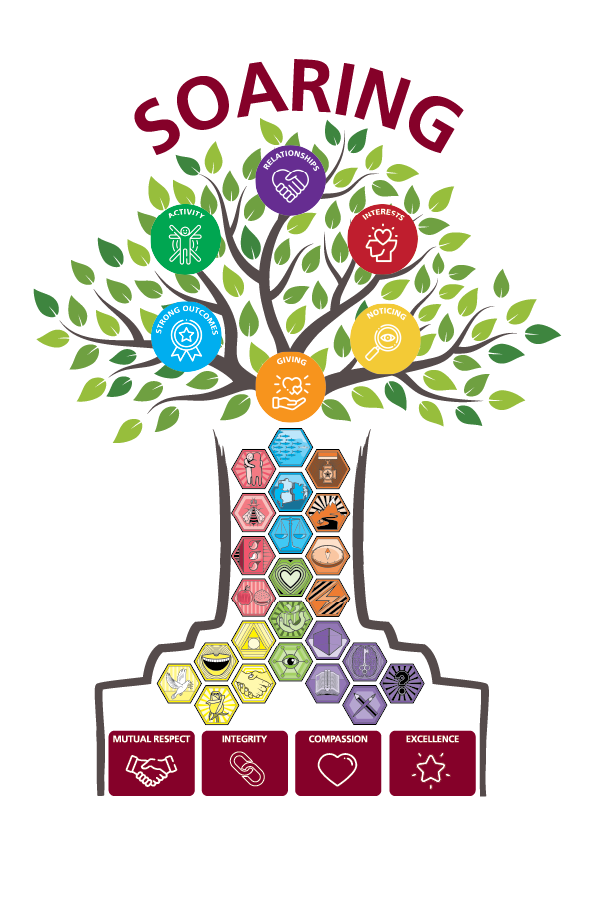
Setting & achieving meaningful goals
Establishing, striving for and achieving personal goals, in belief in oneself — important for self-esteem and wellbeing, and helping to cultivate resilience when students face challenges in life.
In a school week: goal-setting with a mentor teacher, tracking your own progress across a term, and learning to reset after a result you did not want.
Valuing physical & mental health
Valuing our physical and mental wellbeing through exercise, nutrition and sleep. Learning what it means to lead a healthy lifestyle, underpinned by positive attitudes, is vital for young people.
In a school week: timetabled sport, training after school, and honest conversations about sleep and screen time when assessment piles up.
Nurturing positive connections
Nurturing positive connections with others through relational awareness and social management — communication, collaboration, leadership, decision-making and conflict resolution.
In a school week: group work with students from other countries, and a mentor group that stays together all year. Students are taught how to repair a friendship rather than drop it.
Complete engagement — being ‘in the zone’
Experiencing moments of complete engagement in personal interests. Being ‘in the zone’ is the perfect balance of challenge and the application of key strengths and skills.
In a school week: trying a club you have never done before. Picking up an instrument. Joining a team in a sport that does not exist at home.
Self-awareness & positive emotion
Developing self-awareness and the ability to build upon positive emotional experiences — enhancing creativity, resilience, perseverance and wellbeing.
In a school week: reflection built into mentor group, and staff who are trained to see the student who has gone quiet.
Meaning, purpose & serving others
Exploring one's unique sense of meaning and purpose by engaging in experiences that let us think and feel beyond ourselves. Aligning with what we value most gives students a real sense of purpose.
In a school week: Community Care service projects, fundraising, peer mentoring, and older students looking after new arrivals.

Living far from family is the hardest part of studying overseas. We do not pretend otherwise. These are the people who will know your child by name — and who notice when a week is not going well.
Student-centric, and located in its own building on campus. Come with an academic question, come with homesickness, come for student support.
Specialist welfare staff look after each student's emotional, social and academic wellbeing through the school day, and a 24/7 emergency hotline covers anything urgent at any hour.
The same teacher, the same small group, all year. The first person to notice a student going quiet — and the first point of contact for a parent overseas.
A Health Centre and the Sister Cecily Foster Wellbeing Centre are both on campus. A student who is unwell, or having a hard week, is seen the same day.
Our international team can speak with families in Cantonese, Japanese, Korean, Mandarin and Vietnamese. No parent has to make an important decision through a translation app.
Approved host families and supervised boarding staff carry the other half of the day: meals, routines, curfews, and the trip to school each morning.
School finishes, but the day does not stop there. These are the three ways students live while they study with us.
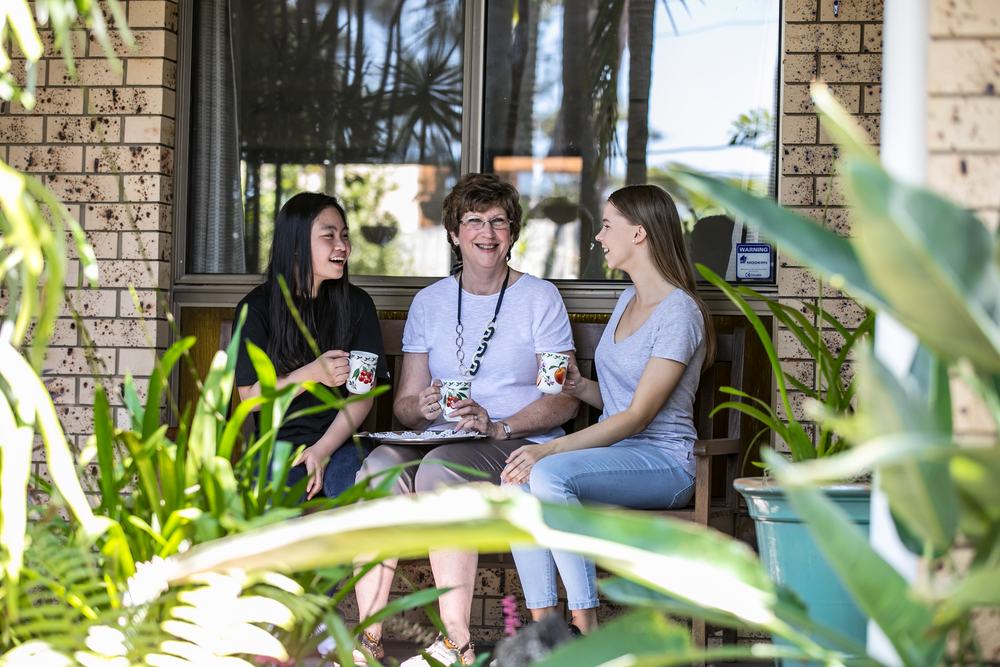 Most students
Living with an approved Australian family in a nearby suburb. Dinner at the table, English every evening, and someone at home who notices how your day went.
JPC Homestay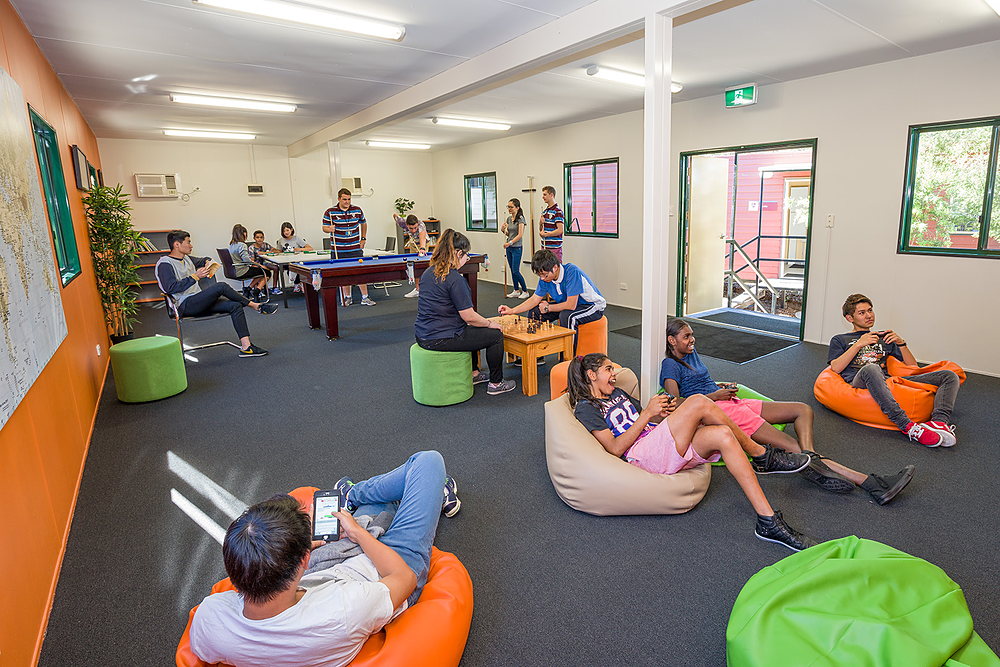 On campus
A supervised boarding village, a short walk from class. Meals, supervised study, weekend activities, and a house full of students in exactly the same position.
JPC Boarding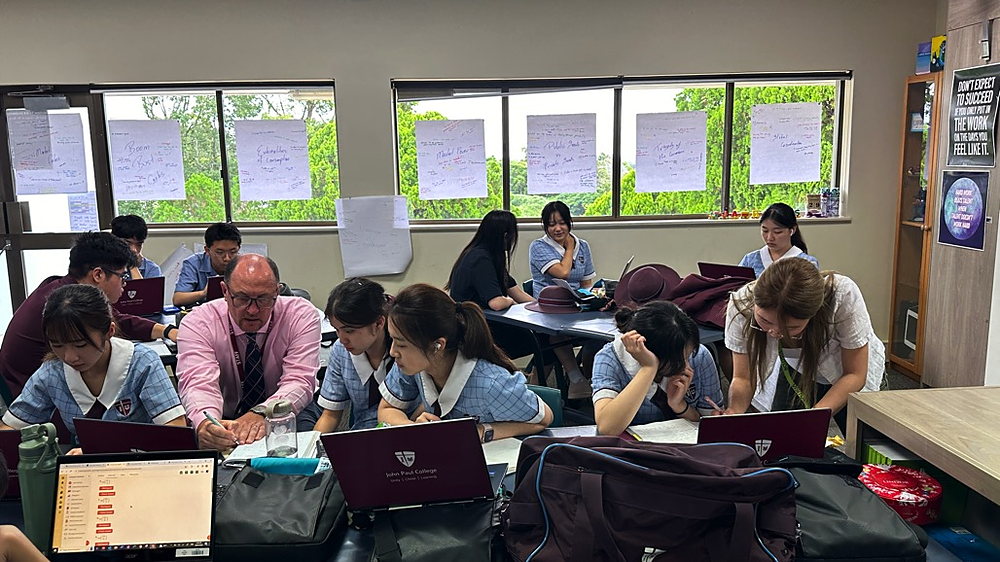 Younger students
For families who want their child supervised on campus after school — homework, activities and a safe place to be until pick-up.
Extended Day ProgramEvery one of these is a real John Paul College student or graduate. Each has their own page, and their own account of how the years went.
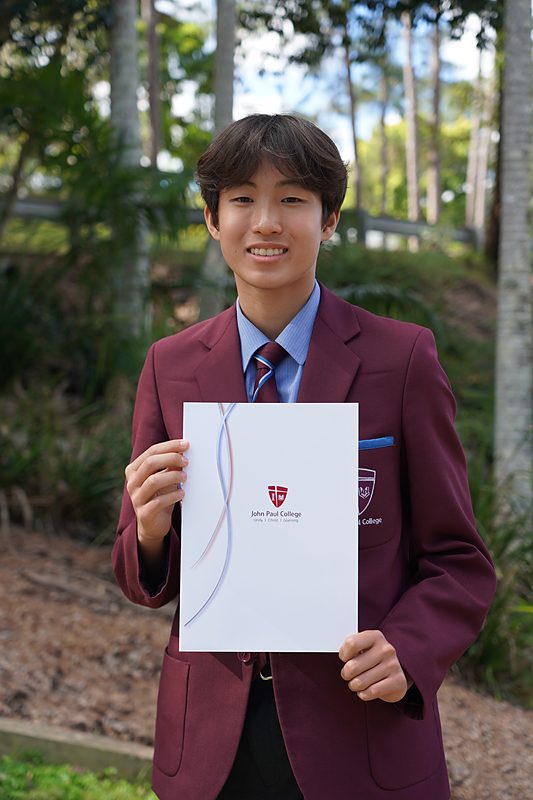 Sport
Sport
Training before class, national competition after it
Read the story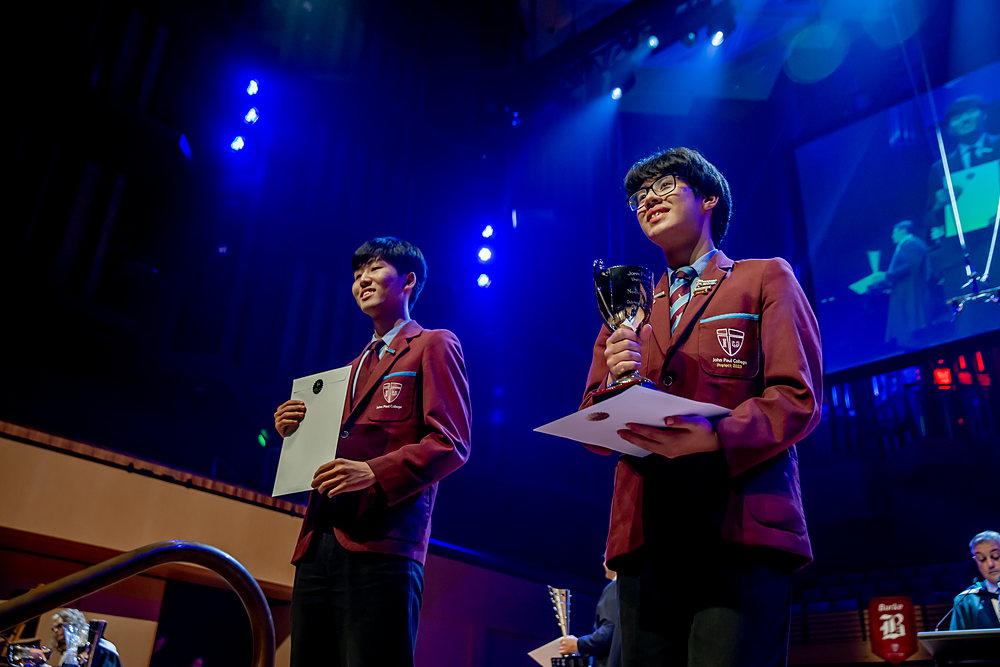 Academic
Arrived in English preparation, finished with an ATAR of 99.55
Read the story Leadership
Vice-Captain, and on to Philosophy, Politics & Economics
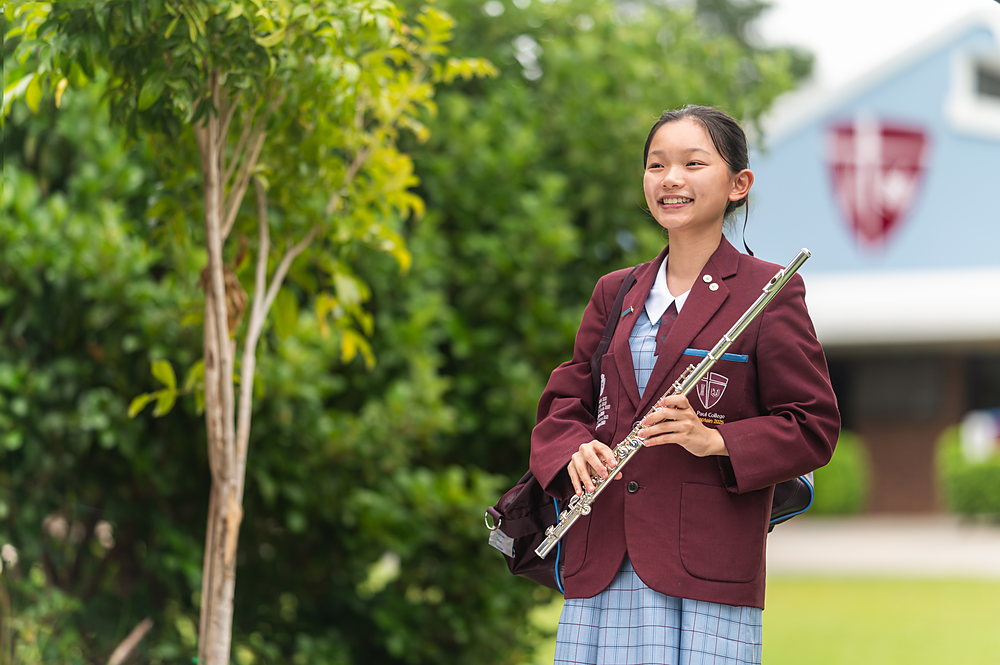
Read the story Music
Music
Rehearsal rooms at school, then the Conservatorium
Read the storyNormal school hours are 8:20am to 3:20pm. Most students arrive a little earlier to meet friends before school starts. Many stay on afterwards for sport training, music rehearsal or the Extended Day Program.
Most students eat with friends at the canteen or the JPCafe, then head outside to play football or basketball on the campus courts and ovals. The campus is 33 hectares of natural bushland, so there is plenty of room to be outside. The student-led clubs meet after school rather than at lunch.
No. Sport is encouraged but not compulsory beyond timetabled physical education. Students choose their own level. Some join an inter-school team, some train with the High Performance Academy, and some prefer the performing arts or a club. There are more than 13 inter-school sports for boys and girls, and three inter-school carnivals each year.
Support is built into the ordinary week, not added on afterwards. The International Student Services team sits on campus and works alongside classroom teachers. English language support and small-group help are available during the school day. Many students begin in a preparation program before moving into mainstream classes.
Yes. The student-led clubs run right through the year and welcome new members at any point. Inter-school sport follows the term seasons. A student who arrives mid-year joins the sport running in the term they start, and picks up the others later.
It depends on where the student lives. Sport training, music rehearsal and club activities all run after 3:20pm. Homestay students also attend the Extended Day Program on Tuesday and Thursday afternoons. After that, homestay students travel home to their host family for dinner and homework. Boarding students return to the boarding house, where supervised study, meals and weekend activities are part of the routine.
John Paul College has students from over 45 nationalities, so arriving without confident English is ordinary here rather than unusual. New students are placed in a mentor group from their first day. The SOARING wellbeing framework also makes relationships and belonging part of what is taught, rather than something left to chance.
Yes. Australian school sport runs in term seasons, not across the whole year. A student who arrives mid-year joins whatever sport is running in the term they start. They pick up the others as the year turns. Music, drama, dance and the student-led clubs run right through the year and take new members at any point.
Yes. Each sport has its own season. In Term 1 the boys play cricket and volleyball, and the girls play basketball, football and tennis. Term 2 is rugby and tennis for the boys, hockey and netball for the girls. Term 3 is basketball and football for the boys, touch football and volleyball for the girls. The three whole-school carnivals are swimming in Term 1, cross country in Term 2 and athletics in Term 3. Term 4 has no inter-school season — it is the end-of-year performance and awards run instead.
Yes, in two ways. Families who are in Brisbane can arrange a personal campus tour. Families who are still overseas can use the 360° virtual tour on this page. It walks through the classrooms, the pool deck, the theatre stage and the boarding common rooms. The full tour library is on the campus map page.