Recognised nationally
Five national awards since 2004: the IDP Award (the first school ever to win it), NEAS Gold Standard in 2018, NEAS national awards in 2021 and 2022, and an Australian Education Awards honour in 2024.
See our awards
Students can enrol at different stages and stay on one campus from start to finish. Most Korean families live in Brisbane with their children while they study.
Primary to Year 12
Ahead of the Queensland average in every NAPLAN subject at Years 3 and 5 — and, thirteen years later, our strongest median ATAR on record.
See our full results and every year since 2020Across all five subjects at Years 3 and 5 in 2026 — in their second language, with no student withdrawn or exempted.
98%
of their results were at or above the expected level
64%
were above it — ACARA level Exceeding
reach the expected level or beyond, against a Queensland average of 67%. Our results have improved three years in a row.
NAPLAN is sat by every child in Years 3, 5, 7 and 9, on the same days, right across Australia — which is what makes it comparable between schools. See the full NAPLAN detail
The ATAR (Australian Tertiary Admission Rank) is the score Australian universities use to offer places. It runs from 0 to 99.95. International students sit the same subjects and the same external examinations as everyone else. Percentages are of the known ATAR-eligible Year 12 cohort. What is the ATAR?
Thirty-three hectares in Daisy Hill, shared by children from over 45 nationalities. Sport, music, science and the pool are all a walk from the classroom — not a bus ride, not an extra fee, and not something your child has to choose between.
Five national awards since 2004: the IDP Award (the first school ever to win it), NEAS Gold Standard in 2018, NEAS national awards in 2021 and 2022, and an Australian Education Awards honour in 2024.
See our awardsOur primary school delivers the International Baccalaureate Primary Years Programme. Our secondary school follows the Australian Curriculum, then the Queensland Certificate of Education and an ATAR for university entry.
See our coursesHome of Australia’s first NEAS-endorsed Primary Preparation Course, with High School Preparation taught by our own language specialists — on the same campus your child will graduate from.
Find Your Starting PointThe Stephen Paul Aquatic Centre, the Stephen Bean Theatre, the Stephen Bowers Oval, a Science Centre, a dance studio and the Noelene Munns Learning Centre — all inside the school gate.
See the campus map13 or more inter-school sports across all four terms — and a High Performance Academy for students who pursue representative pathways at state and national level.
See the sport programAn award-winning performing arts program: bands, string orchestras, choirs and chamber groups, with lessons from Prep to Year 12. Our Korean graduate Kris played in eight ensembles.
See the music programKorean families have been choosing John Paul College for thirty years. Where your child starts depends on their English. Some students join regular classes straight away. Others begin in a preparation program, then move across when they are ready. From there the path is the same: primary school, secondary school, then Years 11 and 12. In those final two years, students work towards an ATAR. That is the rank Australian universities use to offer places — much as the 수능 does in Korea. Our graduates go on to universities in Australia and overseas. You can read two Korean students’ own stories further down this page. Find your child’s starting point below.
Every starting point has its own tuition and CRICOS code — see the full fee schedule and entry requirements.
Korean primary, middle and high school years map cleanly onto ours. The one exception is Year 12 — students do not join it part-way through, because Years 11 and 12 are a single two-year programme.
| In Korea | At John Paul College | Age on entry |
|---|---|---|
| 초등학교 1–6학년 | Year 1 – Year 6 | 6 – 11 |
| 중학교 1–3학년 | Year 7 – Year 9 | 12 – 14 |
| 고등학교 1–2학년 | Year 10 – Year 11 | 15 – 16 |
This table is a guide. Admissions confirms your child’s final placement from their school reports — and Prep, the year before Year 1, is available for children turning five.
Not sure which year level your child would enter, or what the whole journey costs?
Try the Pathway CalculatorMarks are only half of what a family is choosing. The other half is the person your child becomes — and at John Paul College that half has a name, a shape and a program.
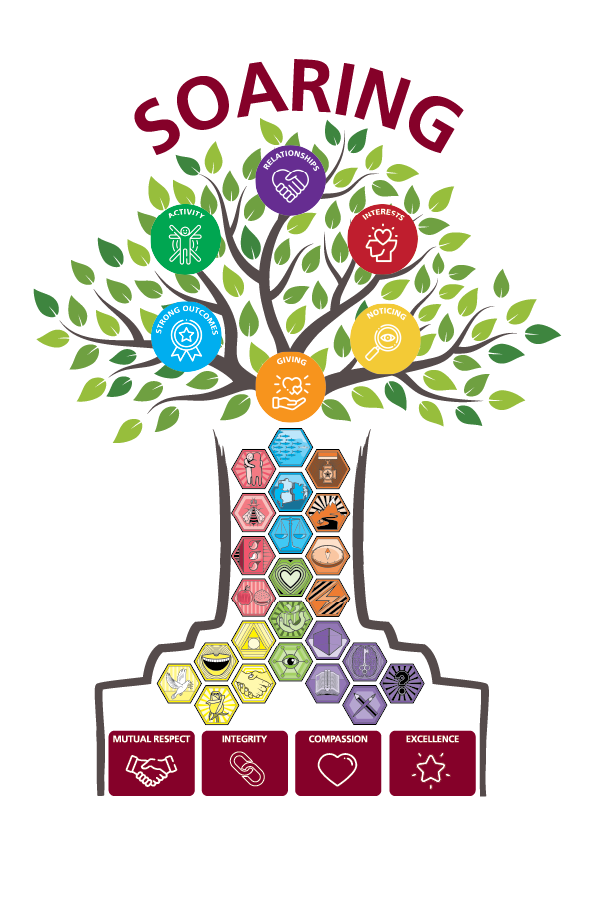
SOARING is our own wellbeing and character framework — built on Positive Psychology and taught in every year from Prep to Year 12. Select a branch of the JPC SOARING Tree to see what grows there.
Establishing, striving for and achieving personal goals, in belief in oneself — important for self-esteem and wellbeing, and helping to cultivate resilience when students face challenges in life.
Valuing our physical and mental wellbeing through exercise, nutrition and sleep. Learning what it means to lead a healthy lifestyle, underpinned by positive attitudes, is vital for young people.
Nurturing positive connections with others through relational awareness and social management — communication, collaboration, leadership, decision-making and conflict resolution.
Experiencing moments of complete engagement in personal interests. Being ‘in the zone’ is the perfect balance of challenge and the application of key strengths and skills.
Developing self-awareness and the ability to build upon positive emotional experiences — enhancing creativity, resilience, perseverance and wellbeing.
Exploring one’s unique sense of meaning and purpose by engaging in experiences that let us think and feel beyond ourselves. Aligning with what we value most gives students a real sense of purpose.
SOARING sits beside Friendology 101, an international program that teaches children how to be a good friend. Each year has its own focus — Begin, Explore, Share, Care, Think, Create, Lead.
See our primary wellbeing program Years 7 – 12SOARING carries twenty-four character strengths through the years when confidence is decided. Students learn to name what they are good at, and to practise it.
See our secondary wellbeing programFor a child who will study, work and lead in a second language, this is not a soft extra. Confidence, teamwork and the willingness to speak up are what turn good marks into real opportunities.
Once a family decides on the school, the next question is always the same: where would we live? John Paul College sits in Daisy Hill, at the southern edge of Brisbane. Everything below is within about thirty minutes of the school gate — including a Korean-speaking community with its own supermarkets and restaurants.
Tap a numbered pin — or its row in the list — to see what is there.
The nearest suburb to the campus, and the one most of our staff would name first if you asked where to start looking. Everything a family needs day to day is here, and the school run is barely a journey at all.
A settled residential suburb, sitting between the school and the Sunnybank side of the corridor. It is a common choice for families who want a short school run and easy access to Asian grocers and restaurants.
The newest housing in the area, built as planned estates rather than grown over decades. Families who want a modern house with a garden, close to the school, tend to look here first.
A full regional shopping centre — the place families go for the weekly shop, a haircut, a phone plan and a Saturday afternoon film, all in one trip.
One of the most international suburbs in Brisbane — more than half of its residents were born overseas, and Korean is one of the languages most spoken at home. If you would like Korean-speaking neighbours, this is one of the two places to look.
Immediately next to Sunnybank, and popular with families who want to be close to that community without being in the middle of it. A quieter, more residential street pattern.
Westfield Garden City at Mount Gravatt is the largest shopping centre on Brisbane’s south side. Most families in this part of the city come here for anything they cannot buy locally.
The centre of Asian life in Brisbane, and the reason many families tell us the move felt easier than they expected. You can do a full Korean grocery shop, eat Korean food, and hear your own language spoken — twenty minutes from the school gate.
A real capital city, but a manageable one — safe, walkable and small enough that a family finds its way around within a fortnight. It is close enough to enjoy and far enough that your child grows up with grass and trees.
Drive times are approximate and depend on traffic. College bus services and TransLink public transport cover this area. Our International Team will confirm which routes reach the address you are considering, before you sign a lease.
One parent comes too, and the family lives in Brisbane while their child studies. You will not be the first: there is an established community of guardian parents at the College.
Visa decisions are made by the Australian Department of Home Affairs, not by the College, and the rules change from time to time. Please treat this as an orientation rather than as advice — our International Team will confirm what applies to your child’s age and your family’s situation before you apply.
Ki Sung-yueng 기성용 did not arrive with perfect English. He started at John Paul International College, in the same preparation courses your child would take.
He graduated from John Paul College in 2006. He went on to play for the South Korean national team at the 2012 London Olympics. He captained his country at the 2015 AFC Asian Cup. He played in the English Premier League.
At school everyone knew him as David. In 2024 he came back to walk the campus again. In this short film he talks about his years here, and leaves a message for the students coming after him.
The preparation courses are not a lesser route into the College. They are where he began. Find your child’s starting point.
One arrived for the secondary years and one grew up here. Both left for an Australian university.
You do not have to work this out on your own. Tell us where your child is now, and we will help you find the right year level, the right entry route and what it costs.
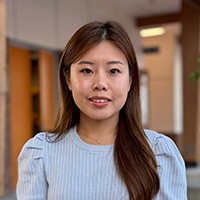
Soo Kim can talk you through the application, the year level and the paperwork in your own language. Ask her anything — there is no such thing as too early.
We reply within two business days.
Brisbane is one hour ahead of Seoul, and neither Korea nor Queensland changes its clocks during the year, so the one-hour gap holds all year. You can call your child after school, every day, without either of you doing arithmetic.
Incheon to Brisbane is a direct flight of about nine and a half hours. There is no transit, no changing planes in another country and no overnight stop with a tired child. Grandparents can visit without it becoming an expedition.
Yes. Soo Kim, EA to the Deputy Principal, International & Accommodation, speaks Korean, so you can ask your questions and read our answers in your own language. You can also apply through an education agent in Korea if you would rather work with someone locally — see the authorised agents.
The Queensland school year runs from late January to early December, in four terms. A child finishing the Korean school year in February arrives at a natural break, near the start of our Term 1. See our term dates.
There are four intakes a year — January, April, July and October. The Queensland school year runs from late January to early December, in four terms. See our term dates.
No external English test result is required to apply through the Primary School Preparation pathway. Direct entry to Primary School is for children whose English and school reports already meet the College benchmarks. See the entry requirements.
Primary School tuition is A$29,500 per year for 2027. Primary School Preparation, for children who need English support first, is A$8,575 per term. Other one-off and annual fees apply — see the full fee schedule.
Years 7 to 10 tuition is A$34,300 per year for 2027. Years 11 and 12 is A$34,900 per year. High School Preparation, for students who need English support first, is A$8,575 per term. Other one-off and annual fees apply — see the full fee schedule.
Most settle in the suburbs south of Brisbane between the school and the city. Sunnybank and Eight Mile Plains both have an established Korean-speaking community with Korean supermarkets and restaurants. Eight Mile Plains is about twelve minutes from the school gate by car, and Sunnybank about twenty.
Tell us about your child and our International Team will guide you, step by step — primary or secondary, entry route, year level, fees, and where other Korean families have settled. There is no cost, and no obligation to apply.