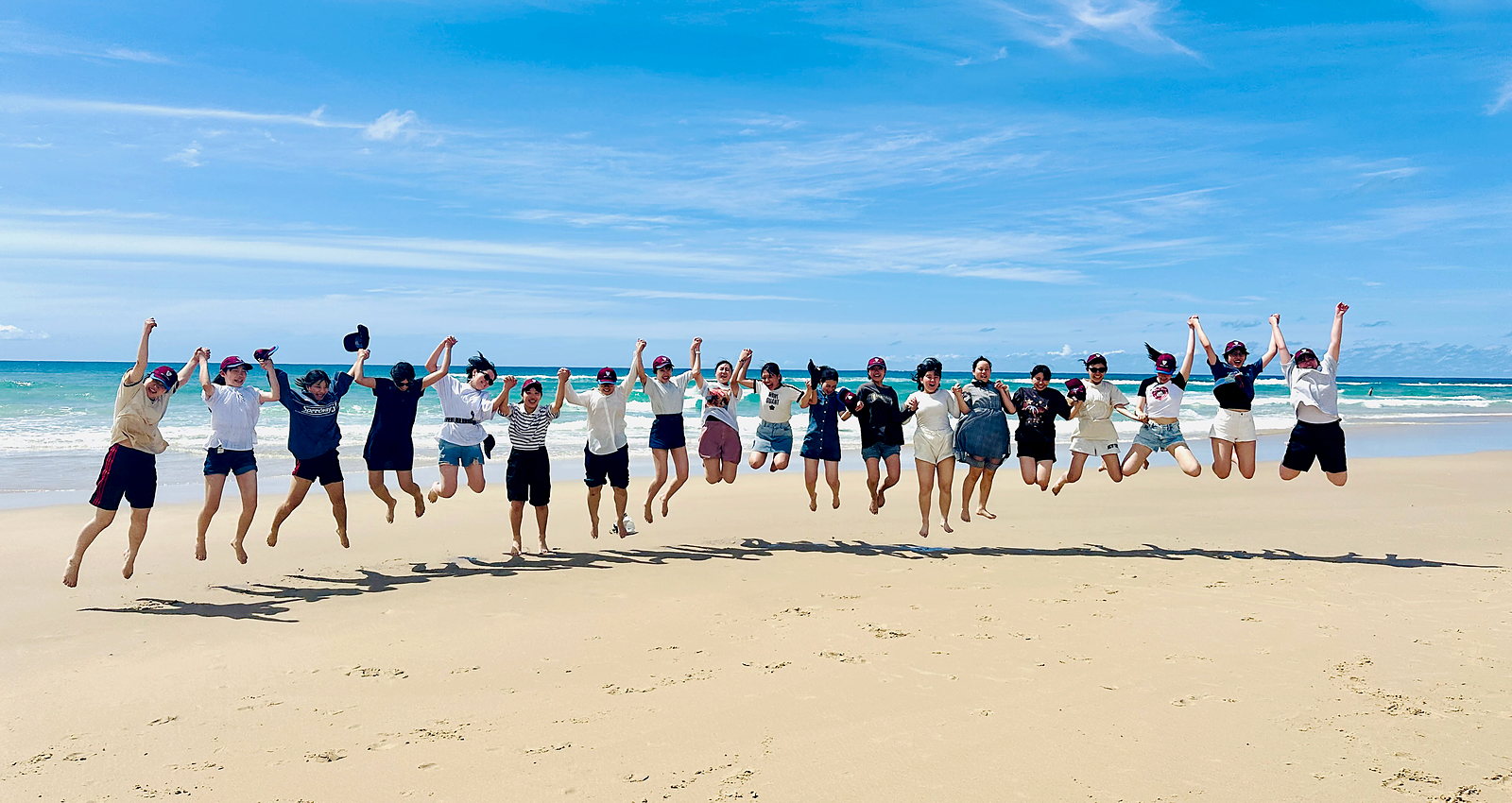
International students jumping in the air together on a wide white-sand Queensland beach with turquoise water behind them
Study Abroad in Queensland, Australia

One Term. One Semester. One Year.

Join real classes, play in real teams, and experience Australian culture with a local host family.

The Sunshine State

Beautiful, sunny Queensland — and John Paul College right in the middle of it

Queensland is the warm, north-eastern corner of Australia — and it keeps the same seasons as Chile. John Paul College sits in Daisy Hill, between the city of Brisbane and the Gold Coast, with koalas in the trees beside the campus and surf beaches 45 minutes away. For 30 years we have welcomed students from other countries, for a term, a semester or a full year.

  • BNE ——:—— SCL ——:—— Brisbane and Santiago, 13–14 hours apart
  • Same seasons Summer starts in December, just like home
  • 2032 Host city of the Olympic and Paralympic Games
  • Top 30 Brisbane’s place among the world’s student cities

Summer (December–February) 27–30 °C · Winter (June–August) 20–23 °C · no snow, and sport outdoors in every term. Queensland does not use daylight saving, so the difference with home never changes through the year.

Tap a numbered pin — or its row in the list — to see what is there.

1 2 3 4 5 John Paul College
South-east Queensland. The gold lines are the routes behind the travel times, and the pulsing pin is the College. Every number matches a row in the list.

Distances and travel times are approximate, by road unless noted. The map is a simplified illustration, not to scale.

The Campus

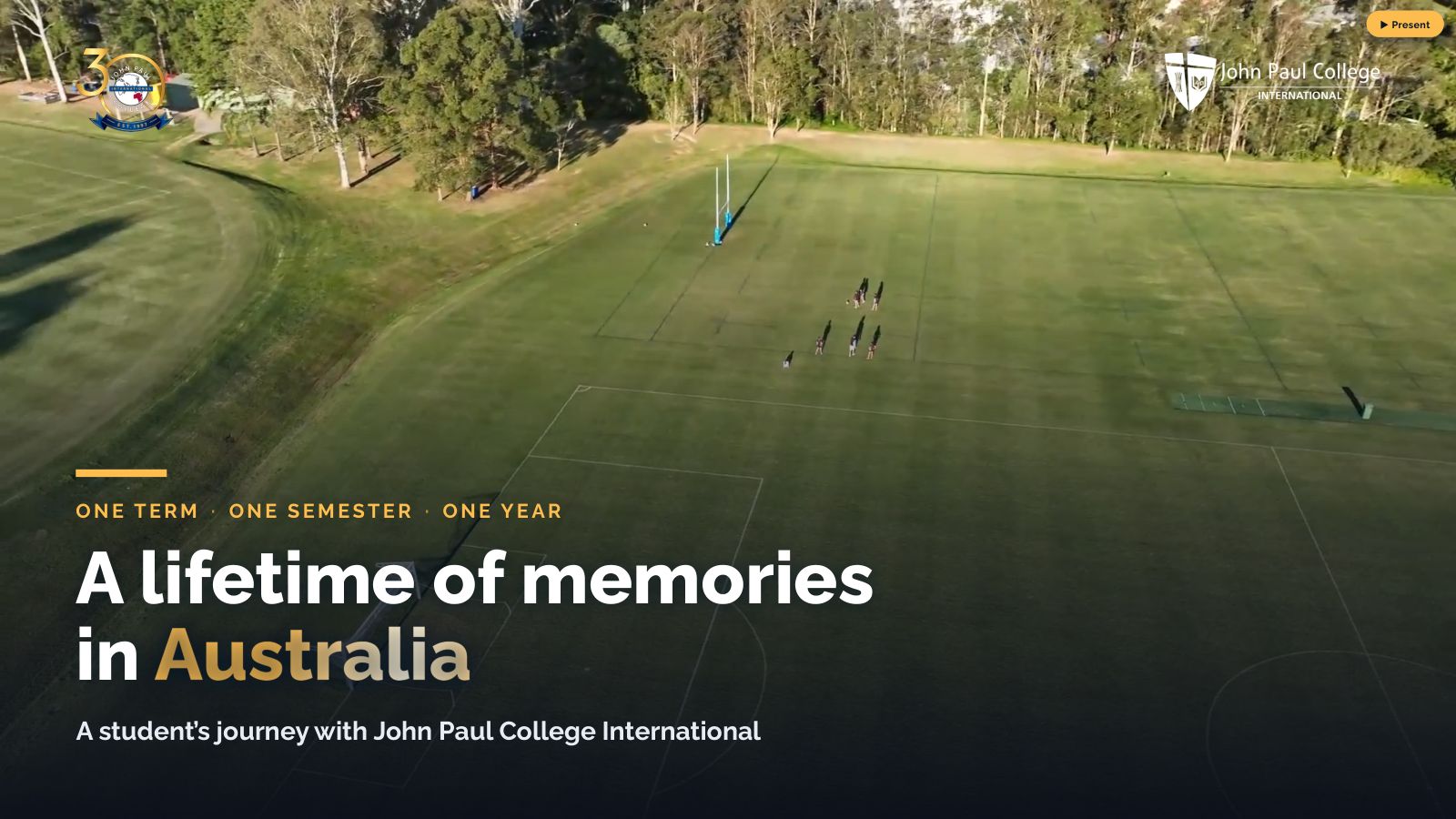
Thirty-three hectares of Australian bushland — see it from the air

You cannot fly here to look first. So here is the ground itself: everything inside the gold line is ours. Open a film to fly across it.

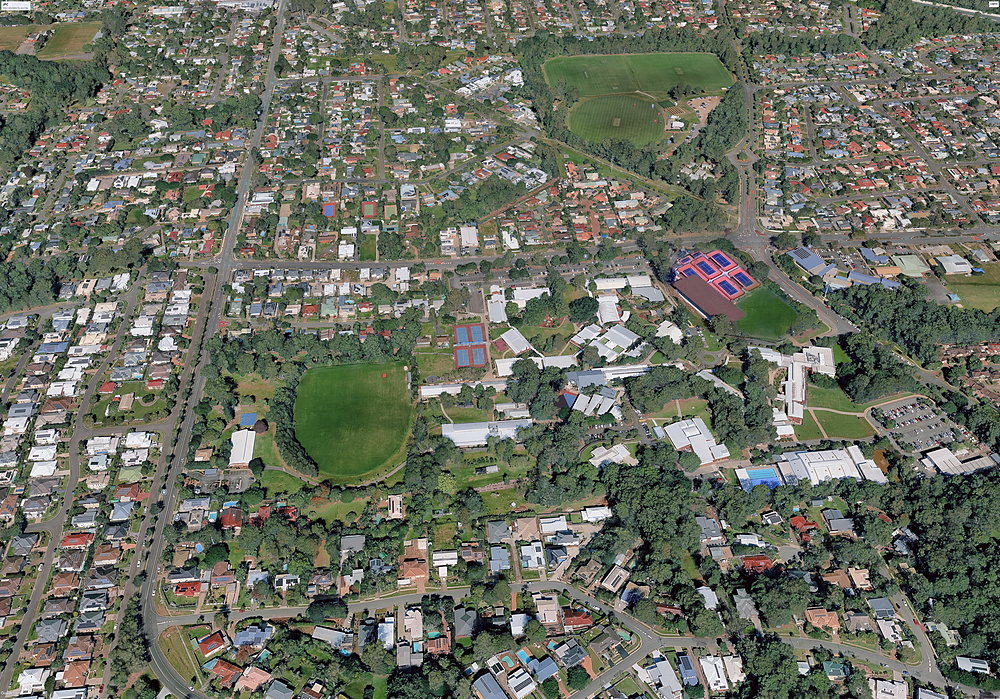
Aerial view of the John Paul College campus at Daisy Hill, its playing fields, courts and buildings set among trees, with the College grounds outlined in gold

Want to look inside the buildings? Walk the campus in 360°

Everything inside the gold line is ours — two ovals, courts, a theatre, an aquatic centre and bushland, on one campus from Kindergarten to Year 12 at Daisy Hill, Brisbane.
2027 & 2028 Intakes

All inclusive.

These are the College’s published fees, in full. The uniform, a school laptop, the airport pick-up, every sport and club, afternoon care and meals every day of the week are already inside the number — families comparing schools usually find those extras arrive later. Here there are none, and every line is set out below so you can check it.

One term

About 10 weeks — a full Australian school term

A$17,300

CLP 11,600,000indicative only

Everything included, arrival to departure

  • Tuition — one termA$9,300
  • Homestay, full board — one termA$6,500
  • Application fee — one-offA$500
  • Student welfare — one-offA$1,000
  • Uniform, laptop, sport, clubs, Extended Day ProgramIncluded
  • Start at the beginning of any term in 2027 or 2028
  • Years 7 to 11
One semester

Two terms, about 20 weeks — half an Australian school year

A$31,200

CLP 21,500,000indicative only

Everything included, arrival to departure

  • Tuition — two termsA$17,150
  • Homestay, full board — two termsA$12,550
  • Application fee — one-offA$500
  • Student welfare — one-offA$1,000
  • Uniform, laptop, sport, clubs, Extended Day ProgramIncluded
  • Semester 1 = Terms 1 & 2 · Semester 2 = Terms 3 & 4
  • Long enough to earn a full report card and real friendships

All fees are in Australian dollars (AUD) and are the College’s published 2027 rates — the same figures as the full fee schedule. The peso amounts are indicative only, converted at about A$1 = CLP 680 and rounded, as at 3 September 2026. Exchange rates move daily — fees are charged in Australian dollars, and the AUD figure is the amount payable. International flights, the Australian student visa and Overseas Student Health Cover (OSHC) are arranged separately, because all three are bought before your child leaves Chile. Working with an agency or a partner school? Agreed rates are handled directly — contact our team for a quote.

What the price covers

In the order it happens — from the arrivals hall in Brisbane to the departure gate.

  • Airport transfers, both waysMet at Brisbane Airport on arrival and driven to the host family — and taken back for the flight home.
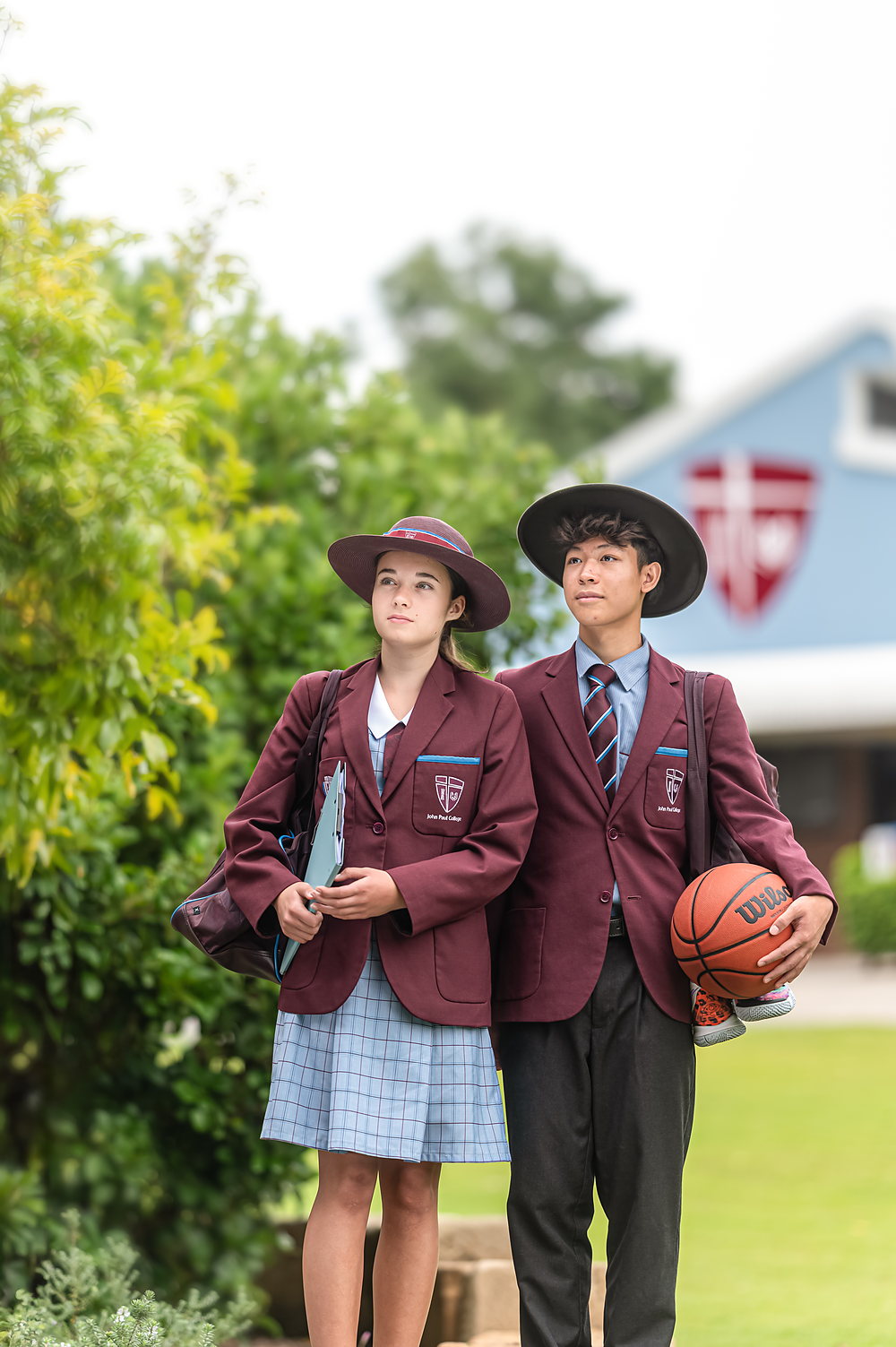
  • The full JPC uniformThe complete uniform, not a partial set. Fitted here, and it goes home with your child.
  • A school laptopIssued by the College and used for the whole program.
  • Tuition and an end-of-program report cardTaught by fully qualified Australian high-school teachers, with real evidence to take back to school in Chile.
  • Every sport, stage and clubFull co-curricular access from the first week — nothing extra to pay, and nothing to audition for.
  • JPC Premium HomestayA single room with a checked, trained and visited Australian host family, for the whole stay including term breaks.
  • Three meals a day, every dayBreakfast, a packed school lunch and dinner with the family — weekends and holidays included.
  • The Extended Day ProgramTuesday and Thursday, 3:30–6:00pm, with supervised study and a community dinner. Home by 6:30pm.
  • Student welfare support, 24 hours a daySpecialist welfare staff for students under 18, and someone to call at any hour, any day.

Arranged separately: international flights, the Australian student visa, and Overseas Student Health Cover (OSHC) — the health insurance every international student in Australia must hold. All three are bought before your child arrives, and we walk you through each one.

When your child can start

Students normally begin on the first day of a term. Tell us which weeks suit your family and we will match them to an intake.

2027Confirmed dates

  1. Term 127 Jan – 25 Mar 2027
  2. Term 213 Apr – 18 Jun 2027
  3. Term 313 Jul – 17 Sep 2027
  4. Term 45 Oct – 26 Nov 2027

Semester 1: 27 Jan – 18 Jun  ·  Semester 2: 13 Jul – 26 Nov

2028Indicative

  1. Term 127 Jan – 31 Mar 2028
  2. Term 217 Apr – 23 Jun 2028
  3. Term 317 Jul – 22 Sep 2028
  4. Term 43 Oct – 24 Nov 2028

Semester 1: 27 Jan – 23 Jun  ·  Semester 2: 17 Jul – 24 Nov

2028 dates are indicative and yet to be confirmed. They follow the settled Queensland term pattern and are published for early planning only — please confirm with the College before booking flights or accommodation for 2028. All term dates, 2026–2028.

Start Your Application How to Apply

JPC Student Life

From sunrise to bedtime, this is the day

8:20 to 3:15 is school. The rest, your child builds.

Classes run from 8:20am to 3:15pm, Monday to Friday. That part is the same every day. Everything around it — the early training, the club at lunch, the afternoon after 3:15 — is your child’s own.

The day below plays on its own. Press pause at any moment, or step through it yourself.

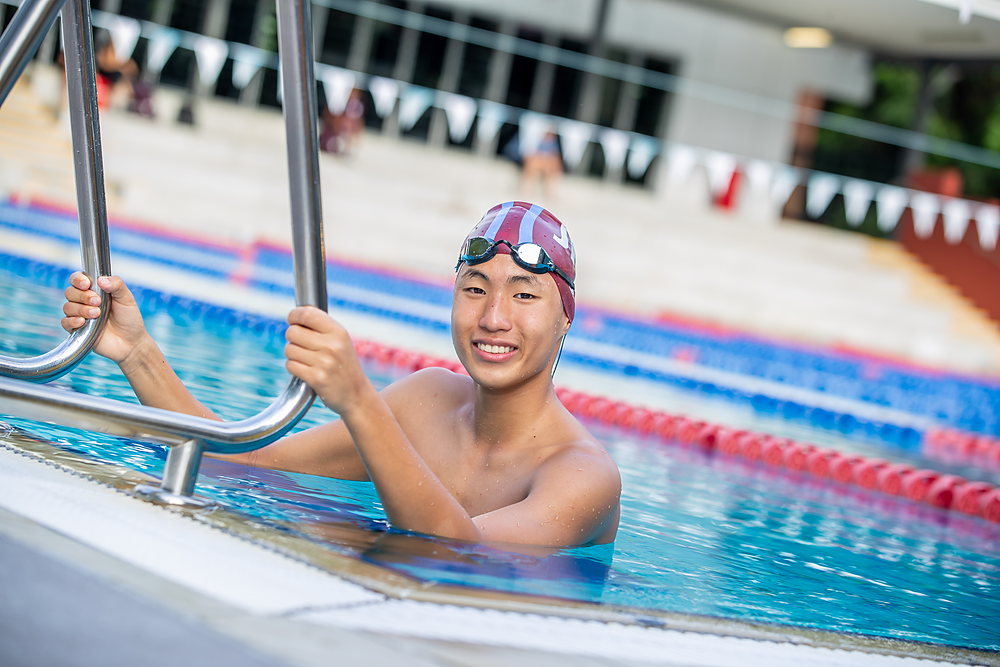
A John Paul College student training with the swim squad in the College pool early in the morning Before school

The day starts well before roll-call

Some students are already here. Swim squads train from about 6:30am. Musicians practise, teams warm up, and plenty of people simply arrive early to find their friends before roll-call.

Why it matters: a sport, an instrument, something your child chose. That is the part students remember years later.

See what is on offer
Watch a real term

They did exactly this day, in Spanish and Portuguese

Maria, Julia and Gustavo came from São Paulo. Same uniform, same 8:20 roll-call, same host families — and they tell it themselves, without a script.

Read their full story
Saturday & Sunday

Weekend with homestay

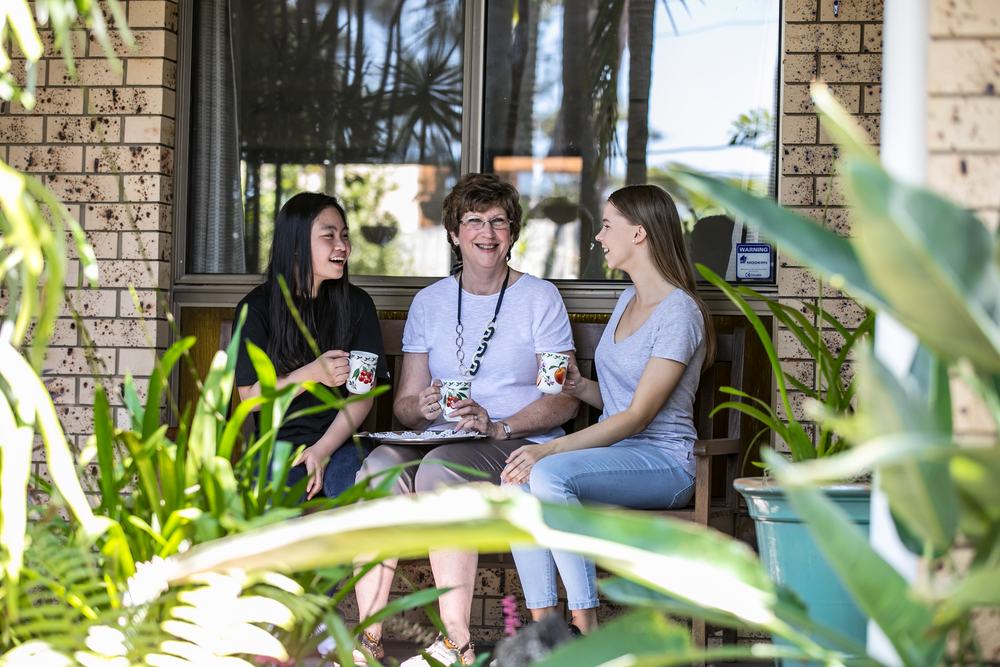
Weekends belong to the host family. There is no College program to join and nothing to pay for. Your child is simply part of the household — which is where the second family actually forms.

An international student sitting and talking with her Australian host family on the veranda at home Saturday

Sport in the morning, family in the afternoon

Many students play an inter-school fixture on Saturday morning, in College colours, with their family on the sideline. After that the day is the family’s: the markets, a barbecue in the backyard, a cousin’s birthday, a film at home.

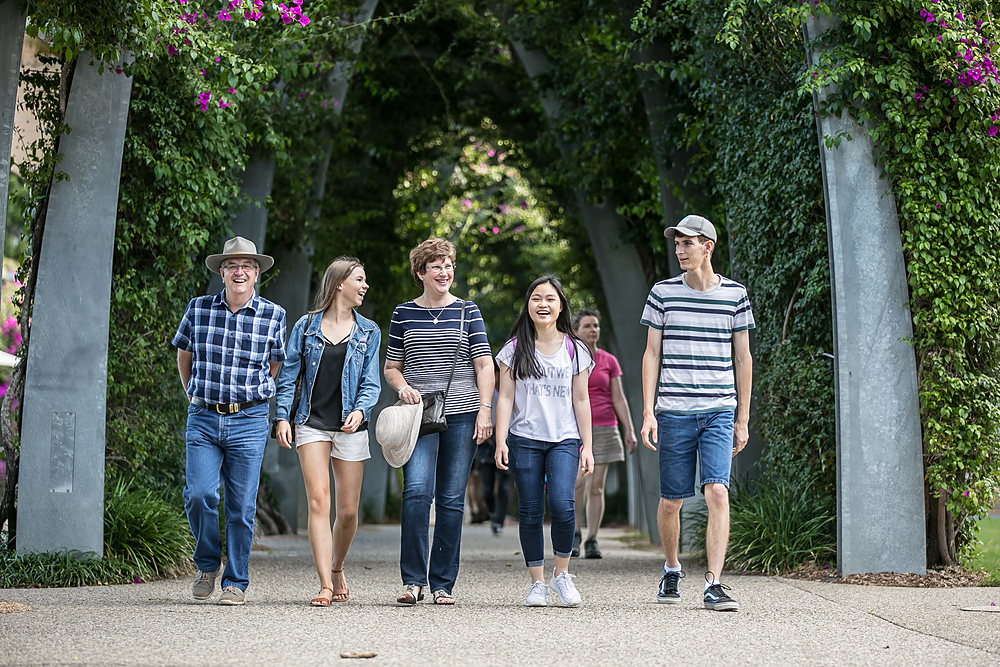
A host family walking with their two international students under the flowering arbours at South Bank in Brisbane Sunday

The day trips that end up in the photographs

The coast is about 45 minutes away. So are the koalas at Daisy Hill, South Bank in Brisbane, and the walking tracks in the hills behind the College. Students come home describing the Sundays, not the classrooms.

Host families are chosen, trained, visited and supported by the College’s own homestay team — and someone from JPC can be reached 24 hours a day, every day of the week, including the weekend.

Your Classes

What can you study at John Paul College?

Whatever the rest of the class is studying. There are only two things to work out — which subjects, and which year level.

1

Which subjects?

Four core areas everyone takes, then electives you choose on arrival.

  • EnglishLiterature, writing and speaking
  • MathematicsSet by level, so the work fits
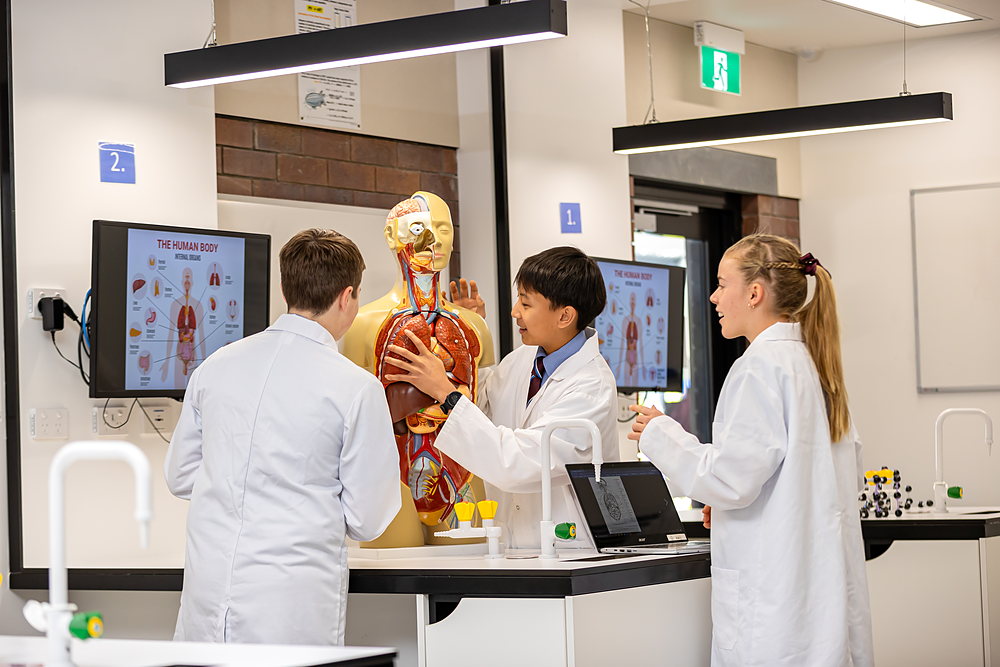
  • SciencesBiology, chemistry and physics
  • HumanitiesHistory, geography, Australian society
  • BusinessEconomics and accounting
  • Technology & DesignDigital, engineering, food, design
  • The ArtsMusic, drama, dance, visual art
  • Health & PEOutdoors, in every term

Core — everyone takes these    Elective — you choose

2

Which year level?

Find your child’s Chilean year on the left. Select a row to open that year level in a new tab.

Study Abroad runs from Year 7 to Year 11 — Year 12 is Australia’s final senior year, assessed across the whole year, so it cannot be joined for a term. A planning guide only: Admissions confirms placement from age, school reports and English level before you commit to anything.

  • A term is about ten weeks

    Long enough for real friends and real progress in English. Our year runs late January to early December, in four terms.

  • Same seasons as home

    December and January are summer in both countries, so the school years line up more easily than they would in Europe.

  • Straight into normal classes

    Entry is around CEFR B1 (about IELTS 5) — a level most Chilean students already exceed.

See Every Subject On Offer See the academic details

JPC Premium Homestay

Experience Australian culture with a local host family

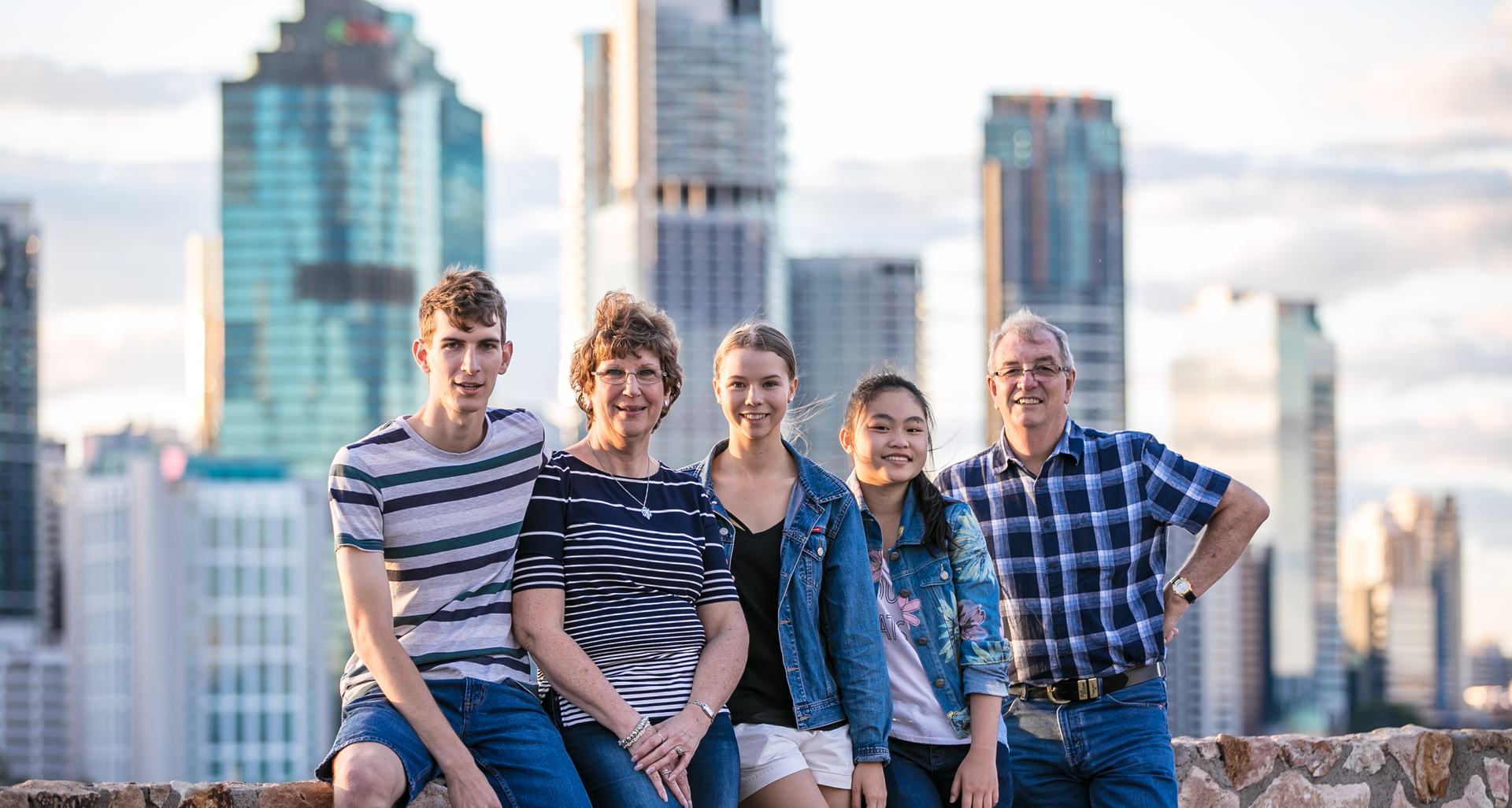
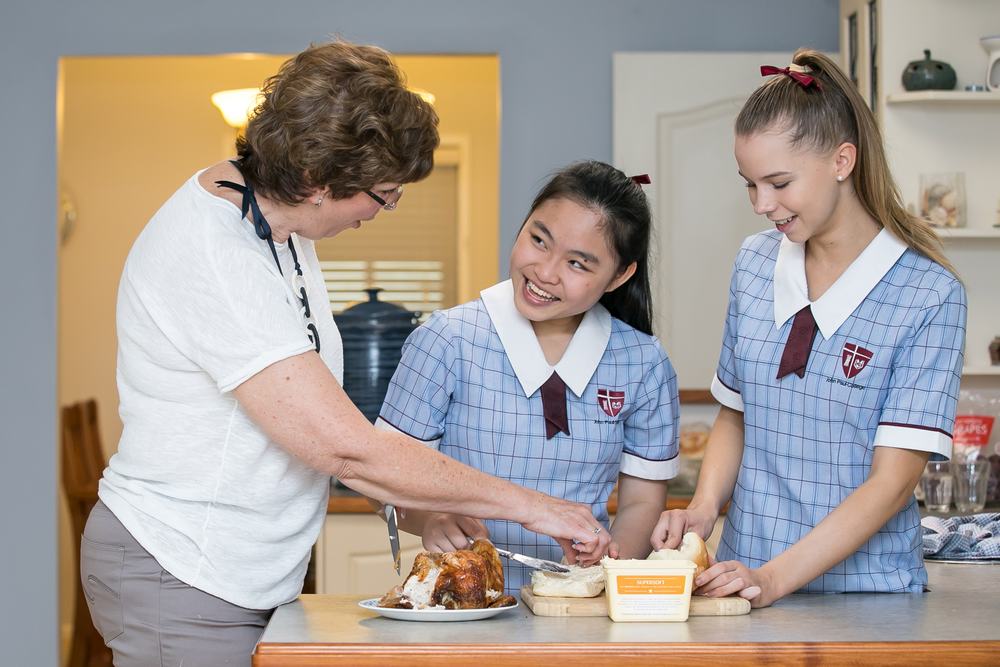
This is the part a hotel and a tour bus can never give you. Your child lives inside an ordinary Australian home — the Saturday barbecue, the drive to the beach, the football on the television, the jokes at the dinner table. English stops being a subject and becomes the way the house talks.

An international student with her Australian host family above the Brisbane city skyline
  • An ordinary Australian home

    Full board and your own room, with a family who has been checked and visited before any student is placed.

  • English at the kitchen table

    The fastest progress our students make is not in class. It is the hour after dinner, talking about nothing in particular.

  • Someone to call, 24 hours a day

    The JPC CARE framework, plus specialist welfare staff for students under 18.

  • Weekends that belong to the family

    The coast, a sanctuary, a cousin’s birthday, the markets. Students come home describing the Sundays, not the classrooms.

See Premium Homestay See the Extended Day Program

Comprehensive Co-Curricular

Every sport, every stage, every club — already in the fee

You join in your first week, on the same terms as everyone else. Nothing extra to pay, nothing to audition for.

  • 13+Inter-school sports
  • 6Student-led clubs
  • Prep–12Performing arts
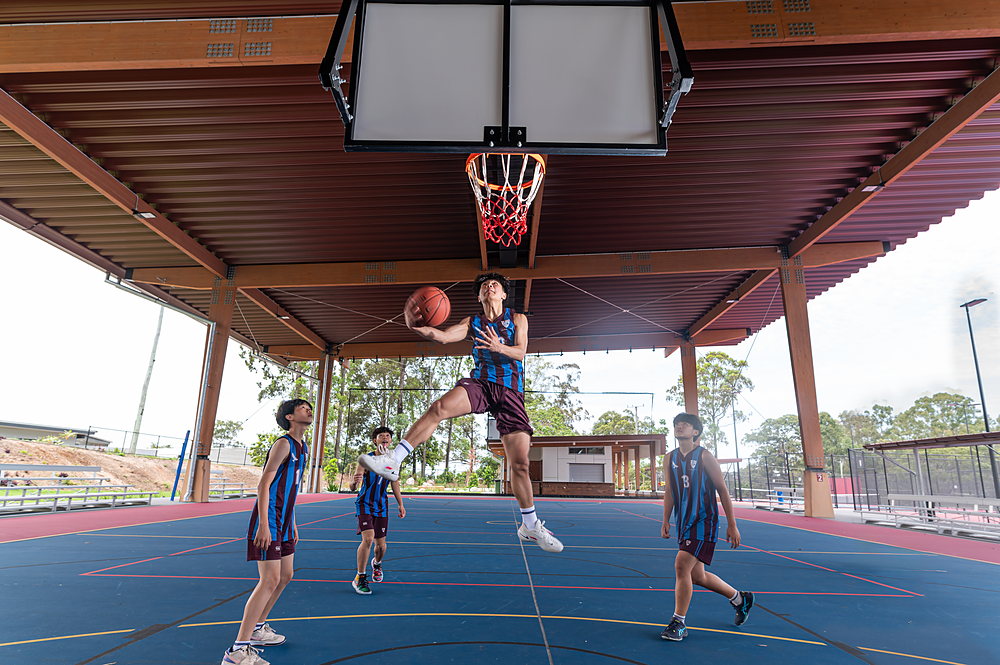
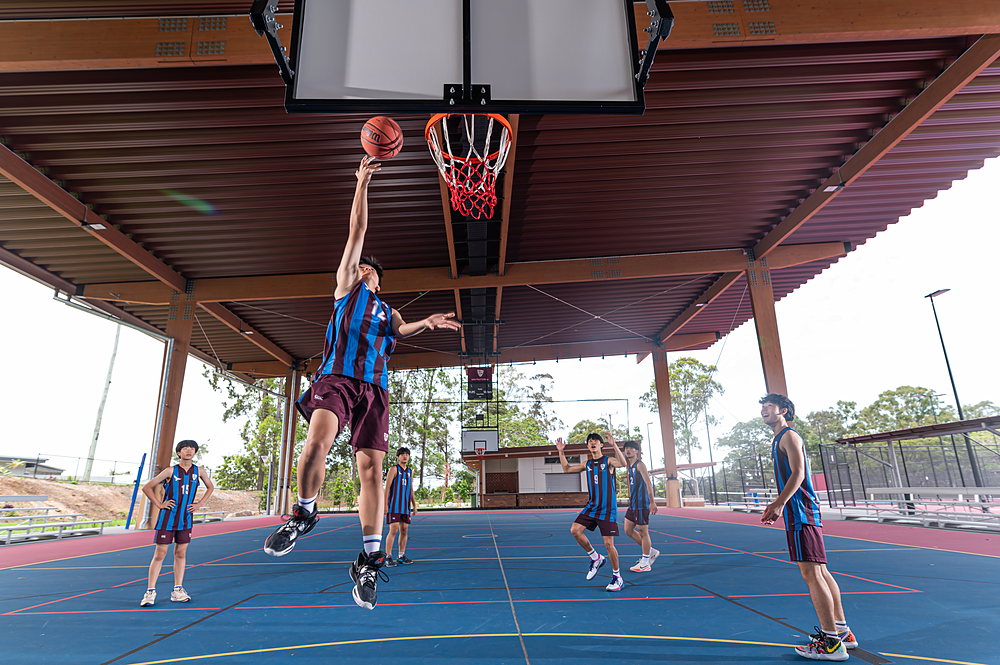
  • John Paul College students playing an inter-school basketball match Basketball
  • A John Paul College swimmer racing in the College aquatic centre Swimming
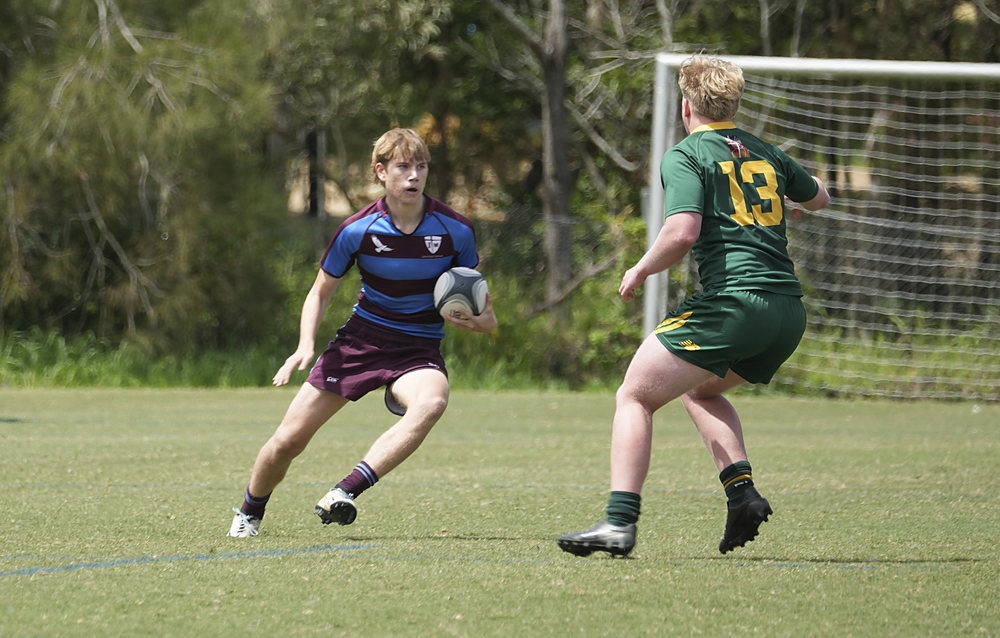
  • John Paul College students in a rugby match in College colours Rugby
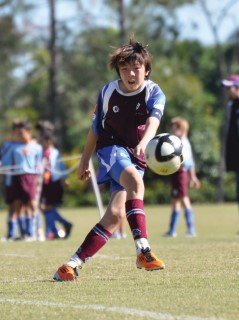
  • John Paul College students playing football on the College oval Football
  • John Paul College dance students performing on stage Dance
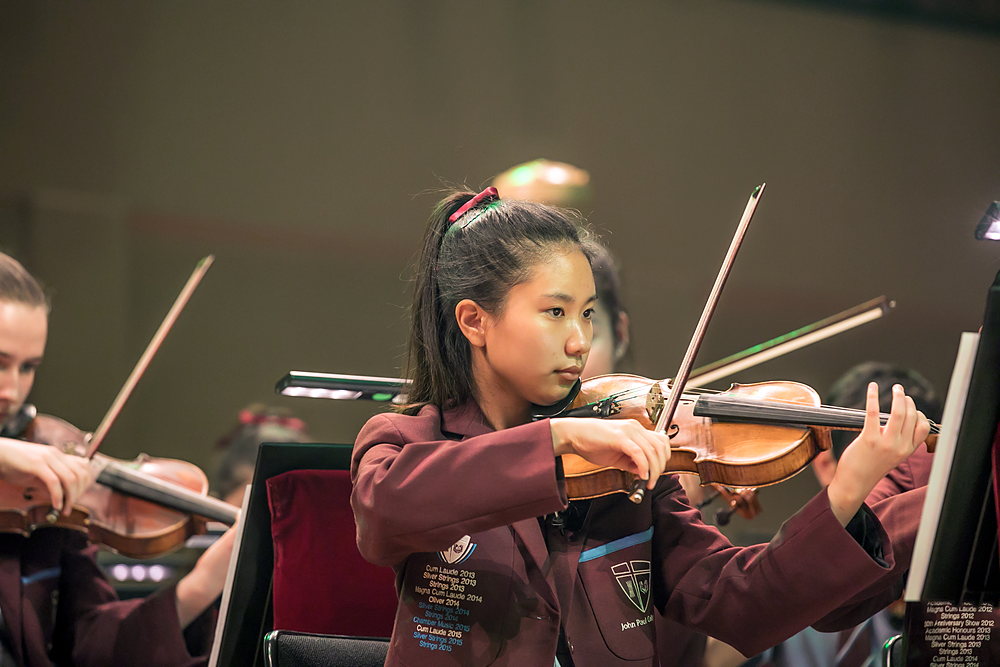
  • John Paul College string players performing in a College ensemble Strings & bands

Play for the College

Thirteen inter-school sports, boys and girls, every term.

  • Volleyball
  • Football
  • Basketball
  • Swimming
  • Rugby

Or take a stage

Bands, choirs, dance and drama — in a real theatre.

  • College Musical
  • Bands
  • Dance
  • Art Club
  • Esports
How to Apply

Four steps, from your first question to the airport

1

Ask us anything

Tell us your child’s year level and when you would like them to come. Your agency in Chile can do this for you.

2

Pick the dates

We match a length of stay and a start date to your family’s plans and the Chilean school calendar.

3

Land and be met

We meet the flight, take your child to their homestay family, and settle them into class.

4

Live it

Then come home with stronger English, a report card, and a second family on the other side of the world.

Start Your Enquiry See term dates and start dates See the full application process

Questions Families Ask

The practical answers

Where exactly is John Paul College in Australia?

In Daisy Hill, on the east coast of Australia, in the state of Queensland. It sits between the city of Brisbane and the Gold Coast beaches — about 25 km from central Brisbane and about 50 km from the Gold Coast surf.

How long can my child come for?

Two lengths are published: one term (about ten weeks) at A$17,075, and one semester — two terms, about twenty weeks — at A$32,650. Both are for Years 7 to 11, and both include everything from arrival in Australia to departure. Many families start with one term and decide from there. Longer or shorter stays can be arranged; ask us for a quote.

What is included in the fee?

The published fees are A$17,075 for one term and A$32,650 for one semester, in Australian dollars. One term is tuition A$9,300, homestay A$6,275, a one-off A$500 application fee and a one-off A$1,000 student welfare fee — a semester doubles the tuition and homestay only, because the two one-off fees are charged once. It covers everything from arrival to departure — airport transfers both ways, the full uniform, a school laptop, tuition and a report card, every sport and club, JPC Premium Homestay with three meals a day, the Extended Day Program, and 24-hour student welfare support. Flights, the student visa and Overseas Student Health Cover (OSHC) are arranged separately, because all three are bought before your child arrives in Australia. See what the price covers.
When can my child start, and how do I pay?

Students normally begin on the first day of a term. A semester is Terms 1 and 2, or Terms 3 and 4.

2027 intakes — confirmed
Term 1: 27 January – 25 March  ·  Term 2: 13 April – 18 June
Term 3: 13 July – 17 September  ·  Term 4: 5 October – 26 November

2028 intakes — indicative
Term 1: 27 January – 31 March  ·  Term 2: 17 April – 23 June
Term 3: 17 July – 22 September  ·  Term 4: 3 October – 24 November

The 2028 dates follow the settled Queensland term pattern and are yet to be confirmed — please check with us before booking flights. Fees are A$17,075 for a term and A$32,650 for a semester, with nothing further to pay once your child is here. See what the price covers.
What English level does my child need?

Around CEFR B1 — about IELTS 5 — for Years 7 to 11. Most Chilean students already exceed this and join mainstream classes from the first day.

What is the weather like?

Brisbane is warm almost all year. Winters are mild and dry, so sport is played outdoors in every term and the beaches are usable for most of the year.

Where will my child live, and who looks after them?

With a caring, JPC-approved Australian family in JPC Premium Homestay — full board and a single room. Support is available 24 hours a day, with specialist welfare staff for students under 18. See Premium Homestay.

What time does the school day start and finish?

Classes run from 8:20am to 3:15pm, Monday to Friday, and students must be on campus before roll-call. Some sports train before school from about 6:30am. Sport, music and clubs run after 3:15pm, and homestay students also attend the Extended Day Program on Tuesday and Thursday afternoons.

What does a typical week look like?

Every week has the same shape, but the activities are your child’s own choice. Classes run 8:20am to 3:15pm in mainstream Australian classes. Some sports train before school. After 3:15pm students choose from more than 13 inter-school sports, performing arts and six student-led clubs, all included in tuition. On Tuesday and Thursday, from the second week of term, homestay students attend the Extended Day Program for supervised study and a community dinner, and are driven home by 6:30pm. Weekends are free time with the host family. See the week hour by hour.

What happens after school?

The Extended Day Program runs on Tuesday and Thursday afternoons, from the second week of each term, finishing at 6:00pm — supervised study with academic mentors, wellbeing activities and a staff-prepared community dinner, with transport home by 6:30pm. It is included in Premium Homestay. See the Extended Day Program.

Can a group of students come together?

Yes. If an agency or a school is placing three or more students starting at the same time, we have separate group arrangements. Make an agent enquiry.

What if my child wants to stay longer?

Many do. Students can continue into full enrolment and an Australian senior-school pathway when the time feels right — our graduates go on to leading universities in Australia and overseas. See where it can lead.

Some things you only get to do once

A term in Queensland is one of them. Tell us about your child and our International Admissions Team will guide you, step by step — dates, homestay, fees, all of it. Prefer to speak with someone in Chile? Your local education agency can help you enquire.