The University of Queensland
One of Australia's Group of Eight research universities, on a riverside campus at St Lucia.
Our graduates there:
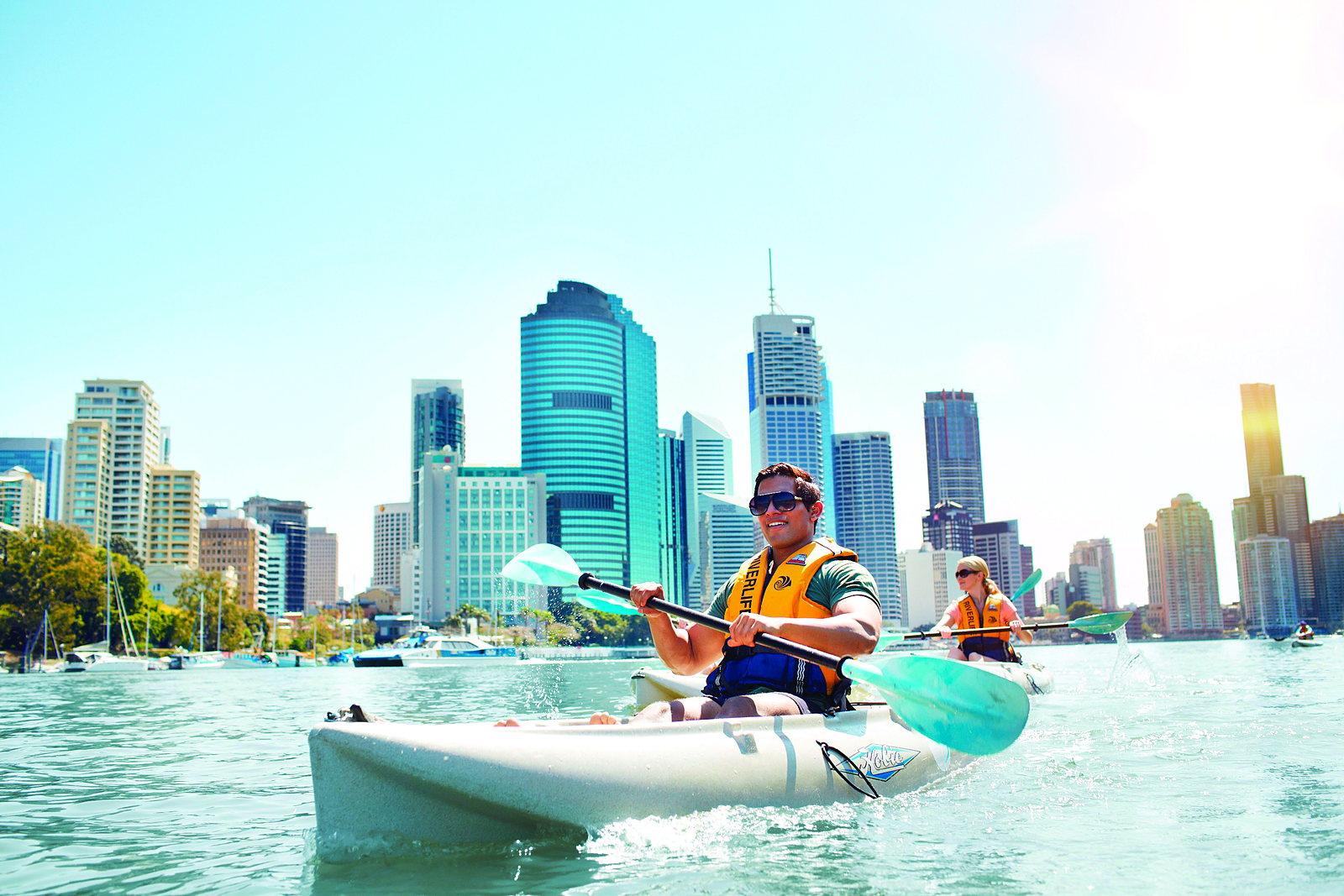
Sunny, safe, and easier on the family budget than Sydney or Melbourne — with three major universities, and our campus 25 minutes from the centre of it all.
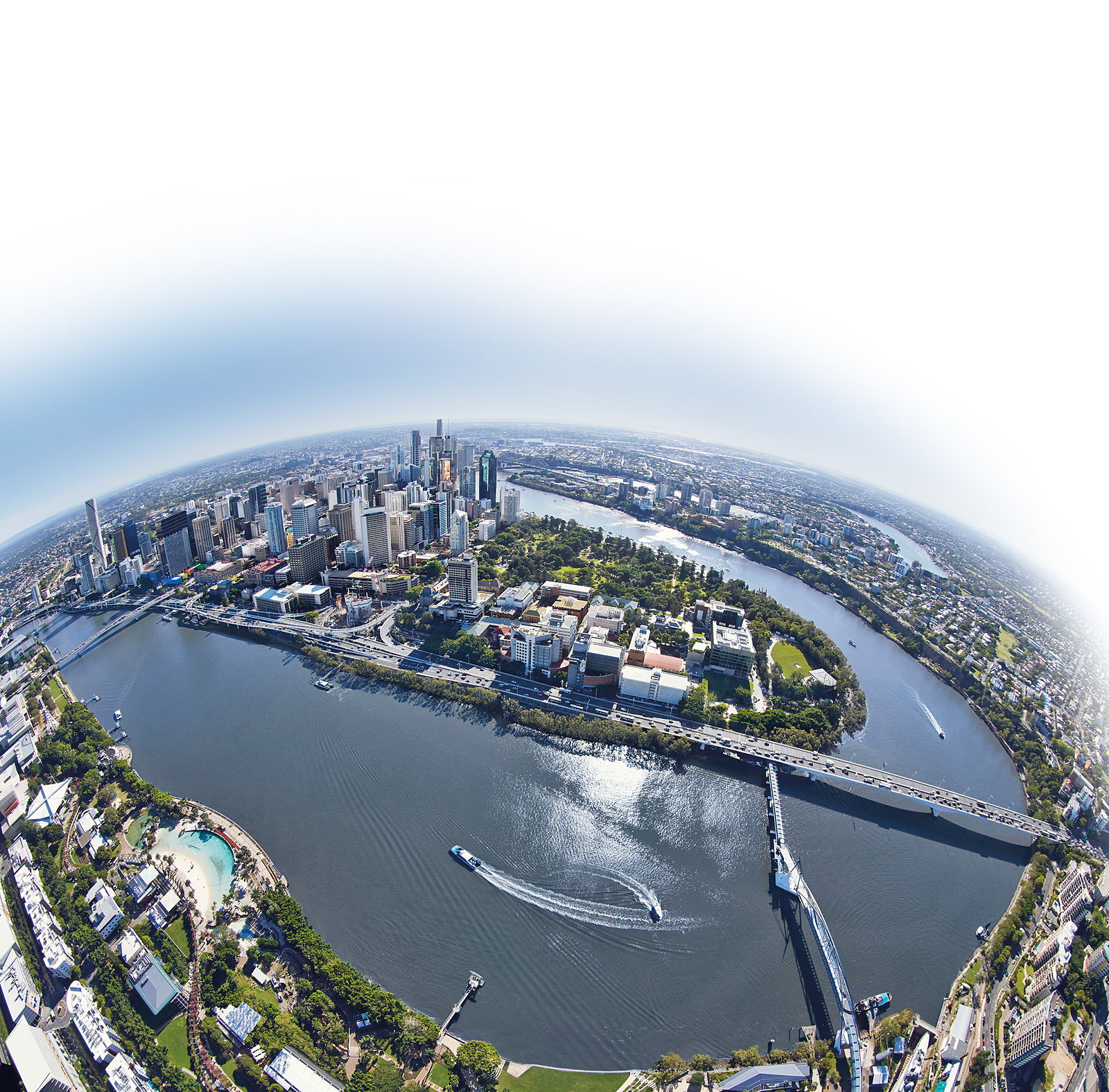
Brisbane is the capital of Queensland and Australia's third-largest city. It sits on the east coast, wrapped around a wide bend in the Brisbane River, about an hour north of the Gold Coast beaches.
Queensland is called the Sunshine State, and the name is earned. The weather here is subtropical: warm for most of the year, and never cold enough for snow. Students spend far more of the year outdoors than they would in a southern Australian city.
One thing families notice quickly: calling home from Brisbane is easy. Queensland is close to most of Asia in time — and Queensland does not use daylight saving, so the difference with home never changes through the year. No confusing shift in winter. The same call time works all year.
——:——
Australian Eastern Standard Time · UTC + 10, all year
——:——
1 hour behind Brisbane
——:——
2 hours behind Brisbane
——:——
3 hours behind Brisbane
A student can finish afternoon sport and still call home before their parents go to bed.
Winter in Brisbane is mild. Daytime temperatures are usually around 20–23 °C — a light jacket, not a heavy coat. Summer days sit around 27–30 °C, cooled by afternoon storms and sea breezes.
For students this matters more than it sounds. Sport, swimming, outdoor learning and weekend trips run all year. Students who come from cooler places often tell us the hardest thing to get used to is that winter simply doesn't arrive.
27–30 °C
Warm and humid, with short afternoon storms that clear the air.
20–23 °C
Cool mornings, bright dry days, no snow. Sport continues outdoors.
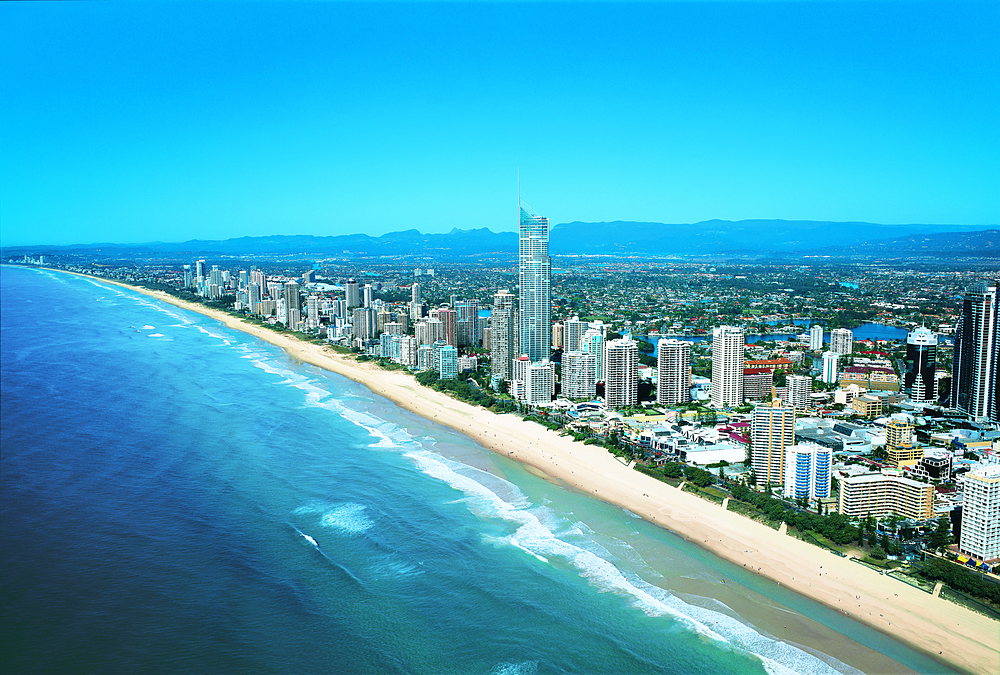
Brisbane is not the biggest city in Australia, and that is rather the point. It is large enough to hold three major universities and an Olympic Games, and small enough that a student can settle in quickly.
Most of our graduates go on to university, and most stay in Queensland to do it. Students finish Year 12 with the Queensland Certificate of Education (QCE) and an ATAR — the rank used for university entry in Australia. Applications go through one state-wide system, so families deal with one process, not many.
One of Australia's Group of Eight research universities, on a riverside campus at St Lucia.
Our graduates there:
Strong in law, business, health, engineering and the creative industries, with a campus in the city centre.
Our graduates there:
The closest of the three to us — its Logan campus is about ten minutes from the school gate, with more campuses in the city and on the Gold Coast.
Our graduates there:
Brisbane will host the Olympic Games from 23 July to 8 August 2032, and the Paralympic Games from 24 August to 5 September 2032. Events will be held across Brisbane, the Gold Coast, the Sunshine Coast, Moreton Bay and Redlands.
For a student starting Year 8 today, that is not a distant headline. They will be at university or beginning a career in the year the Games arrive — in a city that has spent a decade building new transport, venues and sporting programs.
One of our graduates is already part of it. Joseph (Class of 2015) is an engineer working on Cross River Rail and venues for the 2032 Games.
Read Joseph's story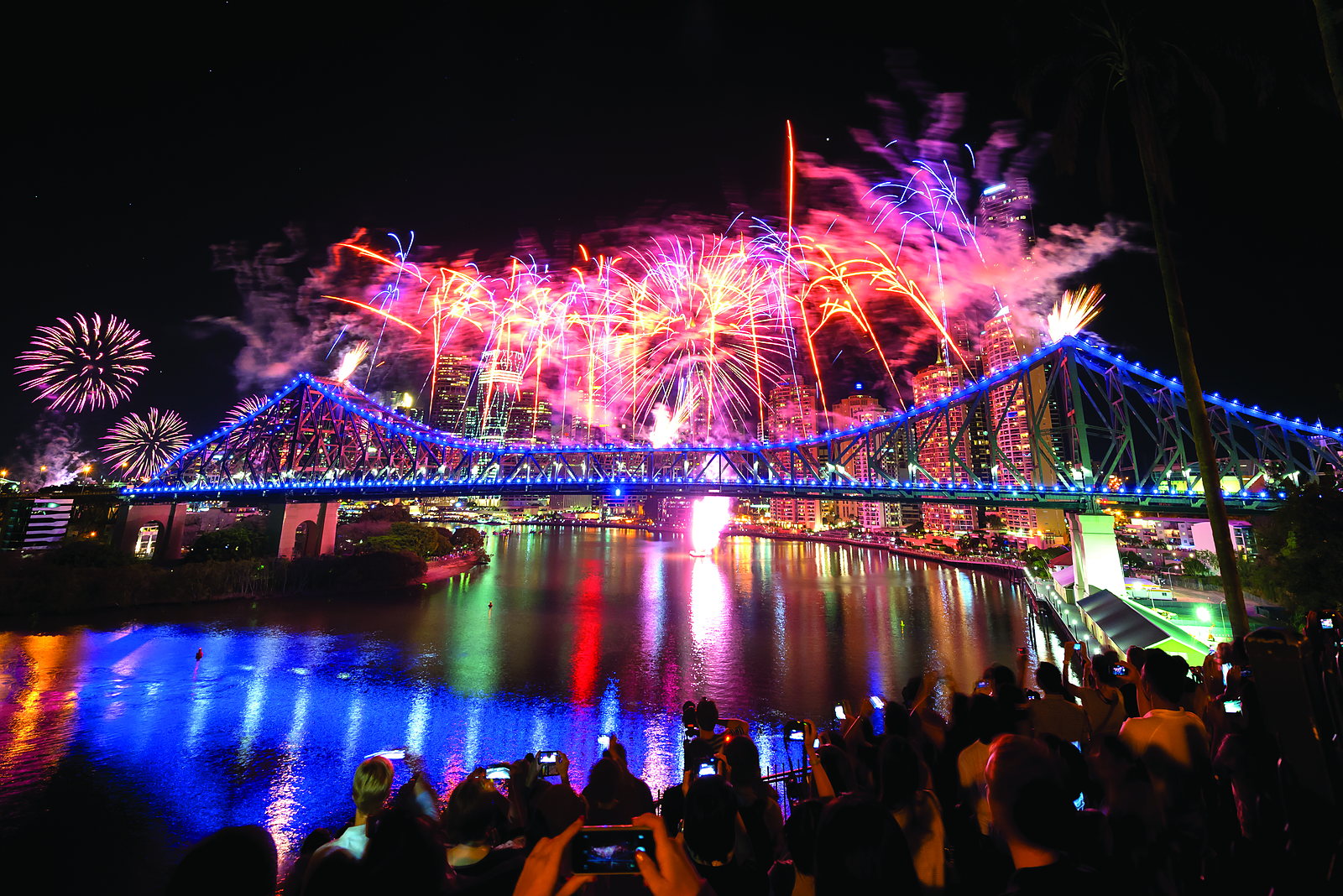
Our campus is in Daisy Hill, a quiet residential suburb south of Brisbane. This is deliberate, and it is the part families most often tell us they did not expect.
There is no city high-rise campus here, and no long commute. Instead: 33 hectares of natural bushland, with the city, the airport, the universities and the beaches all inside a short drive. Homestay families live in the surrounding suburbs, so the trip to school each morning is minutes, not hours.
Driving times are approximate and depend on traffic.
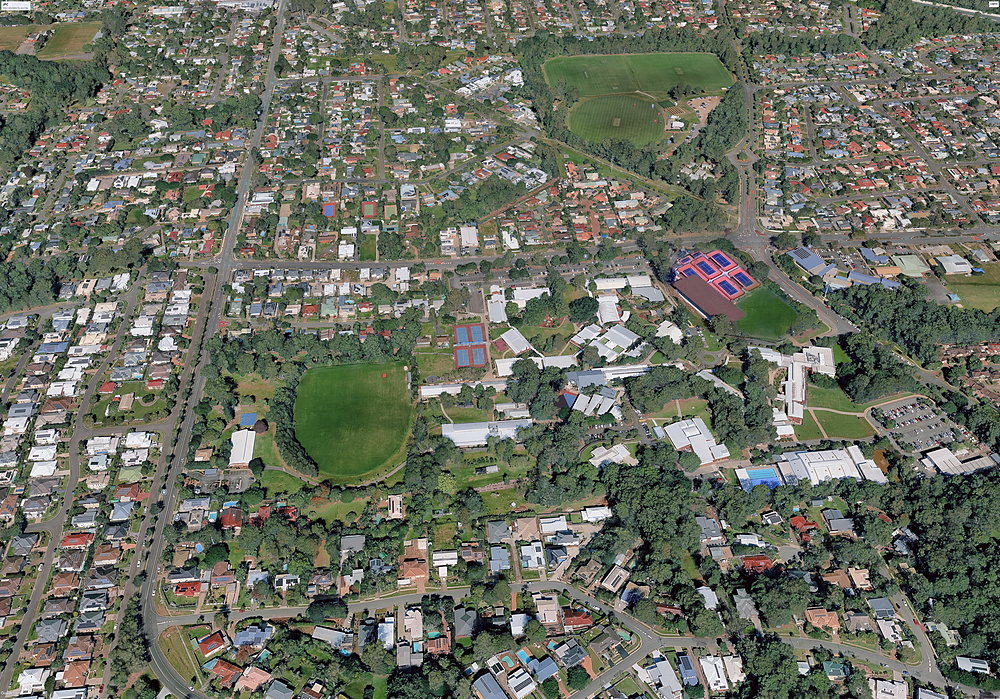
Green ovals, bushland edges and quiet residential streets. Students walk between classes under trees, and the nearest thing to rush hour is the bus at the front gate.
Brisbane rewards students who want to get outside. The river runs through the middle of the city, with free swimming at South Bank, walking and cycling paths, museums and galleries. An hour south are the Gold Coast beaches; an hour north, the Sunshine Coast. Further up the coast is the Great Barrier Reef.
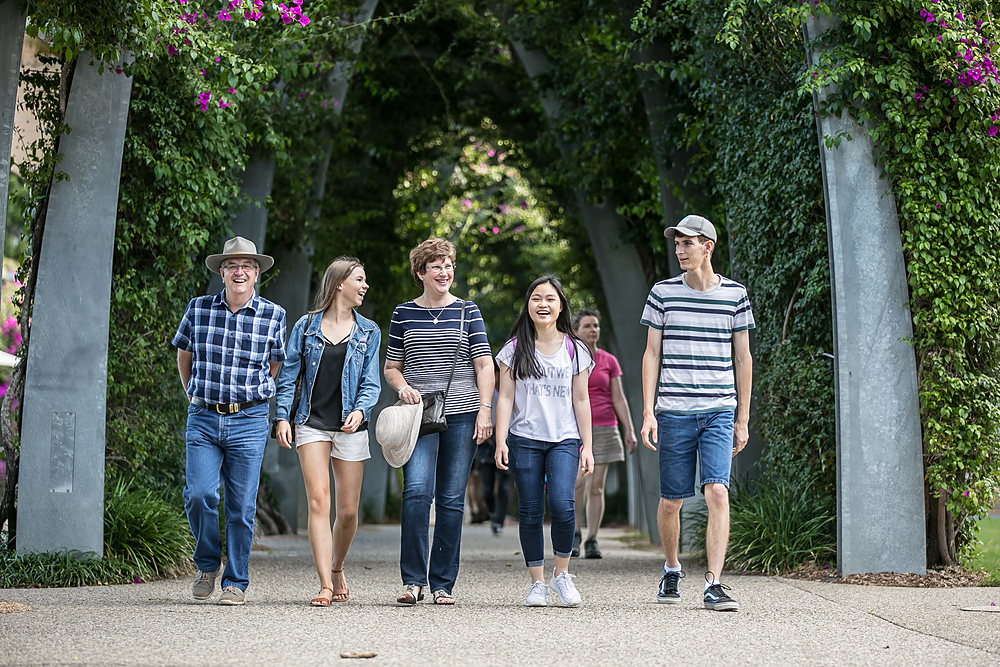
The Gold Coast is about an hour south; the Sunshine Coast about an hour and a half north.
River ferries, kayaking, the riverwalk and a free public beach in the middle of the city.
Koalas in the conservation park beside the school, and the Great Barrier Reef further up the coast.
Swimming, football, netball, rugby, athletics — the season never stops for the weather.
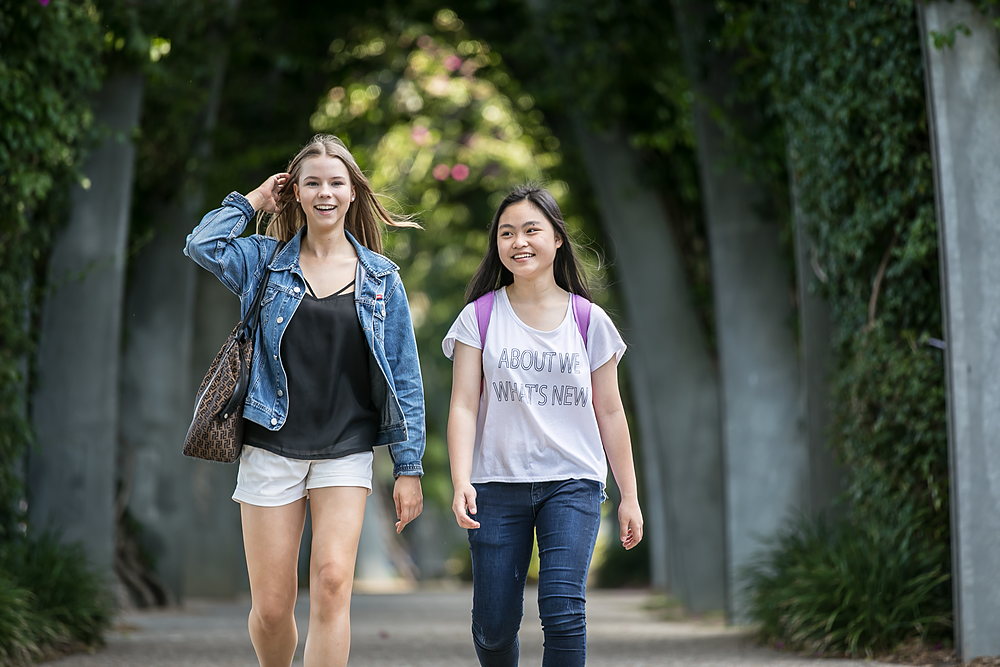
Australia is a safe country to study in, and Brisbane is an easy city to be young in: calm, walkable, and long used to welcoming students from overseas. Living costs are generally lower here than in Sydney or Melbourne, which is one more reason families look north.
But a safe city is only half the answer. What matters day to day is who is looking out for your child. That is where the College comes in: approved homestay families in nearby suburbs, the JPC CARE framework, specialist international welfare staff for students under 18, and a 24/7 emergency hotline.
John Paul College is registered to enrol international students under CRICOS provider code 00500B, and has done so for around 30 years.
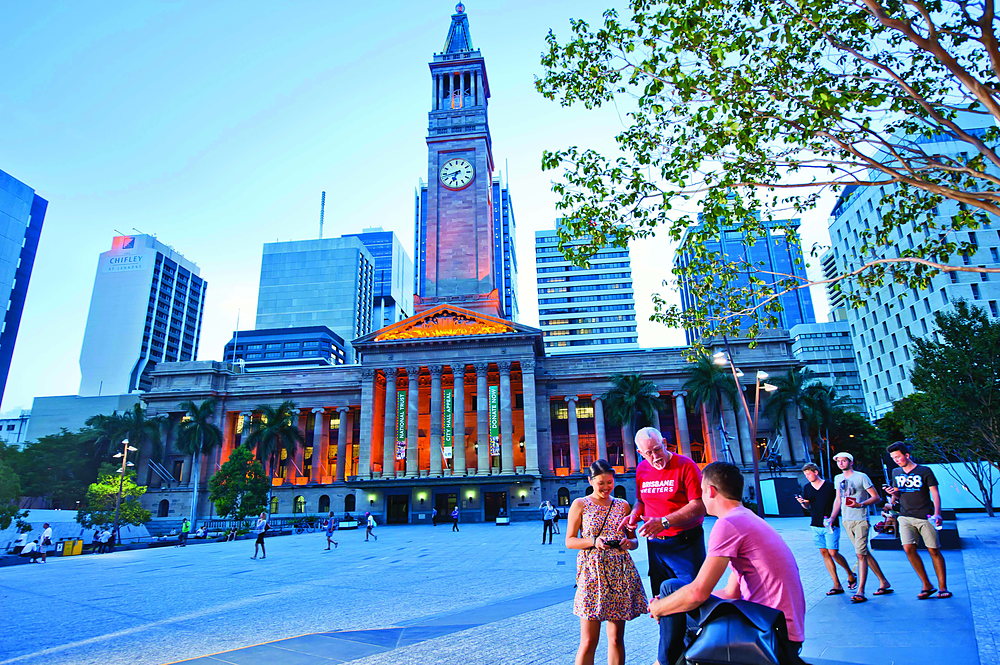
Brisbane is the capital of Queensland and Australia’s third-largest city, on the east coast of Australia. John Paul College is in Daisy Hill, a quiet residential suburb south of the Brisbane city centre, about 25 to 30 minutes away by car. The campus covers 33 hectares of natural bushland.
Australia is a safe country to study in, and Brisbane is a calm, walkable city that is used to welcoming students from overseas. At John Paul College, safety is also managed day to day: students live with approved homestay families in nearby suburbs or in supervised boarding, and specialist international welfare staff support them, with dedicated welfare for students under 18 and a 24/7 emergency hotline for emergencies at any hour.
Living costs in Brisbane are generally lower than in Sydney or Melbourne, which is one reason many international families choose Queensland. Accommodation, transport and everyday costs usually stretch further. For the full cost of study at John Paul College, including tuition, homestay and student welfare, please request the fee schedule for your child’s pathway.
Brisbane has a subtropical climate. Winter days are usually around 20 to 23 degrees Celsius, with cool mornings and no snow. Summer days are usually around 27 to 30 degrees Celsius, with afternoon storms and sea breezes. This means sport, swimming and outdoor activities continue all year.
Brisbane uses Australian Eastern Standard Time (AEST), which is 10 hours ahead of UTC. Queensland does not use daylight saving, so the time difference with home never changes during the year. Brisbane is 1 hour ahead of Tokyo and Seoul, 2 hours ahead of Shanghai, Hong Kong, Taipei and Manila, and 3 hours ahead of Ho Chi Minh City, Bangkok and Jakarta.
By car, the campus is about 25 to 30 minutes from the Brisbane city centre and South Bank, about 35 to 40 minutes from Brisbane International Airport, and about 45 minutes from the Gold Coast beaches. Griffith University’s Logan campus is about 10 minutes away, and Daisy Hill Conservation Park is a few minutes from the school gate. Travel times are approximate and depend on traffic.
Brisbane is home to three major universities: The University of Queensland, which is one of Australia’s Group of Eight research universities; Queensland University of Technology; and Griffith University, whose Logan campus is the closest to John Paul College. Graduates of John Paul College study at all three. Students finish Year 12 with the Queensland Certificate of Education (QCE) and an ATAR, the rank used for university entry in Australia.
Brisbane will host the Olympic Games from 23 July to 8 August 2032 and the Paralympic Games from 24 August to 5 September 2032, with events across Brisbane, Moreton Bay, the Sunshine Coast, the Gold Coast and Redlands. For a student starting secondary school now, it means growing up in a city investing for a decade in transport, venues and sport — and being at university or early in a career when the Games arrive.
Book a conversation with our international team, or arrange a campus visit while you are in Brisbane. We will answer your questions about the city as honestly as we answer the ones about the school.