Homestay Provider Training

Welcome
0% complete
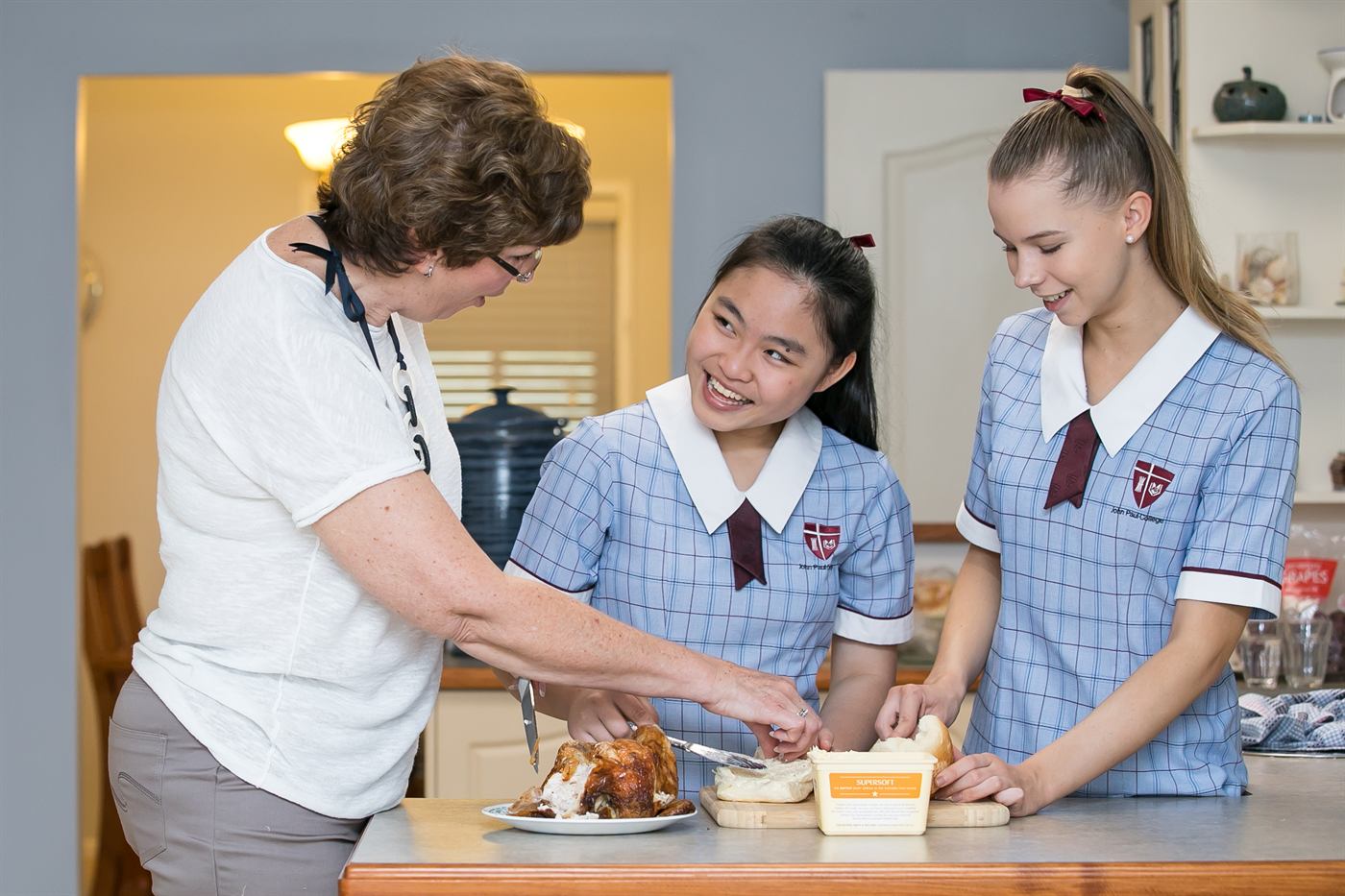
A John Paul College international student welcomed into their homestay family

Welcome Onboard

We are so glad to welcome you as a homestay provider at John Paul College. Our Homestay program gives international students a warm, safe home away from home — and you play a significant part in their journey with us. Thank you, in advance, for the care you will provide.

This short training course walks you through everything you need to know to host confidently and safely. Work through it at your own pace, one topic at a time. At the end, you'll be asked to acknowledge that you've read and understood it — your informal commitment that you're ready to care for a student under 18.

Your role at a glance

A caring carer

For students under 18 you take on the role of carer — a safe, welcoming home for their emotional, social, physical and educational wellbeing.

Three meals a day

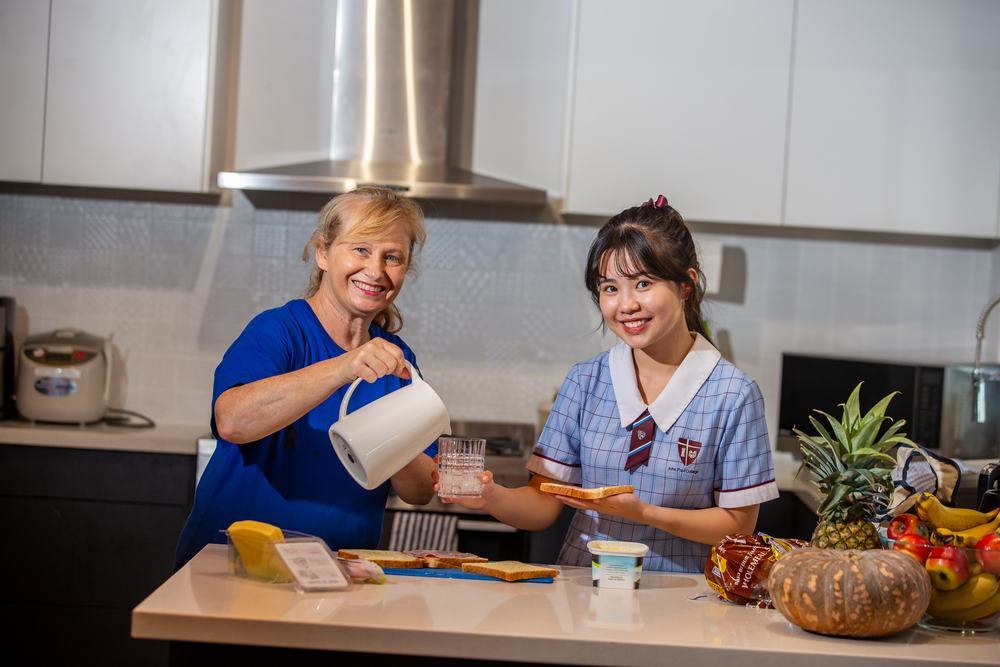
Nutritious meals seven days a week, plus snacks — mindful of each student's dietary and medical requirements.

English at home

Encourage everyday English, take an interest in your student's culture, and help them adapt to life in Australia.

Transport & routine

Provide transport to and from the College and activities, and support attendance and homework as part of a settled routine.

Stay in touch with JPC

Tell us about any welfare, progress or attendance concern — and always first if a student is unwell or will be absent.

Safety first, always

Student safety is paramount at all times. Uphold the expectations and ethos of John Paul College in everything you do.

How this course works. Use Mark Complete & Continue at the bottom of each topic to move forward, or jump around using the Contents list. Your progress is saved on this device, so you can stop and come back any time.

Your Core Responsibilities

Homestay Providers must be of good character and provide accommodation that is age- and culturally-suitable for international students. When you join the program, you agree to the following.

  • Acknowledge and abide by the Homestay Program Terms & Conditions.
  • Allow the College to verify the suitability of your residence at least twice a year.
  • Take on the role of carer for students under 18 years of age.
  • Encourage the use of English in the home.
  • Provide a safe, welcoming environment for emotional, social, physical and educational wellbeing.
  • Show genuine interest in — and respect for — your student's culture and customs.
  • Include students in family life, activities and events where suitable, and help them adapt.
  • Provide three nutritious meals a day, seven days a week, plus snacks — meeting dietary and medical needs.
  • Give an in-home orientation covering facilities, security and emergency numbers.
  • Provide transport to and from the College and co-curricular activities (any public-transport cost is met by you).
  • Support school attendance and the completion of homework where required.
  • Attend interviews with the Accommodation Officer and staff at enrolment, parent meetings and as required.
  • Contact the College about any welfare, academic progress or attendance issue.
  • Contact the College first if a student is unwell or is to be absent.
  • Reinforce the expectations and ethos of John Paul College.

Supervision

Careful, consistent supervision keeps students safe. As a provider you are required to:

  • Ensure students are appropriately supervised and monitored outside College hours, in line with the Duty of Care Declaration.
  • Never allow students to be unsupervised overnight, or out late in the evening, without giving the College prior notice.
  • Only permit overnight stays or non-routine travel/activities once you have written notice from the College.
  • Never leave international students to supervise younger students.
Detailed, age-based supervision and curfew guidance is covered later in Lesson 5 · Homestay Rules & Tips.

Provider Conduct

Your conduct — and that of your whole household — sets the tone for a student's safety and comfort. Providers are required to:

  • Ensure student safety is paramount at all times.
  • Keep household behaviour age- and culturally-appropriate.
  • Ensure adult behaviour would be deemed appropriate if viewed by an external third party.
  • Never allow a student to be alone with another person in a bedroom or bathroom with the door closed. (Short-Term students may share a twin room with other age-appropriate students.)
  • Never address behaviour in a way that harms a student emotionally, and never use physical punishment.
  • Respect a student's right to privacy.
  • Protect a student's personal and sensitive data; use it only for Homestay Program compliance.
  • Never share photos or media of students without their express consent, or where a third party would deem it inappropriate.
  • Ensure students do not have access to alcohol or tobacco.

Residence Standards

A homestay home should be safe, clean, tidy and welcoming — age- and culturally-suitable for students under 18. Every long-term student needs their own private space, plus fair access to the shared home.

A comfortable, private student bedroom in a JPC homestay home

A private room, including

  • A bed with linen, and towels
  • Storage for clothes, personal items and study materials
  • A desk, chair and lighting for study (a separate quiet room is fine)
  • Good lighting and ventilation
  • Reasonable access to heating and cooling

Access to the home

  • A bathroom, with reasonable time for showers
  • Use of communal living areas
  • Individual keys (and door codes, if any)
  • Laundry of clothes and linen as part of the household wash
  • Reasonable access to household internet
  • Safe access to household appliances
A note on internet & extras: reasonable internet access is included — providers must not ask students for extra money for it, in accordance with the Terms & Conditions.

Key Staff & Contact Information

Save these numbers in your phone today. You are never on your own — the Homestay team is here, and there is an after-hours hotline for anything urgent. In a life-threatening emergency, always call 000 first.

Key Homestay Staff

  • GN Grace NaiHomestay Manager
Contact the Homestay team

General Queries

Monday – Friday, 8:00am – 4:15pm

Not sure who to call? When in doubt, ring the After-Hours Emergency Hotline or email the Homestay Office — we would always rather hear from you.

National Child Safe Standards

Child safety is everyone's business. JPC follows the National Principles for Child Safe Organisations — and as a homestay provider, you are part of that safety net. These are the ten principles the College embeds in everything it does.

1

Child safety & wellbeing is embedded in leadership, governance and culture.

2

Children are informed of their rights, participate in decisions, and are taken seriously.

3

Families and communities are informed and involved in promoting child safety.

4

Equity is upheld and diverse needs are respected in policy and practice.

5

People working with children are suitable and supported to live these values.

6

Processes to respond to complaints and concerns are child-focused.

7

Staff and volunteers are equipped through ongoing education and training.

8

Physical and online environments promote safety and minimise the chance of harm.

9

Implementation of the principles is regularly reviewed and improved.

10

Policies and procedures document how the organisation is safe for children.

Harm & Grooming

Knowing what harm and grooming look like helps you protect your student and act early.

Understanding harm

Harm is any detrimental effect of a significant nature on a child's physical, psychological or emotional wellbeing. It can be caused by physical, psychological or emotional abuse, neglect, or sexual abuse or exploitation — through a single act, omission or circumstance, or a series of them.

Recognising grooming

Grooming aims to gain access to a child to perpetrate sexual abuse. It can happen in person or online — on social media, gaming, chat and messaging apps — and may involve encouraging a young person into sexual activity or to send sexually explicit material.

Internet safety is everyone's business. If you are concerned about your student, their internet use, or the people they're talking to, raise it with a Student Protection Officer. Helpful resource: eSafety Commissioner →

Student Protection at JPC

Safeguarding our students is a shared responsibility. Please read the Student Protection — Parents & Students Guidelines, and know exactly what to do if you have a concern.

Your role in student protection

It is mandatory to report any harm — or suspicion of harm — to a JPC Student Protection Officer (SPO) as soon as possible.

  1. 1 You report a concern to a JPC Student Protection Officer.
  2. 2 The SPO reports sexual or physical harm to the Principal.
  3. 3 The Principal reports sexual abuse to Police, and physical harm to Child Safety Services.

The JPC College Values

Every member of the John Paul College community lives by four shared values — MICE: Mutual Respect, Integrity, Compassion and Excellence. Your student knows these from school, and they carry into your home too.

John Paul College value: Mutual Respect
John Paul College value: Integrity
John Paul College value: Compassion
John Paul College value: Excellence

The MICE Values in the Homestay

Students are expected to show these values in the homestay, just as they do at school. In everyday life, that might look like this:

Greetings and good manners

Following the house rules and curfew

Telling you their plans — where they're going and when they'll be home

Being honest — for example, if they don't enjoy certain foods

Asking for help when they need it

Keeping their bedroom and bathroom tidy

Learning from their mistakes

Some students need gentle reminders — thank you for your patience while they learn

You may have additional house rules — explain them warmly when your student arrives. Homestay Providers also uphold the JPC Community Code of Conduct (available in Lesson 5 · Handbooks & Resources).

Emergency Protocols

Know these protocols before you need them. When something urgent happens, act quickly and involve the College.

After-hours emergencies

For anything urgent outside office hours, follow the After-Hours Emergency Procedures and call the JPC After-Hours Hotline (07) 3826 3400. In a life-threatening emergency, call 000 first.

Mental health & safety

Suicidal ideation means thinking about or planning suicide. If you notice any sign of self-harm or suicidal thoughts, follow the Mental Health Flowchart and contact JPC without delay — do not wait.

Harm or suspicion of harm

Report any harm — or suspicion of harm — to a JPC Student Protection Officer immediately (see Lesson 4 · Student Protection).

Reporting Absence & Medical Care

Two of your most common day-to-day responsibilities: letting the school know when your student is away, and helping them access health care.

Seeing a doctor

Students may need help to see a doctor or dentist. They hold Overseas Student Health Cover (OSHC) — there may be an upfront out-of-pocket cost that they then claim back.

Homestay Rules & Curfews

Clear, consistent boundaries help students feel secure. Students shouldn't go out socially on weeknights — that time is for study and co-curricular activities. On weekends, if you don't already have a curfew, the College recommends:

13–14 yrs Not out alone

Should not go out without an accompanying adult.

15 yrs Home by 8pm

Back home by 8:00pm.

16–17 yrs Home by 9pm

Back home by 9:00pm.

18+ yrs By 11pm

Home by 11:00pm, or as agreed with the homestay.

Going out

On weekends students may socialise with friends. Ask them to tell you where they're going and when they'll be home, to stay contactable by phone, and to let you know if they're running late. If you can't drive them, show them how to use local public transport.

Staying overnight elsewhere

Overnight stays with friends or relatives need College approval. Contact the Homestay Office with at least 3 days' notice so we can seek parent permission. Students may not travel interstate or overseas during term (except in compassionate circumstances).

Supervision

Students under 12 must never be left unsupervised. Students of any age must never be left unsupervised overnight — if your family is going away, tell the Homestay Office as early as possible so we can arrange alternative care.

Phone, internet & bedtime

Encourage limiting phone and internet use after 10pm, out of respect for the household. Set your rules on arrival — and remember, time-zone differences with family back home can explain late-evening calls.

Chores & tidiness

Encourage students to keep their bedroom and shared bathroom clean and tidy, and explain your rules (like where dirty laundry goes). Basic chores such as setting the table are great — but please avoid strenuous ones like mowing the lawn.

Rideshare & transport

No rideshare — Uber and Didi are not permitted, as drivers may not hold a Working With Children Check. Use public transport or a registered taxi. For airport trips during term breaks, the College can arrange an airport taxi service.

Alcohol, smoking, drugs & gambling

These are illegal for under-18s and a breach of the JPC Student Code of Conduct. Any such behaviour in homestay should be reported to the College immediately.

Extended Day Program (EDP)

The EDP is an integral part of our welfare support for long-term homestay students — with transport, dinner and tutoring built in.

What the program includes

  • When Tuesday & Thursday
  • Weeks Week 2 – second-last week of term
  • Time 3:20pm – 5:45pm
  • Includes Bus home · dinner · tutoring

Compulsory for all homestay students in JPIC and JPC Years 7–10. Years 11–12 students are welcome. Bus transport home is provided if you're unable to collect your student. More about EDP →

Cultural Awareness & Culture Shock

JPC students come from all over the world — China, Japan, Vietnam, South Korea, Taiwan, Hong Kong, Macau and Russia among them — each with their own language, culture and traditions.

Getting to know your student is the best way to understand their cultural and religious needs. Ask them to share a favourite recipe from home, talk about what their city is like, and celebrate significant cultural dates together. New students may need time to adjust — thank you for your patience. Explore the SBS Cultural Atlas →

Signs of culture shock

It's common for new students to feel homesick or out of place. Watch for:

  • Cultural isolation
  • Extreme homesickness
  • Social withdrawal
  • Overeating or loss of appetite
  • Lack of motivation
  • Too much / too little sleep
  • Frustration with the unfamiliar
  • Unexplained stress or sadness
  • Aches and pains

How you can help

  • Encourage contact with family and friends back home.
  • Encourage them to express their feelings and concerns.
  • Support active participation in school activities — being social eases isolation.
  • Take them out for food from their home country.
  • Encourage good sleep, eating and exercise habits.
  • Suggest they speak to Homestay staff or the school counsellor.

If you have ongoing concerns about your student, please raise them with the Homestay Office.

Handbooks & Resources

The documents and links referenced throughout this training — bookmark the ones you'll use most.

Provider Acknowledgement

You're almost there. This final step is your acknowledgement that you have read and understood the Homestay Provider Training and are ready to care for a John Paul College student under 18.

Tick the box and enter your name to enable this button.